Bloomberg News’ arts site has a funny (and sad to say fair) take down of the NYCO fiasco. Yes, George Steele was a mistake, but somebody did hire him and stand by him.
But to end as a two-bit touring company expiring in the wake of a pathetic Kickstarter campaign really stretches my suspenders of disbelief.
That’s what happened after George Steel, the over-parted general director, extracted the company from Lincoln Center before securing another stage. City Opera began rolling through the boroughs like clown Canio and his tragic retinue.
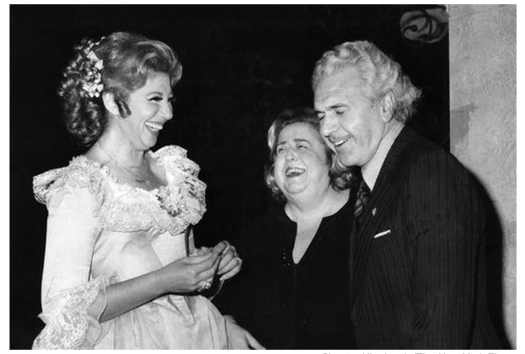
NYCO Opera as it once was, Beverly Sills, Sarah Caldwell, and Julius Rudel pictured in 1976, the year of my first opera there, which left me wide-eyed with wonder.
Dante scholar Peter Hainsworth reviews a new translation of The Divine Comedy in the 10/4 TLS. Hainsworth notes that the poet Clive James, helpfully married to a noted Dante scholar, Prue Shaw, has made (to me) a novel effort to solve the vexing problems of footnotes (how much do you explain, and how do you keep the reader’s experience fluid if apparatus at the bottom of the page keeps interrupting?) And in Dante, there is a lot of context to explain and puzzle over.
From the review:
James solves the puzzles by taking information of all sorts–cultural, historical, doctrinal or simply clarificatory–that he thinks the reader needs “out of the basement and putting it on display in the text.” In other words material that usually appears in the notes becomes part of what Dante himself says, a kind of self-glossing inseparable from the fabric of the whole.”
An interesting idea. And it appears, from the small tidbit Hainsworth quotes, that Clive’s version is a good read; here’s the opening of one canto:
Six thousand long miles eastward it is noon.
Here night is ending. The Earth’s shadow lies
Level in bed, and in the mid-sky, soon,
Deep up above us, to our searching eyes,
A change will come: the odd star disappears,
The handmaid of the sun approaches. One
By one the sky’s lights shut down as she nears,
Even the loveliest, and it is done:
The new day dawns.
Near the end of the review comes this summing up, “[This translation] is energetic, informative, alive, at times attention-seizing, and for the most part actually enjoyable. Its overall readability gives it a much better chance than most of launching newcomers into Dante’s difficult waters and of keeping their boats afloat for longer.”
Back to poetry and music, to wit: a couple of things in an October mood:
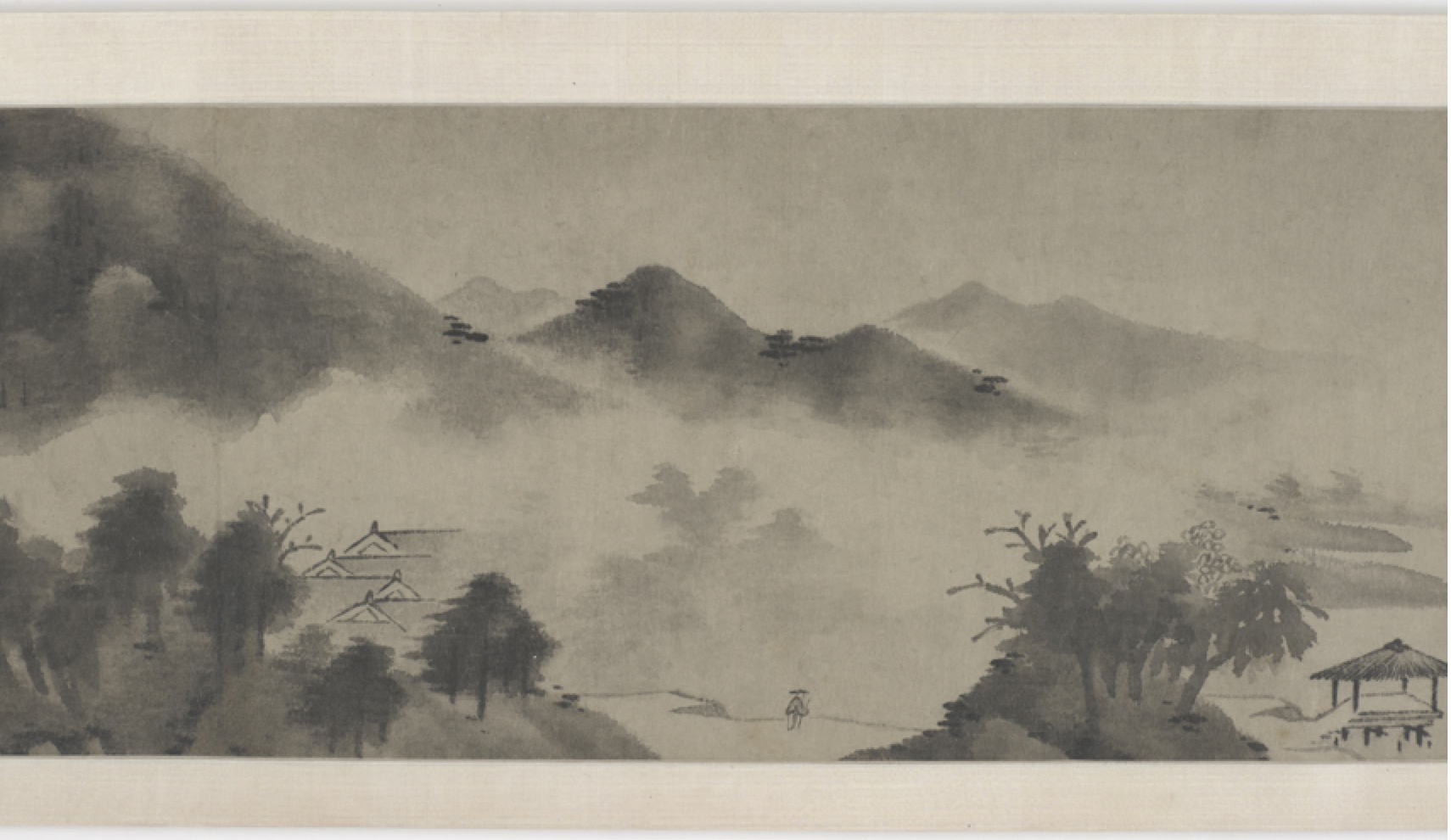
First, an excerpt from Basho’s “The Records of a Travel-worn Satchel”–a travel book with haiku.
It was early in October when the sky was terribly uncertain that I decided to set out on a journey. I could not help feeling vague misgivings about the future of my journey, as I watched the fallen leaves of autumn being carried away by the wind.
From this day forth
I shall be called a wanderer,
Leaving on a journey
Thus among the early showers.
You will again sleep night after night
Nestled among the flowers of sasanqua.
And second, a reprise of a bit of Couperin that I’ve posted before, (not sure why this strikes me as autumnal, maybe because of its evocative melody?) “The Mysterious Barricades.” Here is a good performance and an explanation of the enigmatic title from Philippe Radault.
The nights are finally cool in Washington, and the leaves are turning.
Design Observer has an graceful piece by Nancy Levinson on the transition, if that’s the right term, from book as physical thing to book as a digital object. She opens quoting Walter Benjamin waxing rhapsodic about his library.
I am unpacking my library. Yes, I am. The books are not yet on the shelves, not yet touched by the mild boredom of order. … I must ask you to join me in the disorder of crates that have been wrenched open, the air saturated with the dust of wood, the floor covered with torn paper, to join me among piles of volumes that are seeing daylight again after two years of darkness, so that you may be ready to share with me a bit of the mood — it is certainly not an elegiac mood but, rather, one of anticipation — which these books arouse in a genuine collector.
— Walter Benjamin, “Unpacking My Library (PDF)“
(For me, the passage evokes that “used bookstore smell,” and a familiar feeling, for somebody who has lugged books around all his life.)
Levinson goes on to hit most of the familiar notes in this topic, taking off from the lens of an exhibit about architects‘ favorite books, which is also a book itself. Most of her survey is familiar: affordances of digital v. print, paradigms, with Gutenberg, as technological enabler of Republic of Letters release 1, posing questions about what Republic of Letters v. 2 will be?
She did link to a lively, if a tad obvious piece in Slate that makes the uncontroversial (to me at least) point that in some aspects, journalism has never been better. More choice, more context, depth, multiplicity of perspectives, etc. I’ve heard that line a lot, it it’s true; although it leaves unanswered the question about investigative journalism and other labor intensive types–is that increasing or is it becoming a different beast, with individual hackers as latter day Woodward and Bernstein? It is opinion journalism’s golden age, for sure. (This message brought to you by WordPress!)
But looping back to Levinson, she asks the always useful question: what if the thing we are stewing so much about isn’t a big deal after all?
Her closing:
So here’s a thought experiment: What if we just agreed that the limited and unpredictable commercial potential of ambitious work is not actually a problem?
To wit: perhaps it’s okay if book production, or news production for that matter, goes away in some present forms to be replaced by something new, that living through Gutenberg 2.0 means that’s just what happens?
As traditional journalism (meaning: newspapers) fade away, one rescue scheme is to convert them into non-profits. Oops, they are already “non-profits” under an ordinary definition of that term, I guess I mean “not for profits,” that is, charities.
There’s been some interesting research (by foundations) about what’s going on and whether it’s viable. Reporting out of NPQ, Ruth McCambridge gives a thoughtful round up, with links to reports from Pew and Knight, two foundations who have been involved with this issue.
“…[An] excellent recent Pew study, “Nonprofit Journalism: A Growing but Fragile Part of the U.S. News System,”looked at 172 nonprofit news sites and found that many of these organizations still relied to a fairly significant extent on only a few sources, including grant funding from a foundation or major donor.
Now, the Knight Foundation is preparing to publish another study, titled “Finding a Foothold: How Nonprofit News Ventures Seek Sustainability.” This report, scheduled for release in October, has made a bit of a breakthrough in that it shows patterns of revenue by type of operation, along with other comparative data. As one participant in the roundtable said, this type of information is like gold to those struggling to make sense of an emerging enterprise model.
The journalism groups that attended and were under discussion had annual budgets that were as small as $165,000 (Oakland Local) and as large as $10 million (ProPublica and Center for Investigative Reporting). They were divided generally into three categories—national, statewide, and local—with a few outliers, like NPQ, that addressed particular communities of interest, and more established groups, like NPR. But most were fairly new, and primarily online, publishers. Some engaged heavily in investigative work, but these seemed to be organizations with larger capital investments from individuals or foundations. A number of foundations were also represented, including the Bill and Melinda Gates Foundation, the Knight Foundation, and the MacArthur Foundation.
Later in the same piece, an interesting observation on how the results of investigative journalism might now be “chunked.”
So, the traditional method of doing an investigative project is to work, work, work, work, work, gestate, gestate, gestate, give birth to this big thing when it comes out, and then go take a nap, right? That’s fine, but what you’re seeing more and more of, and partly out of the same necessity, is the rolling investigation kind of thing. The work is not less important, and you don’t do less. The impact isn’t different in the end. But you’re breaking this into pieces as you go along, and there’s a sustained constant hit.
Crudely put, the Internet makes what once were “scoops” into a “beat.” (Although Watergate was surely a “beat” and a rolling investigation.) Still, does point out (the obvious) that the rhythm of reporting is changed wholesale by digital media, print newsrooms no longer scale in the “supply chain” as the chunks aren’t daily, but instantaneous. And the “desks” that have to be staffed, are feeding twitter streams, not the next day’s first print edition.
McCambridge quotes Michael Maness, Knight’s Foundation (big funder of new journalism) saying (journalists at least) not become “addicted to the continuous now.” That horse has left the stable, however.
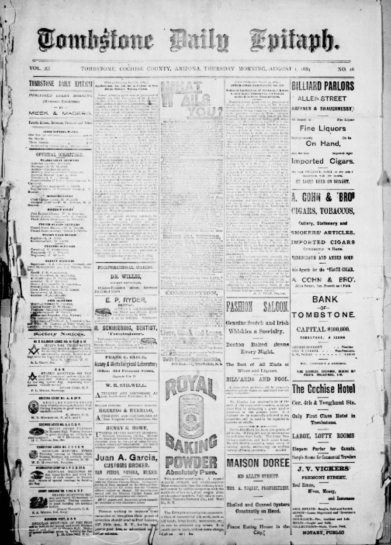
The now very apt title of an Arizona paper (scan of an 1889 front page).
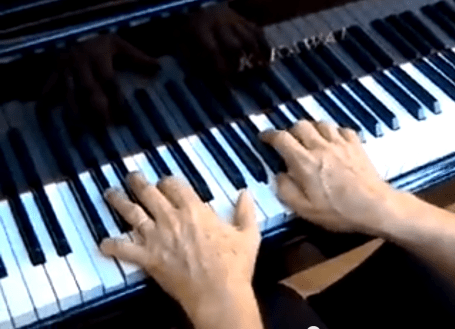
Vocal Arts DC, the Washington-based art song series, has started a new Web/FB feature called “My Favorite Song.” General Director (and voice expert extraordinaire) Peter Russell is asking people to share their favorite classical song and explain why. He leads off with his selection, F. Paolo Tosti’s Ideale, arch-romantic yumminess, beloved by a certain type of tenor, and Peter’s ideal ‘Ideale.’
Some of you will know just from the photo of course:
I’ve been a support of VADC from the beginning, and the program annotator for 20 plus years. Watch this space for a “My Favorite Song” entry of my own before long. And here’s hoping you have time to listen to an old or new favorite song today.
Finally read Paul Graham’s candid talk on start ups (the one that gets passed around from college kid to college kid in CS depts.) Candid, funny and insightful; herewith a couple of choice bits:
Graham On Having A User Focus
I learned something valuable from that [changing to user focus]. It’s worth trying very, very hard to make technology easy to use. Hackers are so used to computers that they have no idea how horrifying software seems to normal people. Stephen Hawking’s editor told him that every equation he included in his book would cut sales in half. When you work on making technology easier to use, you’re riding that curve up instead of down. A 10% improvement in ease of use doesn’t just increase your sales 10%. It’s more likely to double your sales.
How do you figure out what customers want? Watch them. One of the best places to do this was at trade shows. Trade shows didn’t pay as a way of getting new customers, but they were worth it as market research. We didn’t just give canned presentations at trade shows. We used to show people how to build real, working stores. Which meant we got to watch as they used our software, and talk to them about what they needed.
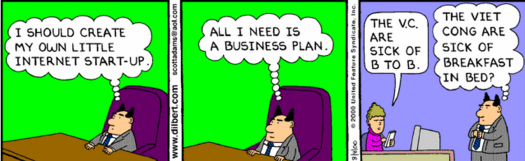
As usual, Scott Adams got there first.
….. And later on…Graham on Flying Low
Another way to say that is, if you try to start the kind of startup that has to be a big consumer brand, the odds against succeeding are steeper. The best odds are in niche markets. Since startups make money by offering people something better than they had before, the best opportunities are where things suck most. And it would be hard to find a place where things suck more than in corporate IT departments. You would not believe the amount of money companies spend on software, and the crap they get in return. This imbalance equals opportunity.
Lots of interesting things, even for somebody like me who had and has no thought of being involved in a start up (despite friends who are thriving in them). I was particularly struck by his bursting of the myth that the initial idea itself has to be so jaw-droppingly amazing; it’s enough just to make some technology suck slightly less. And speaking as a former business IT person for two small companies, his words about corporate IT ring true. So much money and so much time for software that at its best is only not totally borked.
The entire talk is well worth reading if this world interests you at all.
And if you would rather just laugh, there’s always “the start up guys.”
Nice piece on answering the “who said that?” question, by Corey Robin in The Chronicle.
The Wrongly Attributed Statement makes you realize what a battleground a quotation can be. On the one hand, men and women invoke the authority of the great and the good to lend a little heft to their favored sayings. On the other hand, pedants like me rely on the authority of a different great and good in order to take that heft away. They have their Web sites, I have mine (Quote Investigator, which is run by Garson O’Toole, the nom de plume of a Yale Ph.D., is the best; Fred Shapiro’s Yale Book of Quotations is the most comprehensive and reliable source in print, and it makes the most use of online resources.) The quotation is a struggle over expertise, pitting the seemingly tutored against the seemingly untutored but revealing how dependent we all are on the authority of people whom we think—or hope—know better.
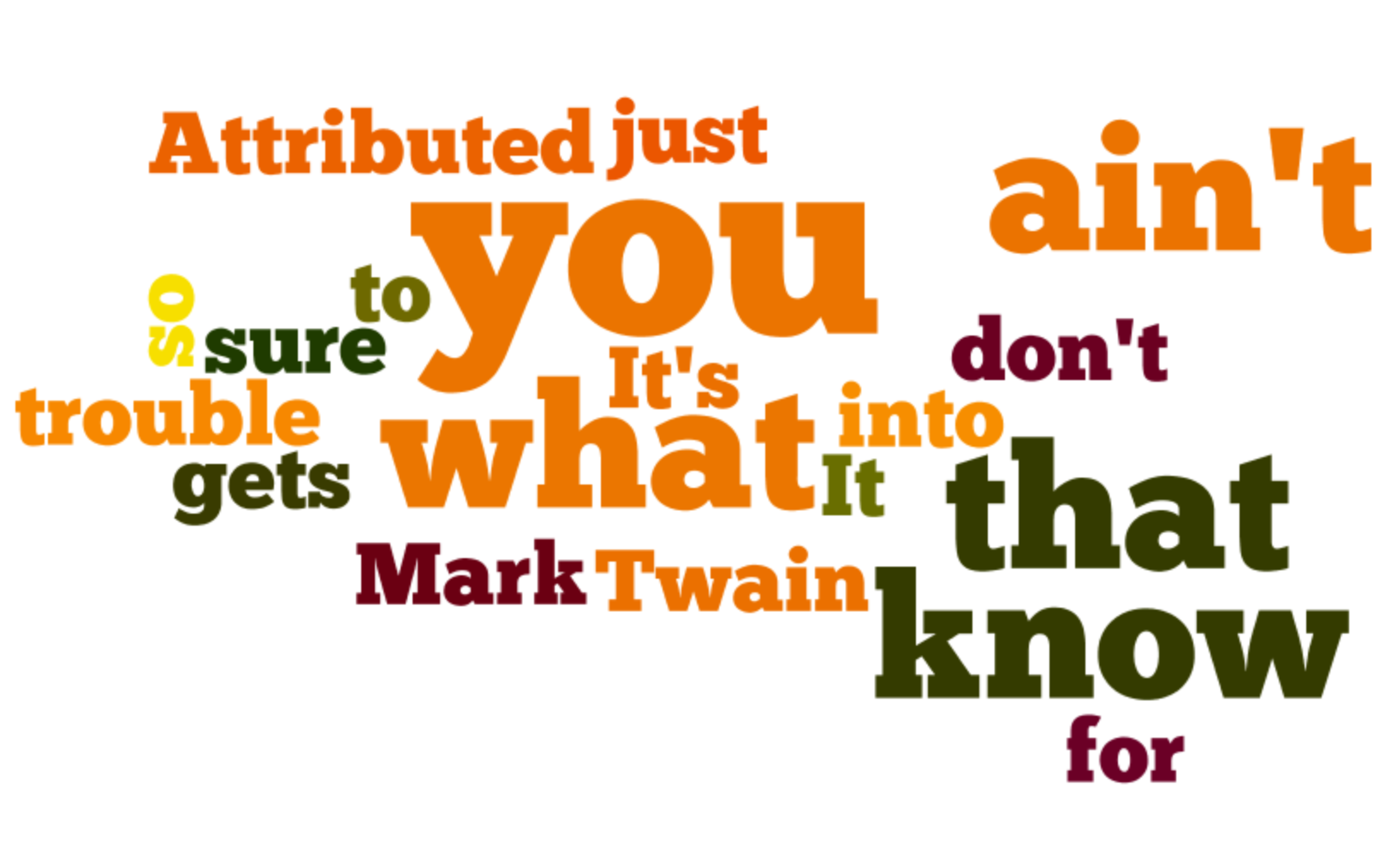
As Mark Twain (I think) said, “It ain’t what you don’t know that gets you into trouble. It’s what you know for sure that just ain’t so.”
I did quote duty a lot in my life, as a legislative & news researcher, and a library nerd in general. But I didn’t have a patch on my mother, who for many years answered press inquiries for the Library of Congress’ Information Office. There is something strangely compelling about getting to the bottom of a hard to pin down quote. You could start a site up for these slippery characters. Corey has a couple, and I would add “From each according to his ability to each according to his need,” attributed to lots of people, among them Marx, but seemingly going back to maybe The Bible.
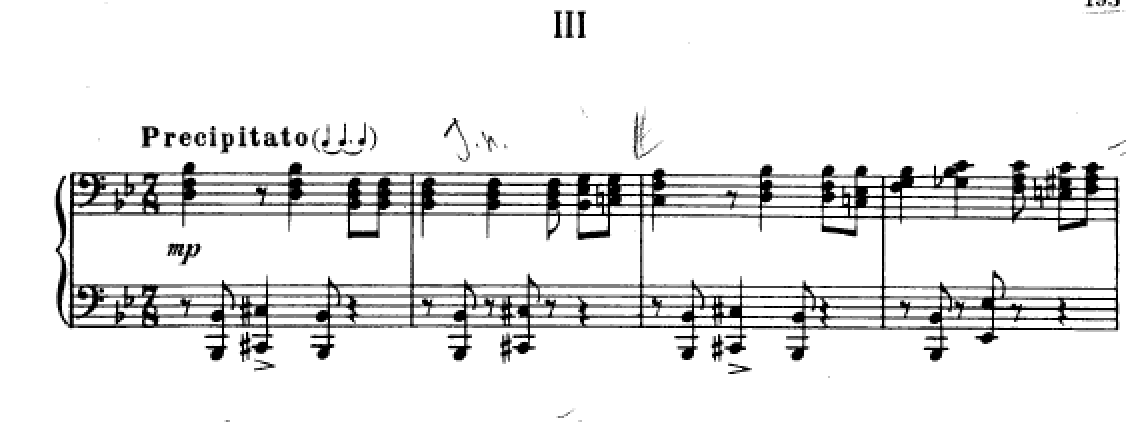
I have, over the years, watched a lot of classical music on TV (yes, there is classical music on TV, once there was rather a lot of it.) But I’ve never seen something shot quite like this, a video of the last movement of Prokofiev’s Piano Sonata #7, “Precipitato” given a strong performance by Denis Kozhukhin.
The photography and the editing border on the hyperactive, but then so does the piece, starting with its jumpy 7/8 time signature.
In fairness to the composer, it is good to remember that his art encompassed not just music that was driving forward in relentless ways, like the 7th Sonata, but works music with tunes, that, as Andre Previn once remarked (of the 5th Symphony I think), he must have sold his soul for.
To wit: the second movement of the 8th Piano Sonata, with Ashkenazy weaving the magic spell.
This blog and thousands of others (or more) uses WordPress, picked mostly because I knew it a bit from a blog (and hosting company) I like, Laughing Squid, which used it. It is open source, and had that “do it yourself” feel of the early web (pitching their “5 second install”), and I was able to put up a little site for an inn keeper friend of mine in about a weekend a few years back. (I later moved it to wordpress.com and it’s still up, if looking its age a bit.)
In the intervening years, WordPress has grown up into more than a blogging tool, providing a platform for a lot of web publishing and building a large developer (and designer and user) community. It has become an ecosystem, perhaps not to the level of Linux (the open source operating system that is used on many web servers), but it is now providing platform infrastructure for between 18 and 20% of the Web.
That is among the tidbits I gleaned at WordCamp Baltimore, a meeting for WordPress types last weekend at the University of Baltimore. For $20 and a train ride up and back it was worth it to see both who attended and the texture of the presentations. It was, in the way of many a tech conference, pleasantly shaggy when it came to organization. No sign on the conference building itself, and confusing ones inside, which meant I ended up in sessions I didn’t intend to attend. But a certain amount of conference chaos means both serendipity and that you have to talk to people to find out where things are, not a bad thing.
Some random notes from the sessions I attended: Russell Heimlich from Pew talked about caching. (Would that I had enough readers to worry about caching or even moving off wordpress.com), but did speak to WordPress’ ability to scale for big sites.
A lawyer turned WordPress entrepreneur Byron Warnken, who has done several successful digital projects relating to law, did a session on content marketing. This was, understandably, focused on commercial uses of WP, but had some intriguing tidbits even for somebody like me who has made his career mostly in not-for-profits. First, “content marketing” pre-dates the web. Byron’s example was “The Furrow,” a magazine from the John Deere tractor company, which gives “relevant content to customers” –that is, content marketing. Wikipedia dates its founding to 1895 and notes a million plus subscribers. Wikipedia lists the Michelin Guide as another preweb example of content marketing, & I assume that beloved book of my youth, The Guinness Book of World Records, would qualify as well.
This was eye-opening for me as previously I saw the whole content marketing idea as separate from “real content” — that is, not influenced mostly by the desire to sell you something, therefore not objective. That still seems broadly true, but it gets usefully blurry around the edges, at least got me to wonder about what content the various companies and non-profits I am involved with can offer as legitimately helpful and engaging (versus what is to sell, I suppose). Byron was engaging and provocative, a very good presenter.
(One provocative (if flaky) observation to fall out of this: what are MOOCs if not Content Marketing on a massive scale? If that logic is correct, when do John Deere, Guide Michelin, and Guinness start their first MOOC? I bet their production values and UX will be an improvement on what is out there from the mighty Coursera and edX. If the Guinness people need an instructional designer for a MOOC-based drinking game, I am at the ready!)
Also worth noting:
Really good session on SEO (that’s search engine optimization, for the two of you who get my blog via parchment scroll in Latin) by principals at WebMechanix, a Columbia, Maryland, company that does optimization for your site (good content marketing gizmo on their home page, as an aside). A lot of familiar stuff (which is like being reminded by the dentist to floss):
Meaningful page titles, correct use of title tags.
Metadescriptions
Meaningful file names for images, alt-tags, good captions
Page headings (and logic of the page) even more important than it used to be.
Other: “thou shalls” from them:
Overall: Think about your page from a “how easy it is to index this?” perspective. That is, produce sites from an “easy to index” mindset.
Religiously share your content on social networks.
Think about off and on page SEO (corollary to the one above)
Benchmark
Use plug-ins for SEO
Use the Google site map generator thingie and make xml site maps and give them to the Google beast for ingest.
New to me (although it’s not that I really do any of those ordinary things very diligently) was thinking about various implications of schemas in search (schemas are tagging schemes, sort of like cataloging that makes content more recognizable to search algorithms (and by implication to APIs or for other uses). It reminds me of headings in library catalogs (except that schema go beyond subject to include type etc).
Schema.org has an explanation and a bunch of already existing schema (one is for instance ratings stars). Google has an “author snippet” akin to a schema, which hooks a comment to a profile, and is important in search. Somebody is probably working out schema for education topics and formats now (or if they aren’t they should be). But more on that later.
The notion that giving search engines more about the semantic structure and content of your pages helps in SEO is really thought provoking–in both directions. You start thinking about this structure as a writer and Google as a reader. The guys who were presenting seemed so positive about this–and were also great presenters–that it was easy to forget it’s slightly freaky to think about Google as your number 1 reader, now telling you how to organize your writing.
Arthur’s WordCamp t-shirt selfie.
Given that I (and probably a lot of others) think about SEO as a question of how do I get a site to show up on the first page of Google and then get people there, this idea of Google as a reader, and everything you write as content, eye-opening. Starts with using snippets and schema, and soon morphs to considering your (or your company’s) digital presence as not just your web site or app, but all these bits and piece
s of content out in the web eco-system. It makes me want to have a lie-down and listen to some very calm Palestrina, who, as yet, has not been the subject of a WordCamp session, (although if I ever present at one, I’ll be sure to work him in.)
So overall my first WP was a great experience, and if you are at all in this WordPress cult, check out one in your area, or watch them on WordCamp.TV, which gives you a feel for what they are about. I enjoyed the WordPress for writers out of the Providence WC by Jess Jurick and there are lots more.






 A Few Reasonable Words