“It was snowing, and it was going to snow.” True words from Wallace Stevens for this St. Patrick’s Day. A few pictures from my neighborhood taken during a mid-afternoon stroll.








A commonplace book
“It was snowing, and it was going to snow.” True words from Wallace Stevens for this St. Patrick’s Day. A few pictures from my neighborhood taken during a mid-afternoon stroll.
Reddit, has, among other things, interesting interviews with all kinds of people, but they are threaded and “pretty” is not a word I would use for them. Now there’s a new site, “Interviewly,” which has the clever idea of pulling Reddit’s interviews “organizing them…and making them prettier.” They don’t seem to have snagged one of my favorite Reddit threads, that with book critic Michael Dirda, http://www.reddit.com/r/IAmA/comments/tjtmp/i_am_michael_dirda_pulitzerprize_winning_book/

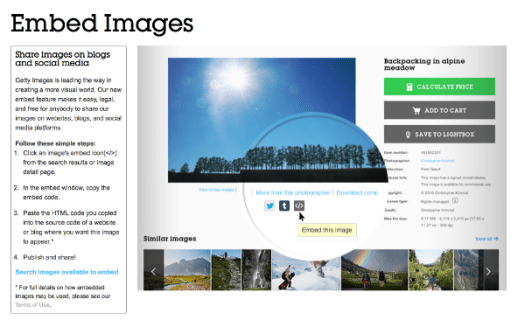
Tipped by Neverending Search, am happy to share the news that Getty Images has offered a kosher way to link to images in its vast archives. This means that non-profit bloggers and others using images for non-commercial use, such as teachers, can link legally rather than the old m.o. (“right clickable? must be okie-dokie!”). It’s akin to YouTube–you just grab the embed code and paste it in.
And just to test it, here is a photo of one of my favorite concert pianists:
Embed from Getty ImagesThe branding is a little more noticeable than YouTube’s (although do we even ever think about YouTube’s brand any more, it’s just the infrastructure of the web?) It includes the photographer’s name, which is long overdue.
Here’s Uchida performing Schumann (via an embedded YouTube clip).
A nice blast from the past courtesy of Robert Paul Wolff’s blog, The Philosopher’s Stone.
Here is, as he puts it, “a bauble from his files” in the form of a hilarious and apt review of Alan Bloom’s “Closing of the American Mind” one of many late 80s petulant squibs from cranky humanities types bemoaning–as I vaguely recall–things like the fact that his undergraduates listened to Tracy Chapman and read Kate Chopin (presumably, instead of reading Chapman’s Homer and listening to Poland’s Chopin).
The beginning of the review from http://robertpaulwolff.blogspot.com/2014/03/yet-another-bauble-from-my-files.html
Aficionados of the modern American novel have learned to look to Philip Roth for complex literary constructions that play wittily with narrative voice and frame. One thinks of such Roth works as My Life as a Man and The Counter Life, Now Saul Bellow has demonstrated that among his other well-recognized literary gifts is an unsuspected bent for daring satire. What Bellow has done, quite simply, is to write an entire coruscating funny novel in the form of a pettish, bookish, grumpy, reactionary complaint against the last two decades. The “author” of this tirade, one of Bellow’s most fully realized literary creations, is a mid-fiftyish professor at the University of Chicago, to whom Bellow gives the evocative name, “Bloom.”…

And of course, Bellow, perhaps inspired by Wolff?, did go on to write a novel about Bloom, who turned out to be–and I say this in the nicest way possible, someday hoping to be be one myself–an effete homosexual.
The whole review is worth a read, and Brian Leiter, whose great blog tipped me off to Wolff’s piece, points out that the Nietzsche scholarship in “The Closing of the American Mind” is inept. So is the argument about foreign language study, not enough of it for Bloom and the cause of many ills–missing the point that this is a long-running battle in higher ed, not something that the 60s foisted on us. Whether to teach languages, which languages to teach, and to what end is a continuing friction point in the curriculum. Nineteenth century academics were as outraged as Bloom that “modern” languages like French and German, and contemporary texts in those languages, were replacing Latin and Greek as core curriculum. That battle has more to do with what languages we offer now that those baleful hippies and feminists of the 60s that so vex B.
But Bloom was an appealing scold for the time: he was an intellectual whom anti-intellectuals could love. And in a somewhat paradoxical way his popularity came from the reassurance that it turned out you didn’t have to feel guilty for blowing off your reading in college (particularly that Nietzsche course!) nor should you regret it if you missed out on college. Not a problem because all those things people were teaching, listening to and doing in college were the WRONG things, and bad, so very, very bad. Whereas, reading his book was doing “the right thing” and best of all was having a high-minded argument about it after a quick skim, and in between filling out your MBA applications.

Al Jazeera America reports that Bayseian statistical approaches might help resolve the disturbing, engrossing mystery of the disappearance of MH370.
“Math equation could help find missing Malaysian plane”
“It’s a very short, simple equation that says you can start out with hypothesis about something — and it doesn’t matter how good the hypothesis is,” said Sharon Bertsch McGrayne, author of “The Theory That Would Not Die: How Bayes’ Rule Cracked the Enigma Code, Hunted Down Russian Submarines, and Emerged Triumphant from Two Centuries of Controversy.”
That’s because the hypothesis can keep changing and improve, and still be used with the theorem, McGrayne told Al Jazeera.
“You are committed to modify that hypothesis every time a new piece of information arises,” McGrayne said…..

Not much posting recently, sorry. Busy trying to learn enough WordPress to do a site for real. (And not as easy as it looks!) Also, sort of bingeing on Borodin after the Met’s Prince Igor b’cast a couple of weeks ago. What an opulent score!
Here’s another bit of Borodin to share: Dmitri Hvorostovsky singing “For the shores of your far homeland” in recital.
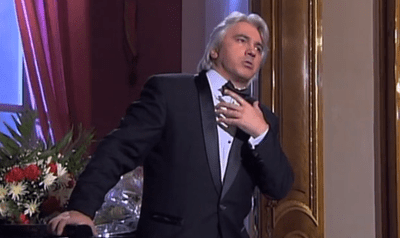
The text is Pushkin,
 For the shores of your far homeland
 You left this strange land;
 Within this unforgettable hour, this hour of sadness,
 I wept lingeringly before you.....
Nothing matches hearing him in person, but this gives a sense of his extraordinary sound and presence.
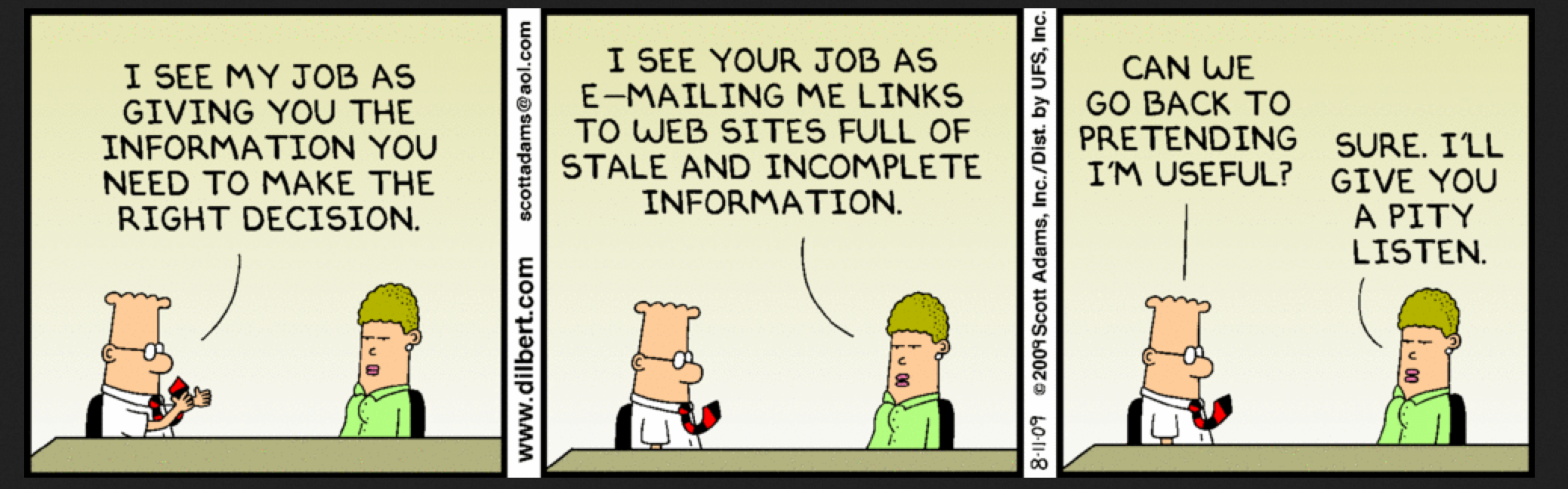
Came across this letter in a recent LRB, which, despite showing a politician I mostly loathe in faintly positive light, does nail one Monty Pythonesque aspect of business life. The “difficult” person may actually be the one who is listening.
From the London Review of Books
Thatcher or Williams
Writing about Shirley Williams and Margaret Thatcher a while back, a permanent secretary at the Ministry of Education who served both described the two as complete opposites of each other (LRB, 19 December 2013). When you entered Williams’s office she would welcome you and be very interested in what you had to say. As you talked she would put her head on one hand, look very hard at you and drink in every word. She could not have been more sympathetic. Thatcher, on the other hand, was never very pleased to see you and when you said, ‘Minister, there’s something I must say,’ she would reply: ‘Do you absolutely have to?’ She would listen with an angry look as you tried to persuade her of the folly of one of her policies and at the end she would shout that it was all rubbish and handbag you.
However, the next day you would notice that Thatcher had accepted some or all of your recommendations and now considered them her own, whereas Williams never altered what she had decided in the first place. She had given you tea and sympathy but had refused to hear a word: Thatcher had given you hell but had allowed your words to percolate through.
R.W. Johnson
Cape Town
Dilbert has also noted a version of this phenomena, as is his wont:
Raised, as I was, by socialist parents during an era where kids sang Woody Guthrie songs during elementary school assembly, I’ve always pretty much been the poster child for a “tax and spend liberal.” I’ve always been okay with taxes, and may be one of the few willing to pay more particular if they serve civic needs and aim towards fairness.
So I am shocked, shocked to find out that cutting taxes–and allowing superstars crafty loopholes (literally)–does fuel economic growth and artistic innovation. To wit: Abba’s essence of the 70’s look, a product of tax policy!
From a Guardian report on their new book:
And the reason for their bold fashion choices lay not just in the pop glamour of the late 70s and early 80s, but also in the Swedish tax code.
According to Abba: The Official Photo Book, published to mark 40 years since they won Eurovision with Waterloo, the band’s style was influenced in part by laws that allowed the cost of outfits to be deducted against tax – so long as the costumes were so outrageous they could not possibly be worn on the street.

Now we know what Grover Norquist will be wearing (and listening to) if he manages to drown the US Government in a bathtub.
The “Periodic Table” meme has gotten a little threadbare, but I did like this recent one (picked up via Laughing Squid) http://laughingsquid.com/the-periodic-table-of-storytelling-uses-classic-tropes-as-elements/

It links through to TVTropes, truly a weapon of mass distraction.
 Of course, all genres and disciplines have their tropes and clichés. When I was a child, I found my mother’s copy of Polti’s The Thirty-Six Dramatic Situations and thought “only 36?” we have more than that in our household. Couldn’t make heads or tales out of it as a 4th grader. Years later it was re-released and I got it out of the library on a lark. It turns out to be learned, and rather interesting, and yes the same plots show up again and again; something he traces to Greek drama often. I don’t remember most of them them, but am sure that the great hits are all there: “a stranger comes to town” “cat and a dog in a bag together” “love under false circumstances” “the night we never met” “wounded healer” all variety of love polygons, overheard confessions, crossed signals, love close up and far away, mistaken identity; and that perennial favorite “embarking on a daring enterprise.”(Just looked that one up: it’s #9).
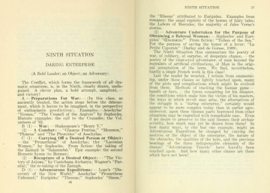
Polit was writing mostly about 19th century and earlier works, where masters and servants were a big trope in storytelling, whether tragic or comic. And what a godsend servants and class relations were to writers (judging by the insane popularity of Downton Abbey to audiences too). They can drive dialogue and action on as they overhear, interfere, serve loyally or betray, and of course tumble in and out of love, bed, windows, jobs, jump seats and much else with cliff-hanging verve. Yet another trope. Gotta wind down. Perhaps a Biblical quote, the original urtext/fake book for so many plots, provides a good way to end:
“What has been will be again,
what has been done will be done again;
there is nothing new under the sun.”
So true, particularly if you are a TV writer!
Years ago (pre-Web) I was a news researcher for the Washington Post, and in a job before that responded to inquires from Congress as a staffer at the Congressional Research Service. Both jobs involved digging things up and fact checking in books (“You Could Look It Up“) and in expensive databases that you dialed up and used arcane search strings to mine. Now resources beyond anything I had access to (and that included the largest library in the world when I was at LoC) are are few taps of a cell phone away. But in that constant blizzard of content, what’s reliable? What counts as news? What factual standards should reporters aim for, particularly in a breaking news situation?
A group of journalists has just put out a web resource to address this issue, The Verification Handbook. I’ve only just begun to browse it, but the content looks strong and the need is real.

Thanks to Joyce Venza’s school library blog, Never Ending Search for the pointer.
 A Few Reasonable Words