Catalogs and the March of Technology

Screen Shot 2016-01-07 at 2.51.27 PMLikely only of interest to library nerds or technology history types, but here’s an interesting piece in American Libraries about how the technology behind library catalogs & how it drove standards (and came to be limited by them).  I lived through a lot of these shifts, including the end of the physical catalog at the Library of Congress. Henriette Avram (mother of the computerized format of bibliographic info)  was still working there at the time and treated with the same sort of awed respect that TBL got in early web days.
From the piece:

“[Melvil] Dewey did not anticipate the availability of the LC printed card service when he proposed the standardization of the library catalog card, yet it was precisely that standardization that made it possible for libraries across America to add LC printed cards to their catalogs. Likewise, Avram did not anticipate the creation of the computerized online catalog during her early work on the MARC format, but it was the existence of years of library cataloging in a machine-readable form that made the Online Public Access Catalog (OPAC) a possibility.”

MARC automated a process, but it was founded on the idea of printing, wrangling and using a physical card, and this has led to any number of misfires…

We, and by “we” I mean all of us in library technology during this time, created those first systems using the data we had, not the data we would have liked to have had. The MARC records that we worked with were in essence the by-product of card production. And now, some 35 years later, we are still using much the same data even though information technology has changed greatly during that time, potentially affording us many opportunities for innovation. Quite possibly the greatest mistake made in the last two to three decades was failing to create a new data standard that would be more suited to modern technology and less an imitation of the library card in machine-readable form. The MARC record, designed as a format to carry bibliographic data to the printer, was hardly suited to database storage and manipulation. That doesn’t mean that databases couldn’t be created, and to be sure all online catalogs have made use of database technology of some type to provide search and display capabilities, but it is far from ideal from an information technology standpoint.

Not to mention a pain for the user. What’s puzzling to me is why we are still stuck with a system that technology has blown past. Karen Coyle wonders too:

The entire basis of the discovery mechanism addressed by the cataloging rules has been rendered moot in the design of online catalogs, and the basic functioning of the online catalog does not implement the intended model of the card catalog. Parallel to the oft-voiced complaint that systems developers simply did not understand the intention of the catalog, the misunderstanding actually goes both ways: Significant differences in retrieval methods, that is, sequential discovery on headings versus set retrieval on keywords, did not lead to any adaptation of cataloging output to facilitate the goals of the catalog in the new computerized environment. Library systems remain at this impasse, some 35 years into the history of the online catalog. The reasons for this are complex and have both social and economic components.

I wonder if they still teach MARC coding in library school? As Wikipedia points out, it’s clearly technically obsolete, but 30 million plus libraries keep track of their collections that way, as the famous saying goes, ” what is to be done?”

Platforms, platforms all around us…

Journalism (and much else for that matter) is mostly a question of platform now, you just may not have noticed it. By platform–a word, that like ‘risk’ means so many things it almost has withered to a semantic husk of itself–I’m thinking about the technological variety, generally a software system that facilitates, automates and otherwise organizes some human activity. Once upon a time it was the human bit that constituted the ends, with the platform as the means, now ends and means are mixed up, perhaps nowhere more than in journalism.

At least that’s the conclusion I draw from three bits of today’s reading, of passing interest to anybody who is watching the intersection between media and technology with fascination or dread.

First (and most interesting), New York Magazine’s Max Read asks “Can Medium Be Both a Tech Company and a Media Company?”
This is pegged to a story I didn’t know about (and am going to catch up on) in which a tech publication covering its own domain trips up on just what enterprise they are engaged in.

http://nymag.com/following/2015/11/medium-a-tech-company-or-a-media-company.html

chautauqua
The platform of yesteryear, a speaker holding forth at Chautauqua.

“Medium wants to straddle the divide between media and tech — to be both a platform (tech) and a publisher (media). This can place it in an awkward position: Institutionally, is it on the closed-ranks side of the “new class of industrialists” of the tech industry, to whom the question of Airbnb’s liability in the deaths of its guests is already settled? Or is it an editorially independent media company with a mandate to ask uncomfortable questions? So far, its defense against the differing interests of its two halves is transparency. This morning, Matter’s editor Mark Lotto weighed in on the entire set of comments: “I can’t think of another publication or platform where an editor and his boss would have this exchange in front of everybody.”


–As Read points out, it’s possible to find such transparency pretty easily (including going back to the pre-web days). Further, is ‘transparency’–another word of the moment, along with its sibling ‘disclosure’–enough? Is having a lively debate about the meta-ethics of a story the same as facing up to a potential conflict of interest? Platforms it seems to me are awfully conducive to this recursive hall of mirrors feel–they yield data about data about data (think the cascade of comments that never ends, even after it’s become very, very meta.) Not sure what it this is–and even if it’s bad per se–just doesn’t feel like journalism.

Exhibit 2 is a piece from BBC Social Media Editor Mark on the BBC Academy Blog, “#Paris: UGC expertise can no longer be a niche newsroom skill” that raises lots of interesting points. Underscores the reality that social media/user generated content sources are now not just part of the reporter’s job but often most of it, with challenges about verification, and just stomaching what you see in your feeds. (We’ve come a long way from checking the AP and UPI wires instead of writing your story.)

http://www.bbc.co.uk/blogs/collegeofjournalism/entries/fbb87059-ab13-4b79-b5ad-5a47a417fb8a

“But how much time and resource can we afford to spend on uncovering the truth? Are we as invested in the search and verification tools as we are in training our staff across newsrooms to appreciate and understand the risks of UGC fakery? And finally, perhaps most importantly, do we have enough safeguards in place to help those who work with UGC on a regular basis cope with the distressing and disturbing material they see?”

Finally, The NYTimes profiles its most prolific commenters.

“These frequent commenters have also become a community, one that has its own luminaries.

“But who are they? We decided to take a look at some of the most popular commenters on The Times site, which receives around 9,000 online comments a day.”

http://www.nytimes.com/interactive/2015/11/23/nytnow/23commenters.html?_r=0

Short profiles, with photos, that predictably (see recursion above) garnered more than 700 comments.

Mobile everywhere: Local News Outfit Replaces Camera Crews with iPhones and Selfie Sticks

I knew this was on some news directors’ wish list, but I was surprised to see that it had already happened. PetaPixel has a report.

lens
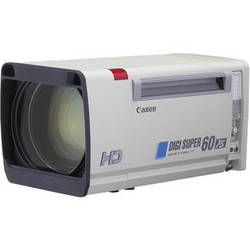
Granted it’s not a news lens, but this little number, a Canon 60x field lens, will set you back a cool $90K. You can buy a lot of iPhones and selfie sticks with that kind of dough.

iPhones may not be very good at photographing lunar eclipses, but apparently they’re just fine for television news broadcasts. A local TV news station in Switzerland has ditched standard TV cameras to go 100% iPhone.

Swiss newspaper Le Temps reports that the TV station Léman Bleu made the major switch this past summer when it outfitted each reporter on the field with an iPhone 6 kit for shooting pre-recorded stories and for shooting live shots.

http://petapixel.com/2015/09/29/swiss-tv-station-replaces-cameras-with-iphones-and-selfie-sticks/

Media Futures and Pasts

Tipped by the American Press Institute‘s lively newsletter, I came across a fascinating portfolio site done by a class at NYU that is researching futures for the NYTimes. Engaging to nose around in (and fronted by an excellent video). Some things that will shock j-school old-timers (“division between advertising and editorial? why still a thing?”), but overall it’s clearly a labor of love, and a well-done one at that.

Future New York Times


Reasonable Words: John Lanchester “Here Come the Robots”

Great piece by John Lanchester in the LRB about the coming era of even greater automation, and its economic implications. Not rosy.

“That is a worrying trend. Imagine an economy in which the 0.1 per cent own the machines, the rest of the 1 per cent manage their operation, and the 99 per cent either do the remaining scraps of unautomatable work, or are unemployed. That is the world implied by developments in productivity and automation. It is Pikettyworld, in which capital is increasingly triumphant over labour. We get a glimpse of it in those quarterly numbers from Apple…”

The whole piece is well worth reading (as are most things by JL, including his great book on the financial meltdown, I.O.U.)

Shortly after reading this, I encountered the not surprising (but still mind-blowing) news that SanDisk has announced a microSD card that has a 200GB capacity.  (Those are the storage cards that go into phones and other devices.)  That’s nearly as big as the computer I’m writing this on (a relatively beefy MacBook Pro), and the equivalent of 25 DVDs, thousands of music files, hundreds of thousands of books, and god knows how many pictures of my cat.

As Lanchester points out, neither increasing storage nor upping processing power has proven to be so difficult. (The limiting factor, as a friend pointed out? plain old batteries…moving the atoms still takes a lot of work.)

sol_lewitt
A work by artist Sol LeWitt (who provided instructions for the works, which were often executed by others, and dazzlingly so.) This is a photo from Flickr by Marc Feldmann.


Chef Watson

After you win at Jeopardy!, I guess you’re mad hungry. Spotted in the Guardian.

Touting such eyebrow-raising combinations as an Indian turmeric paella, a Turkish-Korean anchovy Caesar salad and a Creole shrimp-lamb dumpling, a new contender for hottest cookery writer of 2015 is preparing to elbow aside the likes of Jamie Oliver, Mary Berry and Nigella Lawson: IBM’s supercomputer Watson.

Four years after beating two human champions to win the US game show Jeopardy!, IBM’s cognitive computing system is set to release its first cookbook – with the help of a few human specialists.

Full (and nicely done) story at : http://www.theguardian.com/books/2015/jan/27/computer-generated-cookbook-chef-watson-ibm

book64_cover
Mary Frances doesn’t need Watson it seems, but I wouldn’t turn my back on that spatula thingie if I were her. (A children’s cookbook from MSU’s historical cookbook archive.)

It turns out good recipes are yet another problem that give up the game to “big data”–although, as of yet, it doesn’t seem like Watson can actually take a bite from the simmering sauce pan and “adjust seasoning to taste;”  surely some lab is working on that interface.

One thing I’ve wondered about is a “reverse engineering” recipe search engine, where you can put in good things you’ve had at restaurants and you get the info (the late lamented Gourmet Magazine used to do this  years ago). There also are some search engines that let you put what you have in your larder in and display what you can cook.  Just tried a search and learned I could make something called Eggy Teddy Belly Toast. A mildly disturbing prospect.

Unreasonable Gizmos: Robot Kitchen?

With so much grim news, for relief I caught up with the festival of excess that is CES, the Consumer Electronics Show. Among many things which could charitably called solutions in search of a problem, I encountered “Sereneti,”  which is a robotic gizmo that cooks dinner for you. Here is their amusing promo video.

Sereneti Kitchen Showcase from Sereneti Kitchen on Vimeo.

Now I realize that I am not the target demographic for this–I’m well past my instant Ramen noodle phase, and in fact have become a decent home cook. Accordingly, I enjoy the tasks that Sereneti  aims to eliminate–including shopping for food, finding recipes, determining just how to prepare it. It’s a pleasantly analogue task for somebody who makes his living looking at digital rectangles all day.

All that said, I avidly await the Food Network Robot Wars  “risotto vs. ganache” episode with tricked out Serenetis armed with spoons and spatula.

Part of the documentation I use in the kitchen!  (Courtesy of RadioFan from Wikimedia Commons https://commons.wikimedia.org/wiki/File:Childs_Joy_of_Cooking.JPG#mediaviewer/File:Childs_Joy_of_Cooking.JPG)
Part of the documentation I use in the kitchen!
(Courtesy of RadioFan from Wikimedia Commons)


Publishing Words: Platforms and Publications Round-Up

This will be old news to many, but in the light of The New Republic’s meltdown, I have been nosing around new digital approaches to what is (loosely speaking) journalism, or maybe publishing, or at least, typing.  Herewith, a brief list.

Cir.ca

Cir.ca is a news service (currently only for mobile, but coming to the browser). Nicely presented stories, gives you a simple way to follow any particular beat you are interested in, as well as sharing of course. Not sure if this will become part of my regular news diet, but in the emerging world of “journalism apps” seems like one that solves a problem.

Medium

Medium is platform rather than a publication as nearly as I can tell, and certainly handsome. It seems to be open to any kind of long form material, by professionals or duffers. Like Cir.ca, has a very striking design (although some will not be a fan of the wide horizontal one-page scroll approach–something that is all over current web design). Medium comes from the people who created Twitter, and presumably they aimed for the same kind of pick up. Upstart Biz Journal’s Alex Dalenberg was asking good questions a year ago about it–how their business model will work? and just what kind of tool it is? He also mentions something that a writer friend also pointed out, the license appears to let Medium sell your content, presumably in search of “sustainability”. (Like “platform” and “content,” another drab word.)

As far as I know, those questions are still out, and he also links to some weirdly fascinating info about Medium’s business structure, called Holacracy. It boasts “no managers” and seems to be a distributed  system. (Classic Google goose chase, I just learned about Holacracy researching Medium, and now I discover that it’s already contested: fad versus brilliant management approach? Zappo’s is finding out.)

Ghost

Finally, there is Ghost, which is a blogging platform from some of the same people who worked on WordPress. It’s intuitively appealing and also beautifully designed–pared down for clean presentation and ease of posting. WordPress, of course, has a lot to offer, but its development as a powerful publishing platform means that for me, at least, its sort of blown past plain old blogging. I’m tempted to move everything to Ghost, but, of course, it’s a little like moving house if you have hundreds of posts to fool with, and since part of my living is made with WordPress, is nice to stay close to the platform, even if I use 1% of its power. Ghost, like WordPress.com, has a more writer-friendly license than Medium (although, like anything online, they reserve the right to change it any time.) But you own your stuff, and their only right is to post snippets for promotional purposes.

I don't think they used Twitter!
I don’t think they used Ghost, Medium, WordPress or even  Twitter!

Reasonable Words: The Linotype

Just finished Keith Houston’s informative and droll Shady Characters: The Secret Life of Punctuation, Symbols & Other Typographical Marks, a book teeming with a lot of news about such creatures as the pilcrow, interrobang, octothorpe, and the surprisingly complicated history of the hyphen.

This last is of course related to the rules for word division, which once upon a time, long before computer word processing programs relieved us from this task, writers (even mere typers, like myself) were supposed to master. I took typing in high school and I doubt ever correctly applied the 10 rules for word hyphenation–not sure I even learned them.

While illuminating the hyphen, Houston takes us on a side trip to the Linotype and Monotype machines, nearly mythic to me–as both my parents started in journalism in the era of hot type. These wildly complicated contraptions automated the setting of type, but they still left hyphenation up to the operators. This was least of their worries, as Houston relates:

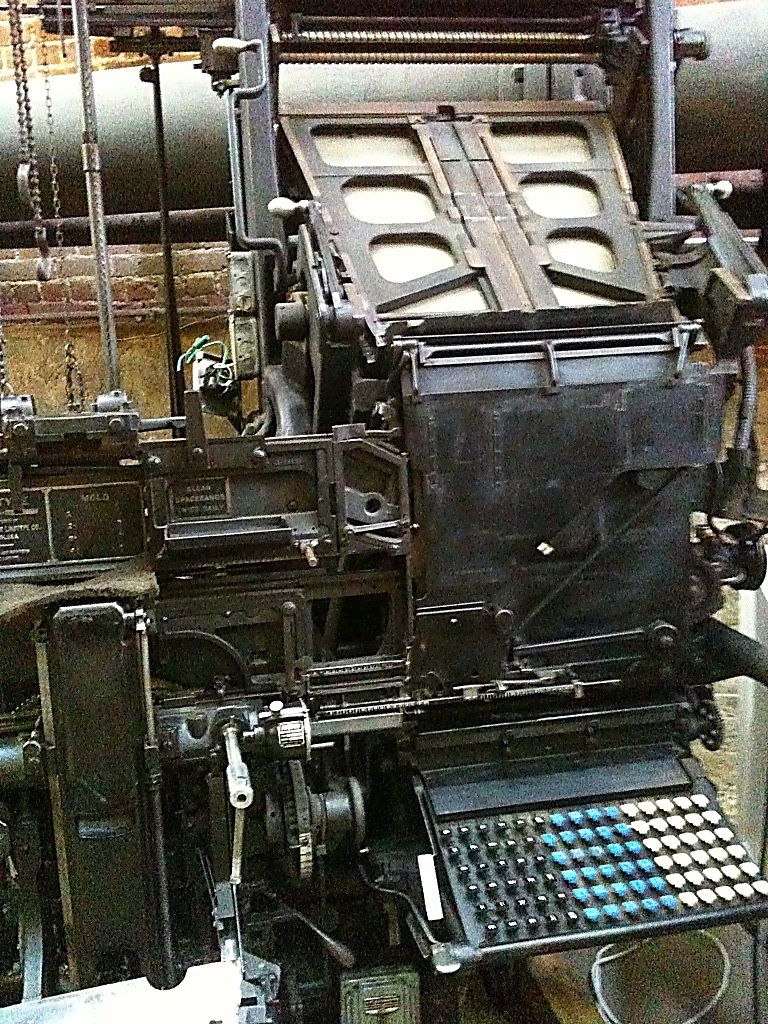
A Linotype machine at the Charles River Museum of Industry in Waltham, MA.

“For all the speed gained over hand composition, there were dangers inherent in the machines that required their users to work beside bubbling crucibles of molten lead. The joy of mechanically setting line after line o’ type came with the added frisson that a “squirt” might occur at any time: any detritus caught between two adjacent Linotype matrices would allow molten type metal to jet through the gap. And aside from the immediate dangers of seared flesh, operators of both Linotype and Monotypes ran the more insidious risk of poisoning from the (highly flammable) benzene used to clean matrices, the natural gas that some machines burned to melt the type metal, and the fumes emitted by the molten type metal itself.”


Makes my regular carping about the annoyances of WordPress seem a little silly! Updating versions has not, as yet, required me to dodge squirts of molten lead, but God knows what they are thinking up for the next release.

BTW, Houston has a blog on the same topic–also charming, but somehow this topic seems to really twinkle in book form.

One of the odder Central Casting Gigs: MOOC strategy, silly and serious

Pretending to be students of Clay Christensen in his MOOC audience!

From yesterday’s NYTimes on Harvard Biz School’s fraught embrace of MOOCs:

Professor Christensen did something “truly disruptive” in 2011, when he found himself in a room with a panoramic view of Boston Harbor. About to begin his lecture, he noticed something about the students before him. They were beautiful, he later recalled. Really beautiful.

“Oh, we’re not students,” one of them explained. “We’re models.”

Harvard Class Day, 1906. The visitors are strolling down North Harvard Street to enter the stadium. The B-School didn't even exist until 1908.
Harvard Class Day, 1906. The visitors are strolling down North Harvard Street to enter the stadium. The B-School didn’t even exist until 1908.

They were there to look as if they were learning: to appear slightly puzzled when Professor Christensen introduced a complex concept, to nod when he clarified it, or to look fascinated if he grew a tad boring. The cameras in the classroom — actually, a rented space downtown — would capture it all for the real audience: roughly 130,000 business students at the University of Phoenix, which hired Professor Christensen to deliver lectures online.

A minor bit in a fascinating piece: HBS is living out in real time the question of just what kind of innovation MOOCs embody? A Clay Christensen style disruption (something I heard him foretell in a commencement speech in 1999 at Marlboro College for their online MAT), or something that can be folded into a more incremental strategy (a la Michael Porter’s view of sticking to your core differentiation)?

A later bit in the piece describes what happens when your core differentiation gets dissolved: the “unbundling” potential of online ed (perhaps this era will be known as the “great unbundling of media.” Format, content, and platform are now all just a digital stew.)

“François Ortalo-Magné, dean of the University of Wisconsin’s business school, says fissures have already appeared. Recently, a rival school offered one of his faculty members not just a job, but also shares in an online learning start-up created especially for him. “We’re talking about millions of dollars,” Mr. Ortalo-Magné said. “My best teachers are going to find platforms so they can teach to the world for free. The market is finding a way to unbundle us. My job is to hold this platform together.”

Christensen’s bet? He, and many others like him, won’t be able to do it: Christensen’s on the record as saying, “half of the United States’ universities could face bankruptcy within 15 years.”


A scene that will seem antique to kids born today?