Reviewing Your Own Books Anonymously

Faking your own reviews started long before Amazon, but Walter Scott, at least, was pretty clear-eyed about his liabilities as a writer. (Scott fascinates me for, among other things, being a writer whom everybody once believed was one for the ages–I bet there is a Waverly Street in your town–who is now almost forgotten).

Anyway, fun piece by Stuart Kelly in the Guardian on being a “sock puppet” pre-Web. Here’s Scott on Scott:

Sir Walter Scott, who reviewed his own books none too favorably.

“Probability and perspicuity of narrative are sacrificed with the utmost indifference to the desire of producing effect”, he writes, adding “the author errs chiefly from carelessness” and suffers from “flimsiness and incoherent texture”. Warming to his theme he continues “in addition to the loose and incoherent style of the narration another leading fault in these novels is the total want of interest which the reader attaches to the character of the hero”. They are all a “very amiable and very insipid sort of young men”. One wonders how many people got the joke, especially when Scott writes: “Few can wish his success more sincerely than we do, and yet without more attention on his part, we have great doubts of its continuance.”

Kelly is spot on about the difference between the current lot and their forebears like Scott, Alexander Pope, Anthony Burgess, or Joe Orton who famously wrote letters as one “Edna Welthorpe,” completely outraged by Orton’s (once) transgressive plays Today’s sock-puppet-gensia is often content to heap fulsome praise on their own work, with nary a blush.

The coming of color

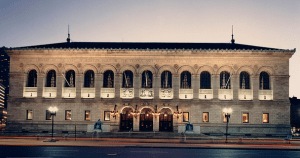
Boston Public Library has wonderful sets of photos on Flickr, and through it I found the tag called “Vintage Illustration” that included this card from NBC about color TV. There’s a nice description of part of the story of its advent…which by 2012 standards was glacial. The Smith household didn’t get a color TV set until 1967. It was still a big deal 14 years after it had launched: we could see the wild Pop-Art colors of Laugh In.

An interesting comment from the Flickr site:

To the ordinary viewer, [color] was just another innovation. But underneath there was an engineering miracle that brought about the ability to transmit and receive a color TV image. It really was an extremely complicated Rube Goldberg scheme that made it all possible.

So how did it work? Any help out there? I sort of understand color film photography, is there an analogy?

Reasonable Words: Dick Cavett on Stan Laurel

A nice piece from Dick Cavett’s NYTimes blog remembering an interview he did with Stan Laurel. I didn’t realize he traveled to the U.S. on the same boat as Charlie Chaplin did.

There he stood. No derby. No silly grin. No shrill, squeaky crying to “I didn’t mean it, Ollie…” Just a nice-looking gent in a white shirt and tie and a warm, welcoming manner. The face was fuller but the eyes — and the ears — were instantly familiar.

Preserving Modernist B- Buildings

Now am back in DC after our Maine vacation, and regularly tooling around downtown (vastly spiffier than my days living here in the 1980s and 90s). Until you come upon the main library, the Mies van der Rohe-designed Martin Luther King Library, which opened in 1972. It is as resolutely unspiffy as ever.

Washington DC’s MLK Library, the only van der Rohe building in the city.

I love libraries, and saying van der Rohe is my favorite architect is an understatement. (I belong to that club of believers who can stare up at the Seagram building and say, “Mies, we are unworthy of your genius” out loud.

And yet, this library, which I’ve spent many hours in, has always seemed like a dud to me, and perhaps was born that way. It has the Miesian trademark characteristics (strong geometry, with the I-beams emphasizing the verticals), the open span approach to the interiors, light from side to side, a grand central space. But it doesn’t click. Maybe the scale is off? Perhaps his ideas just don’t suit the library program? Maybe the building did work in ’72, but has become so run down that its quality has been obscured?

Or could I just be out of sync with it? This is an argument often made about 60s and 70s architecture…in 50 years we’ll be able to “see it again” (well, I probably won’t, but some “we” will). And everyone will be glad that it is still around; a lot of the 19th century buildings aren’t (or are just facades) and much of DC architecture is monumentally fake 20th century neo-classic stuff (no doubt itself a preservation conundrum in time). This building is an honest expression of its time.

Right now, though, the MLK Library is certainly a challenge, like its New England sibling, Philip Johnson’s unlovely addition to the Boston Public Library, it’s expensive to maintain, too historic to tear down, too hard to adapt to another use.

The companion building to the Johnson, the ornate and glorious McKim building, has had an overhaul that everybody’s pretty jazzed by: it reunited the architectural ideas of the library with its present-day users beautifully. At the MLK Library they were probably never together in the first place, and what exactly do you preserve?

Reasonable Words: Enlightened Anger

The Times Literary Supplement has an engrossing (and bracing) review of a new German book, Sapere aude! (from Horace, “Dare to Know!” or “Dare to be Wise!”) The reviewer, T.J. Reed, translates it as “Think for Yourself.” The subtitle is “Why we need a new enlightenment” and it’s by Heiner Geissler, a retired 82-year-old German politician, seemingly past labels like conservative or liberal it seems, judging by his dismissal of the pieties of capitalism or communism. His lens is Kant (on whom Reed is an expert, as a retired professor of German at Oxford.)

A few compelling excerpts:

“Nobody, Kant rather surprisingly held, is ever completely wrong, which means not that their view has to be accepted, but that it needs to be taken issue with. That embraces even the most conservative interests. In this sense we really are “all in it together”.

Better late than never: if only there had been more questioning of the hard-nosed economics the West visited on the ex-Communist bloc after 1989, several societies and their economies would be in better shape, some diplomatic relations would be easier, and there might have been fewer of the rightwing extremists in the East who have seen the anti-capitalist propaganda of their old communist governments borne out by events. Even now, if there were more effective questioning of bone-headed orthodoxy, further disasters might be averted or mitigated.

It’s refreshing to find a conservative exminister rejecting Friedrich Hayek and Milton Friedman, invoking Marx and Engels, and declaring capitalism no better than communism: “the one liquidated capital and the capitalists, the other liquidates workers and their jobs”

Not that there ever was an enlightened age, only at best, as Kant argued in his great defining essay of 1784, an age engaged in the process of enlightenment. He would hardly be surprised if he were to come back today. Enlightenment is only ever unfinished business, or business that has to be begun all over again.

Later, Reed quotes and a sardonic line of Brecht’s, a voice that would seem needful just now:

“Wouldn’t it be easier if the government dissolved the people and elected another one?”

Perhaps it’s already happened?

Unfortunately, the full review is behind the TLS paywall, but if it comes out in English, I’ll link to it. The original essay by Kant is on a server at Fordham, and is actually pretty readable, for the work of a major philosopher!

Silly: Computer Science Board Games

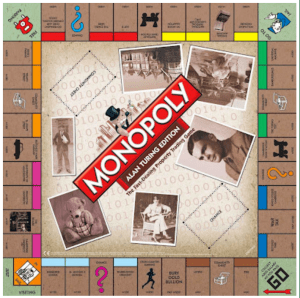
I like Alan Turing, I like Monopoly, but this I find ridiculous, and perhaps in faintly bad taste.

http://joemygod.blogspot.com/2012/09/new-edition-of-monopoly-honors-gay.html

His story was tragic, which perhaps comes out in the chance cards?

What’s next, Bertrand Russell Parcheesi of Types? Wittgenstein’s Remarks-only Version of Scrabble? Godel’s “You Can Pick Them Up But You Can’t Find All of Them” Sticks? Schrödinger’s “Is there a Cat Named Jack in that Box? John Rawls “Game of Life” you play backwards so you can find out “Your Original Position.”

Last Night of the Proms

Managed to listen to more of the Proms this year than ever before (freelancing certainly helps) and encourage any music lovers to do the same.

Tonight’s performance (7:30 London time) is the traditional last night fest (prom #76!), with a great line up: Nicola Benedetti, violinist, tenor Joseph Calleja singing (all) of Nessun Dorma, among other things, and the BBC Symphony. There is new stuff, old stuff, Land of Hope of Glory, and of course, “Jerusalem,” which, trust me, you’ll know, even if you don’t know.

Nice way to ring out the summer and spend a Friday afternoon. If you can’t listen live (maybe you aren’t a freelancer?) it will be up for another week, along with 10 other concerts or so. If you are in a place with better deals with the BBC for video (yes, I’m talking about you and your gang in New Dehli, Arnab) you even get to see it. For the rest of us, BBC has put up excerpts, including an invigorating, but abbreviated, bit of Copland’s Fanfare for the Common Man (with funny comments attributing the original to Emerson Lake and Palmer). Also good: John Adams, Anna Meredith’s “Hands Free,” and a searing bit of “Belshazzar’s Feast.” You can just let it run…nice tasting menu of the best classical music festival in the world.

Clinton: The Substance of Ideas

An interesting take on Clinton v. Romney as policy wonks from Ed Kilgore’s blog “Political Animal” at Washington Monthly, echoing a view from Daniel Larison at The American Conservative (don’t be put off by the name, it’s an interesting publication with thoughtful responses. Noah Millman writes for them, and he’s not an orthodox anything).

Larison’s analysis strengthens my growing belief that in choosing Ryan as a running-mate, Romney had zero intention of making a robust defense of the Ryan Budget or pursuing anything else the conservative movement was panting for him to say or do (other than the racially-tinged demagoguery about welfare). It was precisely the opposite: he figured he could shut up the noisy ideologues by offering them the symbolic prize of Ryan and then running his campaign in exactly the non-substantive way he always intended. This end-the-primaries strategy, as I’ve called it earlier, depended, of course, on swing-voter ignorance about Ryan and indeed the entire GOP agenda…

Clinton has sort of blown that all up.

An obvious point: Clinton isn’t a sitting president or a candidate; makes the task a little, um, easier. Still if this is an election about two truly different ideologies, as Michael Beschloss vapored on about on PBS’s coverage last night, then perhaps their proponents could express them, and their policy implications, a little more directly. Although that’s seldom been the way of things.

John Cage at 100

Composer John Cage’s 100th anniversary is today (why no Google Doodle?). A gentle soul who created some of the most fearsomely controversial music of the 20th century, and, for me at least, the most memorable and generous.

Am reading Kyle Gann‘s No Such Thing as Silence: John Cage’s 4′ 33″, enjoyable in the way a really good grad school seminar is enjoyable. It circles around Cage’s most famous work, in which the performer does not make a sound per se, for the indicated time. Unlike most compositions, the composer, the performer, and the listener are equal in this experience, and the musical process is happening in real time.

It won accolades and enemies from the very start (David Tudor performed it at Carl Fischer Concert Hall in NYC on April 14, 1954.) Whether it touches your Zen place, your humor place, your “happenings” place, or folds up a lot of mid-20th century art into a deceptively simple piece of origami, it is something wondrous to experience. (It’s also, in a jokey way that Cage probably would have appreciated, a ring tone that is available for dead cell phones, and was once iTunes download of the day.)

Gann points out that 4’33″‘s legacy is rich. Musical minimalism is one part of the offspring, (he’s got fascinating bits on Steve Reich’s response), and a whole landscape of sound art, even multimedia art in general, was fed by this river. (I hadn’t known that Naim Jun Paik started out as a musician before he turned to video art. Would Cage even think there was a distinction?) I just experienced the sound piece, “The Murder of Crows” in New York, and its spooky, immersive effect owes something to Cage as well.

Deceptive Cadence, the NPR classical music blog has a post in honor of the anniversary, http://www.npr.org/blogs/deceptivecadence/2012/09/05/160339846/silence-and-sound-five-ways-of-understanding-john-cage 

Of the grainy YouTube videos they curated, Cage’s performance of “Indeterminacy” resonated most with me. It’s worth the nine minutes. Cage would probably frown on it, but I’d love to “direct” an evening of Cage stories some day.

More Cage, from a letter responding to a critic of 4′ 33″. (Imagine it being spoken in that musical voice.)

Original ms. of 4’33” at the New York Public Library

“…[N]othing is single or unidimensional. This is an action among the ten thousand: it moves in all directions and will be received in unpredictable ways. These will vary from shock and bewilderment [referring to criticism of 4’33” in the letter] to quietness of mind and enlightenment.”

Italy from Space

Courtesy of Bad Astronomy, a wonderous photo of Italy from the International Space Station:

Lo Stivale d’Italia. (The Boot!)