Poetic Words: Library Verse

Given my love of libraries and poetry (and the fact that there was at least one great poet, Philip Larkin who was also a librarian), odd that I haven’t posted anything on the intersection of these worlds.  But here’s a nice one by American poet Rita Dove.

Maple Branch Library, 1967

For a fifteen-year-old there was plenty
to do: Browse the magazines,
slip into the Adult Section to see
what vast tristesse was born of rush-hour traffic,
décolletés, and the plague of too much money.
There was so much to discover—how to
lay out a road, the language of flowers,
and the place of women in the tribe of Moost.
There were equations elegant as a French twist,
fractal geometry’s unwinding maple leaf;

I could follow, step-by-step, the slow disclosure
of a pineapple Jell-O mold—or take
the path of Harold’s purple crayon through
the bedroom window and onto a lavender
spill of stars. Oh, I could walk any aisle
and smell wisdom, put a hand out to touch
the rough curve of bound leather,
the harsh parchment of dreams.

As for the improbable librarian
with her salt and paprika upsweep,
her British accent and sweater clip
(mom of a kid I knew from school)—
I’d go up to her desk and ask for help
on bareback rodeo or binary codes,
phonics, Gestalt theory,
lead poisoning in the Late Roman Empire,
the play of light in Dutch Renaissance painting;
I would claim to be researching
pre-Columbian pottery or Chinese foot-binding,

but all I wanted to know was:
Tell me what you’ve read that keeps
that half smile afloat
above the collar of your impeccable blouse.

So I read Gone with the Wind because
it was big, and haiku because they were small.
I studied history for its rhapsody of dates,
lingered over Cubist art for the way
it showed all sides of a guitar at once.
All the time in the world was there, and sometimes
all the world on a single page.
As much as I could hold
on my plastic card’s imprint I took,

greedily: six books, six volumes of bliss,
the stuff we humans are made of:
words and sighs and silence,
ink and whips, Brahma and cosine,
corsets and poetry and blood sugar levels—
I carried it home, past five blocks of aluminum siding
and the old garage where, on its boarded-up doors,
someone had scrawled:

I can eat an elephant
if I take small bites.

Yes, I said, to no one in particular: That’s
what I’m gonna do!

———————————————————

Turns out Larkin did pen one:

 Library Ode

New eyes each year
Find old books here,
And new books, too,
Old eyes renew;
So youth and age
Like ink and page
In this house join,
Minting new coin.
 
————————————
 
Although, as a heavy user, I have multiple suppliers, for many years my main library was the Somerville Central Library, quirky but with its own kind of hipster grandeur. Somerville Library

Remembering Seamus Heaney

Reading the many obits and tributes for Seamus Heaney has been occupying my time. The NYTimes obit is great; herewith, a few choice bits:

The eldest of nine children of a cattle dealer, Seamus Justin Heaney was born on April 13, 1939, at Mossbawn, his family’s farm in County Derry, west of Belfast. The farm’s name would appear throughout his work. Mr. Heaney’s intoxication with language, he said in a 1974 lecture, “Feeling into Words,” “began very early when my mother used to recite lists of affixes and suffixes, and Latin roots, with their English meanings, rhymes that formed part of her schooling in the early part of the century.”

Later in the lecture, he ventured an alternative scenario: “Maybe it was stirred by the beautiful sprung rhythms of the old BBC weather forecast: Dogger, Rockall, Malin, Shetland, Faroes, Finisterre; or with the gorgeous and inane phraseology of the catechism; or with the litany of the Blessed Virgin that was part of the enforced poetry in our household: Tower of Gold, Ark of the Covenant, Gate of Heaven, Morning Star, Health of the Sick, Refuge of Sinners, Comforter of the Afflicted.”

More on Heaney from around the web:

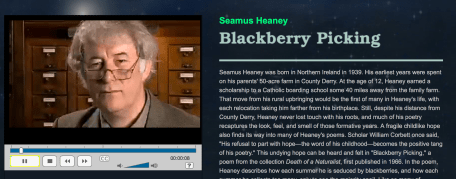
From WGBH/PBS’s Poetry Everywhere, a Poetry Break with the poet reading “Blackberry Picking.”
Screen Shot 2013-09-02 at 9.43.07 AM

And a long, rewarding ramble of a piece by Andrew O’Hagan from the LRB about a trip he, Heaney, and Karl Miller, the founding editor of the LRB and long-time friend and publisher of Heaney, took around 2000 I think. They set out to drive around the Celtic Lands, drinking attending to the “ground of literature” and the ground itself. One of the best things I’ve ever read in the paper: given the LRB’s level of writing, that’s saying something.

One of many fine bits:

We passed by Offaly and Seamus asked me if I knew what a Biffo was.
‘No.’
‘It means a Big Ignorant Fucker from Offaly.’
I was looking out at the landscape as we drove beyond the Irish midlands. If you come from a Protestant country, where the hedges are trimmed and evened-up to within an inch of their lives, the mad tangle of Irish hedges is striking. I imagine Scotland’s hedges speak of order and repression, of a land heavily demarcated, parsed and owned, but in Ireland a certain bucolic anarchy obtains. Ireland presents itself as an entity that might again revolt against the people. The landscape appears to have a mind, a vengeful one, an Old Testament one, if you think of the potato famine.
Karl and Seamus were discussing the notion of writers being either ‘branch men’ or ‘head office’. This came from a story Seamus was telling about T.S. Eliot. Lloyds Bank decided to throw a party a few years ago for Mrs Eliot, and Seamus went as the representative poet. Some knight or other was giving a speech and he said that Eliot wasn’t the only poet ever to work for Lloyds. Cardiff’s Vernon Watkins gave a lot of time to his writing but refused to take days off, preferring to come to his desk. Then again, the gentleman said, ‘Watkins was a branch man and Eliot was very much head office.’
We stopped for lunch at a favourite place of Seamus’s called Moran’s. They gave us a table to ourselves in the snug. There was a nice bottle of Alsace and we all three had chowder. Seamus once wrote a poem after coming here, called ‘Oysters’:
We had driven to that coast
Through flowers and limestone
And there we were, toasting friendship,
Laying down a perfect memory
In the cool of thatch and crockery.

Worth reading every bit, and not behind the paywall.

And to close, a poem of his called, appropriately, Postscript. Screen Shot 2013-09-02 at 9.49.21 AM

Postscript

And some time make the time to drive out west
Into County Clare, along the Flaggy Shore,
In September or October, when the wind
And the light are working off each other
So that the ocean on one side is wild
With foam and glitter, and inland among stones
The surface of a slate-grey lake is lit
By the earthed lightning of a flock of swans,
Their feathers roughed and ruffling, white on white,
Their fully grown headstrong-looking heads
Tucked or cresting or busy underwater.
Useless to think you’ll park and capture it
More thoroughly. You are neither here nor there,
A hurry through which known and strange things pass
As big soft buffetings come at the car sideways
And catch the heart off guard and blow it open.

Poetic Words: Anthony Hecht

Screen Shot 2013-08-25 at 7.13.11 AMReading a lot of the American poet Anthony Hecht, prompted by a long and engrossing piece on his recently published letters by Colm Tóibín in the LRB, and also an upcoming poetry book group at our neighborhood bookstore, Politics and Prose.

Tóibín puts Hecht in the genealogy of war poets (unlike Jarrell, he saw action in WWII and was deeply affected by it.)

From the review

Of the many things Jarrell said about the war, the one that seems most true came at the end of his review of Marianne Moore. ‘The real war poets are always war poets, peace or any time.’ This remark applies more perhaps to Anthony Hecht, who was born in 1923 and had published no poems before he went to war, than it does to anyone else. Hecht studied at Bard College then served in the US Army from 1943 to 1946. He saw action in Germany and Czechoslovakia in 1945 and was later stationed in Japan. After the war he studied at Kenyon College with John Crowe Ransom and William Empson (Jarrell had earlier been on the faculty; Lowell had been a student there), and in New York with Allen Tate. In the early 1950s he lived in Italy, where he became friends with Auden; later he taught at Bard College, Smith College, the University of Rochester and Georgetown. His first book of poems, A Summoning of Stones, was published in 1954. In 1968 he won the Pulitzer for his next volume, The Hard Hours. His Collected Earlier Poems were published in 1990; his Collected Later Poems came out in 2003, a year before his death.

Here is Hecht’s “Death the Poet: A Ballade-Lament for the Makers,” a poem that does not, for me at least, fit into a war poetry tradition. Belongs instead to the long list of old poets’ looking back–“laments for makers” being an idea that goes back centuries in poetry. Hecht himself notes John Skelton. The collection it’s in, Flight Among the Tombs, also has a wonderful poem mourning James Merrill.

Death The Poet
A Ballade-Lament for the Makers

Where have they gone, the lordly makers,
Torchlight and fire-folk of our skies,
Those grand authorial earthshakers
Who brought such gladness to the eyes
Of the knowing and unworldly-wise
In damasked language long ago?
Call them and nobody replies.
Et nunc in pulvere dormio.

The softly-spoken verbal Quakers
Who made no fuss and told no lies;
Baroque and intricate risk-takers,
Full of elliptical surprise
From Mother Goose to Paradise
Lost and Regained, where did they go?
This living hand indites, and dies,
Et nunc in pulvere dormio.

Old Masters, thunderous as the breakers
Tennyson’s eloquence defies,
Beneath uncultivated acres
Our great original, Shakespeare, lies
With Grub Street hacks he would despise,
Quelled by the common ratio
That cuts all scribblers down to size,
Et nunc in pulvere dormio.

Archduke of Darkness, who supplies
The deadline governing joy and woe,
Here I put off my flesh disguise
Et nunc in pulvere dormio.

Poetic Words: Richard Siken

Looking for a “poem about copyediting” (don’t ask, I’ll get around to explaining it a few posts from now) rather than information on “copyediting poetry” (a difficult distinction to make clear to the mighty Google), I came across this knife-edged and dazzling piece from a poet named Richard Siken, who was new to me. Sort of a crazy-house ars poetica, and both ingenious and dark.

Litany in Which Certain Things Are Crossed Out

By Richard Siken

Every morning the maple leaves.
                               Every morning another chapter where the hero shifts
            from one foot to the other. Every morning the same big
and little words all spelling out desire, all spelling out
                                             You will be alone always and then you will die.
So maybe I wanted to give you something more than a catalog
         of non-definitive acts,
something other than the desperation.
                   Dear So-and-So, I’m sorry I couldn’t come to your party.
Dear So-and-So, I’m sorry I came to your party
         and seduced you
and left you bruised and ruined, you poor sad thing.
                                                         You want a better story. Who wouldn’t?
A forest, then. Beautiful trees. And a lady singing.
                  Love on the water, love underwater, love, love and so on.
What a sweet lady. Sing lady, sing! Of course, she wakes the dragon.
            Love always wakes the dragon and suddenly
                                                                                               flames everywhere.
I can tell already you think I’m the dragon,
                that would be so like me, but I’m not. I’m not the dragon.
I’m not the princess either.
                           Who am I? I’m just a writer. I write things down.
I walk through your dreams and invent the future. Sure,
               I sink the boat of love, but that comes later. And yes, I swallow
         glass, but that comes later.
                                                            And the part where I push you
flush against the wall and every part of your body rubs against the bricks,
            shut up
I’m getting to it.
                                    For a while I thought I was the dragon.
I guess I can tell you that now. And, for a while, I thought I was
                                                                                                the princess,
cotton candy pink, sitting there in my room, in the tower of the castle,
          young and beautiful and in love and waiting for you with
confidence
            but the princess looks into her mirror and only sees the princess,
while I’m out here, slogging through the mud, breathing fire,
                                                               and getting stabbed to death.
                                    Okay, so I’m the dragon. Big deal.
          You still get to be the hero.
You get magic gloves! A fish that talks! You get eyes like flashlights!
                  What more do you want?
I make you pancakes, I take you hunting, I talk to you as if you’re
            really there.
Are you there, sweetheart? Do you know me? Is this microphone live?
                                                       Let me do it right for once,
             for the record, let me make a thing of cream and stars that becomes,
you know the story, simply heaven.
                   Inside your head you hear a phone ringing
                                                               and when you open your eyes
only a clearing with deer in it. Hello deer.
                               Inside your head the sound of glass,
a car crash sound as the trucks roll over and explode in slow motion.
             Hello darling, sorry about that.
                                                       Sorry about the bony elbows, sorry we
lived here, sorry about the scene at the bottom of the stairwell
                                    and how I ruined everything by saying it out loud.
            Especially that, but I should have known.
You see, I take the parts that I remember and stitch them back together
            to make a creature that will do what I say
or love me back.
                  I’m not really sure why I do it, but in this version you are not
feeding yourself to a bad man
                                                   against a black sky prickled with small lights.
            I take it back.
The wooden halls like caskets. These terms from the lower depths.
                                                I take them back.
Here is the repeated image of the lover destroyed.
                                                                                               Crossed out.
            Clumsy hands in a dark room. Crossed out. There is something
underneath the floorboards.
                   Crossed out. And here is the tabernacle
                                                                                                reconstructed.
Here is the part where everyone was happy all the time and we were all
               forgiven,
even though we didn’t deserve it.
                                                                    Inside your head you hear
a phone ringing, and when you open your eyes you’re washing up
            in a stranger’s bathroom,
standing by the window in a yellow towel, only twenty minutes away
                           from the dirtiest thing you know.
All the rooms of the castle except this one, says someone, and suddenly
                                                                                              darkness,
                                                                                     suddenly only darkness.
In the living room, in the broken yard,
                                  in the back of the car as the lights go by. In the airport
          bathroom’s gurgle and flush, bathed in a pharmacy of
unnatural light,
             my hands looking weird, my face weird, my feet too far away.
And then the airplane, the window seat over the wing with a view
                                                            of the wing and a little foil bag of peanuts.
I arrived in the city and you met me at the station,
          smiling in a way
                    that made me frightened. Down the alley, around the arcade,
          up the stairs of the building
to the little room with the broken faucets, your drawings, all your things,
                                                I looked out the window and said
                                This doesn’t look that much different from home,
            because it didn’t,
but then I noticed the black sky and all those lights.
                                           We walked through the house to the elevated train.
            All these buildings, all that glass and the shiny beautiful
                                                                                             mechanical wind.
We were inside the train car when I started to cry. You were crying too,
            smiling and crying in a way that made me
even more hysterical. You said I could have anything I wanted, but I
                                                                                      just couldn’t say it out loud.
Actually, you said Love, for you,
                                 is larger than the usual romantic love. It’s like a religion. It’s
                                                                                                 terrifying. No one
                                                                                 will ever want to sleep with you.
Okay, if you’re so great, you do it—
                        here’s the pencil, make it work . . .
If the window is on your right, you are in your own bed. If the window
            is over your heart, and it is painted shut, then we are breathing
river water.
            Build me a city and call it Jerusalem. Build me another and call it
                                                                                                                 Jerusalem.
                            We have come back from Jerusalem where we found not
what we sought, so do it over, give me another version,
             a different room, another hallway, the kitchen painted over
and over,
             another bowl of soup.
The entire history of human desire takes about seventy minutes to tell.
             Unfortunately, we don’t have that kind of time.
                                                                                                 Forget the dragon,
leave the gun on the table, this has nothing to do with happiness.
                                        Let’s jump ahead to the moment of epiphany,
             in gold light, as the camera pans to where
the action is,
             lakeside and backlit, and it all falls into frame, close enough to see
                                                the blue rings of my eyes as I say
                                                                                                   something ugly.
I never liked that ending either. More love streaming out the wrong way,
             and I don’t want to be the kind that says the wrong way.
But it doesn’t work, these erasures, this constant refolding of the pleats.
                                                            There were some nice parts, sure,
all lemondrop and mellonball, laughing in silk pajamas
             and the grains of sugar
                              on the toast, love love or whatever, take a number. I’m sorry
                                                                                  it’s such a lousy story.
Dear Forgiveness, you know that recently
                     we have had our difficulties and there are many things
                                                                                                  I want to ask you.
I tried that one time, high school, second lunch, and then again,
             years later, in the chlorinated pool.
                                      I am still talking to you about help. I still do not have
             these luxuries.
I have told you where I’m coming from, so put it together.
                                                            We clutch our bellies and roll on the floor . . .
             When I say this, it should mean laughter,
not poison.
                  I want more applesauce. I want more seats reserved for heroes.
Dear Forgiveness, I saved a plate for you.
                                                  Quit milling around the yard and come inside.


——————————————————————————-

I love the twists and turns of this, the sense of physical space the poem moves through, including folding up against, erasing, rewriting, coiling up even and then unspooling a bit more while the poet is around the corner getting a smoke.

Many fine lines, but I noted this one in particular:

The entire history of human desire takes about seventy minutes to tell.
             Unfortunately, we don’t have that kind of time.

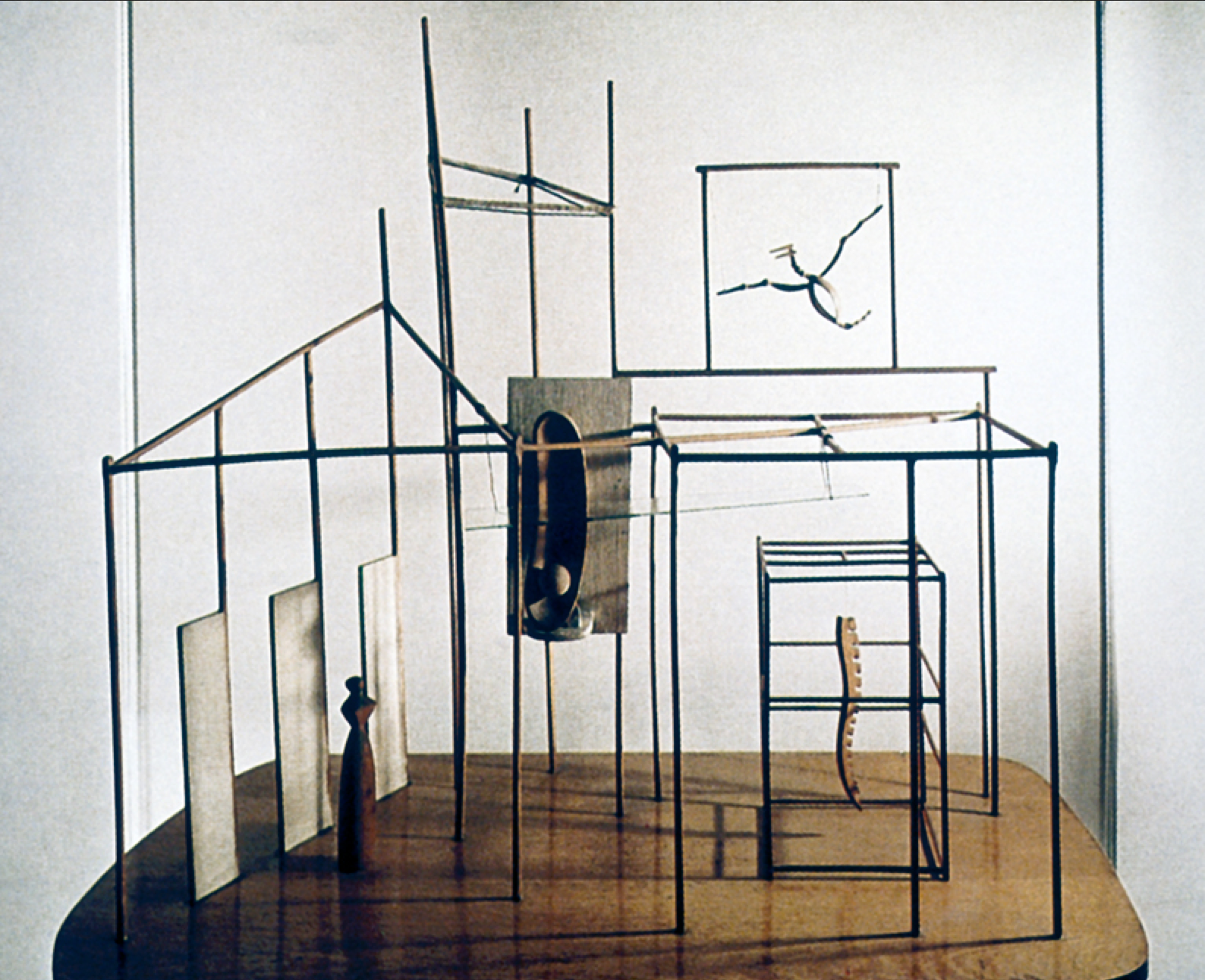
Brings to mind for me Alberto Giocometti’s sculpture “The Palace a 4 a.m.” Similar themes, but lean, compressed and fragile where the poem is lavish.

Screen Shot 2013-08-18 at 8.57.54 AM
The Palace at 4 A.M.

Poetic Words: Enzensberger

TLS tipped me off to a poem by Hans Magnus Enzenberg, a polymath author, who, among other works, wrote a charming book on math for kids called The Number Devil.

Here he is in a sharper key.

Short History of the Bourgeoisie

This was the moment when, for five minutes,
without noticing it,
we were immeasurably rich, generous
and electric, cooled in July,
or if it were November,
wood flown in from Finland glowed
in our Renaissance fireplaces. Funny,
everything was there, was flying in,
in a way, by itself. How elegant
we were, no one could bear us.
We threw our money about on solo-concerts,
chips, orchids in cellophane. Clouds
wrote our names. Exquisite.

Scheduled flights in all directions. Even our sighs
were on credit. Like fishwives
we scolded each other. Everyone
had his own misfortune under his seat,
close at hand. That was a shame, really.
It was so practical. Water
flowed from the taps like nothing on earth.
Do you remember? Overcome
by our tiny emotions,
we ate little. If we had only known
that it would all be over
in five minutes, the Beef Wellington
would have tasted quite, quite different.

–Hans Magnus Enzensberger
–Translated by Alasdair King (1990)

Screen Shot 2013-08-09 at 10.15.58 AM

“Culture and possessions, there is the bourgeoisie for you.”
Thomas Mann
and in this case, a little too much red too!

Silly Words: Sons of Poetry

The appeal of “Sons of Anarchy” on FX eludes me, but I found this Sesame Street spoof pretty adorable.

I will look for “Sons of Poetry” t-shirts and leather jackets at the next reading I go to!

Poetic Words: Emily Dickinson

Finally a gentle, breezy July day in DC (rare commodity after the run of humid, sticky, hoped-for-rain-that-doesn’t come-days).

Emily Dickinson offers a tour of one of her Amherst summers:

PSALM OF THE DAY.

A something in a summer’s day,
As slow her flambeaux burn away,
Which solemnizes me.

A something in a summer’s noon, —
An azure depth, a wordless tune,
Transcending ecstasy.

And still within a summer’s night
A something so transporting bright,
I clap my hands to see;

Then veil my too inspecting face,
Lest such a subtle, shimmering grace
Flutter too far for me.

The wizard-fingers never rest,
The purple brook within the breast
Still chafes its narrow bed;

Still rears the East her amber flag,
Guides still the sun along the crag
His caravan of red,

Like flowers that heard the tale of dews,
But never deemed the dripping prize
Awaited their low brows;

Or bees, that thought the summer’s name
Some rumor of delirium
No summer could for them;

Or Arctic creature, dimly stirred
By tropic hint, — some travelled bird
Imported to the wood;

Or wind’s bright signal to the ear,
Making that homely and severe,
Contented, known, before

The heaven unexpected came,
To lives that thought their worshipping
A too presumptuous psalm.


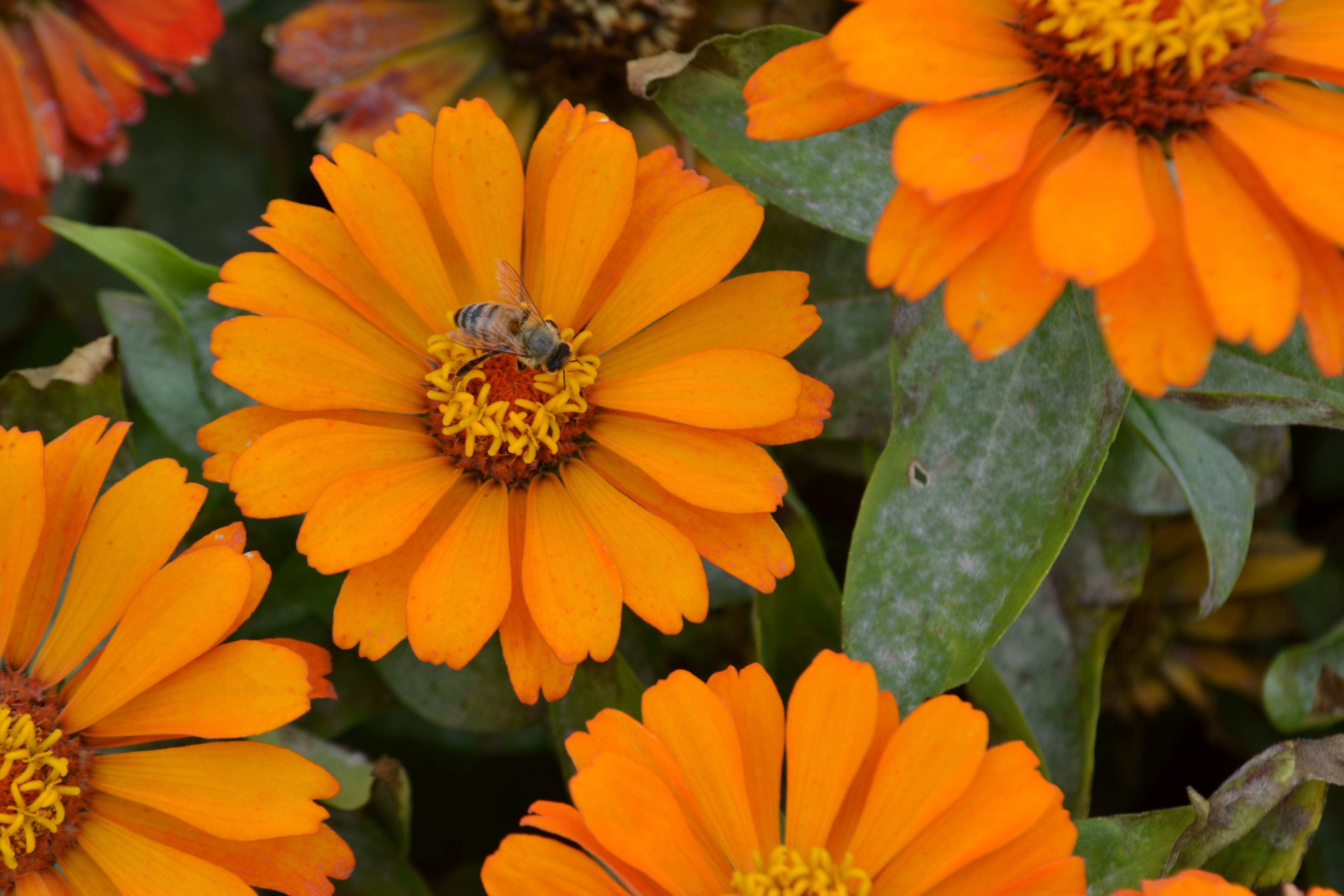
bee

Poetic Words: Thoughts Archaeological

Poetry Daily has a nice counterpoint to the recent stories about museums returning artifacts.

Screen Shot 2013-05-26 at 8.44.38 PM

At the Archaeological Institute of America’s Annual Meeting
by Ernest Hilbert

O, ungrateful hordes! Archaeologists
Mill through the hotel lobby, like jammed cars,
Clogging doorways, aiming all ways, vaguely
Swerving clots of unflappable classicists.
While elsewhere, their counterparts, undertakers,
Are busy burying, they burrow to see
What’s still down there. To think, such an awkward
Set of characters would meddle with tombs
Of emperors, queens, and epic poets!
They hunt all summer long the long interred,
Gather smashed shields, pry seals from anterooms,
Blow dust from sherds, dive to black ships.
Veering, talk to talk, they discuss ancient glory,
Building careers, then joining their quarry.

Funny Words: Automatic Poetry

Google Earth has already created some stunning, if accidental, photography. Now there is a new genre of Google Autocomplete poetry.  Huffington Post has the scoop.

The form has its limitations, although it will presumably be a boon to ribald verse, given how often those terms are searched.

Still, this one was charming:  o-GOOGLE-POETRY-570

And here’s one I did one myself, somewhat meta, I grant you. Screen Shot 2013-03-27 at 8.58.28 AMI quite like “anaphora is no noiseless patient spider.” If I had a spider, I would start calling her Emily Anaphora at once. But on the whole I’ll stick to Wallace Stevens,  Frank O’Hara, and the like.

Poetic Words: Five White Birds

Screen Shot 2013-02-01 at 11.30.45 AM
5 Birds by Will Hastings

From today’s Poetry Daily, Not a new trope (birds + poems = love always), but I smiled at “riding on contingency,” which brought to mind birds I saw one day walking along the Hudson, wisecracking sea gulls in particular with their eye on the main chance.


Five White Birds

Having seared the sky, the sun—a brazier—
smolders through the crumbling clouds
upriver; to the east, rich mounds of smoky
vapors, signifying rain tomorrow, drift on.
Five white birds rise suddenly, fanned out,
flushing from a maze of roofs and gardens

well below my windows, topping mushroom-
rounded oak trees and the heady sycamores.
Riding on contingency, the birds with ease
glide upward, bodies turned to movement,
backlit from the final sun rays on the scrim
of sky and thought, as flashes of pure being—

foreseeing, passing, leaving all one ecstasy.
Drawing light against the indigo of evening,
they separate a moment, fingers spreading
from a palm, then close together to compact
their various motions into one white wedge,
which flies along the river now, accentuating

giant cranes, the beaks of freighters moored
among the Harmony Street wharves. I watch
the light reflected on sleek forms, which dip,
then disappear, a note, a point, a nothingness.
The swept effect remains, a smoothing-over
of asperities, a pentimento that refines the day,

its painted infelicities recolored in the silver
twilight. So one is, and is not, what has passed,
windy patterns on deep, loamy grasses, stilled
at dusk, a watermark of images upon the mind,
wings beating for a glassy moment in desire—
a gesture’s meaning as the shaken air resounds.

Catharine Savage Brosman