Tipped by an Opera News profile, I spent a pleasant hour hunting down YouTube videos of the Russian soprano Albina Shagimuratova. The hunt confirmed that David Shengold in ON rightly praised her staggering technique, and noted that she is building a career as a stylish artist. Listen for yourself.
Three samples:
1. Bits of Ah! fors’e lui … Sempre libera from La Traviata. (Very strange filming, seems like a pops concert?) But spot on, affecting singing.
2. “Regnava nel silenzio… Quando, rapito in estasi” from Lucia di Lammermoor (again chunks of it, in a performance at WQXR). It’s a coloratura showpiece, and she nails that, but she has found some inward character too (and high notes for days.)
3. Finally, the Queen of the Night’s Vengance Aria. This piece usually comes off as party trick to me–notorious for its difficulty, maybe better known for its ring tone appearance than its place in the opera. And of course, boasting the highest note generally required of an operatic soprano (F above high C). Although that has been topped this season at the Met. Generally people can sing it or they can’t, and many who can don’t really seem to be able to do much else. She can! Even the La Scala audience agrees.
“The Writer” from Fragonard, The Fantasy Figures at Washington’s National Gallery of Art. I always blog in a tunic like that.
A round-up of some quotes on writing (no certainty that these are all accurate). I found them nosing around the web looking for a Peter De Vries quip–always one of my favorites.
“Writing is a way of talking without being interrupted.”
Jules Renard
“A writer who waits for ideal conditions under which to work will die without putting a word on paper.”
Kurt Vonnegut
“I love being a writer, what I can’t stand is the paperwork.”
Peter De Vries
“If the doctor told me I had six minutes to live, I’d type a little faster.”
Isaac Asimov
“Some writers confuse authenticity, which they ought always to aim at, with originality, which they should never bother about.”
W. H. Auden
“I always write a good first line, but I have trouble in writing the others.”
Moliere
“The profession of book writing makes horse racing seem like a solid, stable business.”
John Steinbeck
“Hard writing makes easy reading. Easy writing makes hard reading.”
William Zinsser
“You can fire your secretary, divorce your spouse, abandon your children. But they remain your co-authors forever.”
Ellen Goodman
“It took me fifteen years to discover I had no talent for writing, but I couldn’t give it up because by that time I was too famous.”
Robert Benchley
“Writing is like driving at night in the fog. You can only see as far as your headlights, but you can make the whole trip that way.”
E. L. Doctorow
“I’m writing a book. I’ve got the page numbers done.”
Steven Wright
“Writing a book of poetry is like dropping a rose petal down the Grand Canyon and waiting for the echo.”
Don Marquis
“When you’re writing, you’re conjuring. It’s a ritual, and you need to be brave and respectful and sometimes get out of the way of whatever it is that you’re inviting into the room. ”
Tom Waits
“Novelists are no more moral or certain than anybody else; we are ideologically adrift, and if we are any good then our writing will live in several places at once. That is both our curse and our charm.”
Andrew O’Hagan
“If you know what you are going to write when you’re writing a poem, it’s going to be average.”
Derek Walcott
“Writing nonfiction is more like sculpture, a matter of shaping the research into the finished thing. Novels are like paintings, specifically watercolors. Every stroke you put down you have to go with. Of course you can rewrite, but the original strokes are still there in the texture of the thing.”
Joan Didion
“Revision is one of the exquisite pleasures of writing.”
Bernard Malamud
“Writing is a form of therapy; sometimes I wonder how all those who do not write, compose or paint can manage to escape the madness, melancholia, the panic and fear which is inherent in a human situation.”
Graham Greene
“I never attended a creative writing class in my life. I have a horror of them; most writers groups moonlight as support groups for the kind of people who think that writing is therapeutic. Writing is the exact opposite of therapy.”
Zadie Smith
“I’m never, I hope, stupid enough to believe that Twitter or blogging or any of this stuff is a substitute for actually doing the work of writing a book.”
Neil Gaiman
Tipped by the always readable Farhad Manjoo, a NYTimes tech writer (with a good twitter name), I checked out Jia Tolentino’s lament for blogging, in The New Yorker, pegged in part to the closing of The Awl, sort of the blog equivalent of an alternative daily.
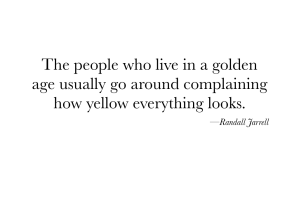
It’s a nice piece, although perhaps a bit impredicative in that it (I assume unwittingly) embodies some of the reasons people might not be so interested in blogs any more. Although it oversells a golden age” of the Internet that has been lost (such vanished Edens have always been with us, although perhaps they are disappearing over the horizon faster and faster), there is a sense of fun that has diminished (even for somebody who barely even qualifies as a blogger, like me).
I have previously shared with you Balk’s Law (“Everything you hate about The Internet is actually everything you hate about people”) and Balk’s Second Law (“The worst thing is knowing what everyone thinks about anything”). Here I will impart to you Balk’s Third Law: “If you think The Internet is terrible now, just wait a while.” The moment you were just in was as good as it got. The stuff you shake your head about now will seem like fucking Shakespeare in 2016.
Perhaps true, but also perhaps ever so, for more than just the Internet. Somewhere I recall a Mark Twain quote, “no matter what the show, the golden age seems to have ended the day before I bought my first ticket”
When my brother died
I worried there wasn’t enough time
to deliver the one hundred invitations
I’d scribbled while on the phone with the mortuary: Because of the short notice no need to RSVP.
Unfortunately the firemen couldn’t come.
(I had hoped they’d give free rides on the truck.)
They did agree to drive by the house once
with the lights on— It was a party after all.
Prompted by a post from librarian extraordinaire, Joyce Valenza, I spent a happy hour fooling with logos (despite lacking any graphic design talent or training, I find typography and graphic design fascinating).
She writes about free logo tools, including https://www.designevo.com/, which is ridiculously easy and fun to fool with. Here’s one I did for my employer.
And one for the blog,
Yeah, they are nothing to write home about, but the tool is easy to use, and fun. And worth your while if you can’t afford a Pentagram designer! (And you probably can’t!)
To book end Hardy’s wintery words, here’s a snowscape by American painter George Innes, 1824-94, famed for detailed landscapes, solemn, bleak, yet radiant.
A Winter Sky, 1866, George Innes, Cleveland Museum of Art
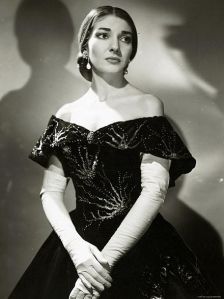
In the operatic edition of “news of the weird” –a surprisingly hefty category–the latest entry is Maria Callas, in 3D on the stage of New York’s Rose Theater. Anthony Tomassini was there for the preview for the opening of the “tour”: https://www.nytimes.com/2018/01/15/arts/music/maria-callas-hologram-opera.html
Like many things today, the promotional language from the company behind it, Base Hologram, seems to be pulled from a sci-fi novel, “La Divina lives, breathes, sings and captivates in her astonishing return to the stage.” Since Callas died in 1977, her return really would be astonishing. What we have instead, wondrous in a different way, is a 3-D hologram of the revered soprano, performing with a live orchestra (a gig that I suspect gave pause to the even the hungriest of NYC freelancers). “Callas sings” some well-known arias, from Carmen, Lady Macbeth, and the like–with audio mined from her numerous recordings, already an object of obsession by fanatics, and what I guess is a computer recreation of her body based on the more limited film and video legacy. As Tony points out, we don’t have a single full length opera on film of her.
Okay, I do get the fascination with her, and with Base’s other ectoplasmic excretion, Roy Orbison “Interactive Roy Orbison to Embark on World Tour.” I have found that opera lovers refer to hearing Callas live with the same awe that the others diners at the Last Supper must have lorded it over their lessers who weren’t in the room. Any opera unfortunate, such as me, who is prepared to forthrightly admit that he didn’t hear Callas, and even finds some grounds for criticism of her recorded performances, will be met with an impossible to counter “you had to be there” even from people who quite possibly weren’t there–never hearing the notoriously temperamental and cancellation prone singer in the flesh.
So, given that she has already moved into a virtual fantasy object phase, is a holographic tour anything to get agitated about? Is truthfully saying you saw the fake Callas, instead of falsely claiming to have seen the real one, such a big gap? And the reports of the technology, which apparently even lets her banter with the audience and conductor, fascinates me. (Is the hologram directed in real time by somebody ‘playing Maria?’ How? is AI involved? Just how spontaneous can it be: Does holographic Maria storm off the stage if she gets angry? What happens if somebody asks her to sing “Memories” from Cats? Can the audience demand that Roy Orbison come out and join her for a duet? She never recorded Only the Lonely, nor he The Barber of Seville, but they might bring it off…
So many questions, and for all my quibbles I might well go if the show comes to DC. Probably would play Anthem.
Still, I have one more point, which Tony adumbrates, and which I would underline more strongly. Opera, already a backwards looking art, is nonetheless a live, and acoustic art form. That is, you connect because a singer making an un-amplified sound, one you are hearing as is. Being there. The singer’s voice, your ears. Nothing but natural air pressures getting from one to the other.
There is so little acoustic anything today in the performing arts: mics are the norm from Broadway, to high school theater, and I hold no brief against them, just how things are done now, and the art form survives. Opera, and in particular, vocal recitals, it seems to me present a more challenging case–opera may seem a particularly artificial art form, but there is an argument to be made that it is at the same time a very authentic one. What you are hearing is what the singer really sounds like. Not remastered, no engineering jiggery-pokery, no edits to create the perfect version.
If the whole point is being in the room with the source of that voice, virtual Maria gives you a lot, the image, the orchestra, the format, except the actual voice. What’s more Avatar Maria likely looks radiant and sounds ideal, yet was remarkable about her, is what is remarkable about any opera singer or any live performance, what happens live, her voice and in that moment.
His latest recording, mature thoughts on one of the great monuments of piano repertoire.
The world is full of magnificent pianists–every generation provides its gems–but for me, the Polish pianist Krystian Zimerman has always set the standard. I first heard him in the 80s in DC in a luminous performance of the complete Chopin Preludes at the Kennedy Center’s Terrace Theater. Later he came (with his own piano I think) to Jordan Hall in Boston for a solo recital, and then all three Brahms Violin Sonatas with Gidon Kremer (a musical odd couple, given Kremer’s impulsiveness versus Zimerman’s poise).
He is, like many a great musician, apparently a squirrely character. He has disowned some of his earliest recordings, despite their glories, and has gone into the studio only sparingly in recent years. He also is fanatical about the exact sound of the piano, and its technical maintenance, traveling with his own instrument when possible, and more recently, with a keyboard he created himself!
Here he is as a young man, the picture of musical elegance, the gesture of his hands alone enough to see how attuned his whole being is to the musical purpose.
In my long-ago college days, Hardy the novelist was celebrated, and Hardy the poet was–other than a few well-anthologized poems like The Darkling Thrush–passed over without comment by the faculty and the English majors. He was too Victorian, too prolific, a relic, and flat.
I’m glad to say that bias has passed, and the craft and depth of his poems are now valued (in concert with, rather than in opposition to, what else was going on in the early 20th century poetically).
Here’s one, chosen in honor of the gentle dust of white on our sort of suburban, even rural, back patio.
SNOW IN THE SUBURBS

        Every branch big with it,
	Bent every twig with it;
       Every fork like a white web-foot;
       Every street and pavement mute:
Some flakes have lost their way, and grope back upward, when
Meeting those meandering down they tum and descend again.
     The palings are glued together like a wall,
     And there is no waft of wind with the fleecy fall.


A sparrow enters the tree,
	Whereon immediately
       A snow-lump thrice his own slight size
       Descends on him and showers his head and eyes,
	And overturns him,
	And near inurns him,
 And lights on a nether twig, when its brush
Starts off a volley of other lodging lumps with a rush.

      The steps are a blanched slope,
      Up which, with feeble hope,
A black cat comes, wide-eyed and thin;
	And we take him in
The dance of FB (and social media) with traditional media companies has been a fraught courtship to say the least. Media watcher Frederic Filloux dispenses a postmortem today in his Medium column.
One particularly telling passage from Filloux’s piece,
Facebook killed the news media three times
First, it killed the notion of brand. Year after year, the percentage of people able to recall where they got their news, is dwindling. “I read it on Facebook” now applies to half the population of the United States and Europe, and much more in countries where Facebook embodies the Internet.
Second, the notion of authorship has also vanished. Almost nobody has a clue who wrote what. Gradually, the two pillars of the trusting relationship between the media and its customers eroded, before crumbling altogether. Facebook has flattened the news for good.
Third, Facebook annihilated the business model of news by opening the way to a massive, ultra-cheap and ultra-targeted advertising system that brings next to nothing to the publishers. The reality of Facebook’s revenue stream is harsh: a European publisher told me last week that its RPM (Revenue per thousands) for videos on Facebook was about 30 cents of a Euro (that is 37 cents on a dollar). A pittance.
Zuckerberg’s last message has the merit of clarity. It says: “Sorry guys, it didn’t work as expected, go somewhere else or face a slow but inexorable extinction in our ecosystem. Nothing personal, here. Just business.”
NYC’s City Hall and Newspaper Row a century ago–when print media ruled the roost (and New York had something like 8 daily newspapers).
These points seem unarguable to me–channels are now so flooded with content, which comes from every which place, the notion of checking the source–dear to my librarian/newspaperman mind–thinking critically, and trusted journalism brands, have all taken a beating. If I still work that way, it’s probably a artifact of being a mid-life person who has worked on and off in this world most of his adult life. My question is what channels and hierarchies get disrupted next. iTunes did it to music, FB/social media has done it to news…Filloux’s whole piece is worth reading for news-biz mavens, even if there are debatable points (the end of the full piece seems a little unwarranted in its optimism to me, for instance). He’s got a bit of H.L. in him, namely a style that’s fun to read.


 Tipped by the always readable Farhad Manjoo, a NYTimes tech writer (with


 Okay, I do get the fascination with her, and with Base’s other ectoplasmic excretion, Roy Orbison “
 In my long-ago college days, Hardy the novelist was celebrated, and Hardy the poet was–other than a few well-anthologized poems like
 A Few Reasonable Words