“Any city, however small, is in fact divided into two, one the city of the poor, the other of the rich; these are at war with one another. “—Plato
“An imbalance between rich and poor is the oldest and most fatal aliment of all republics.” —Plutarch
“Jesus said unto him, If thou wilt be perfect, go and sell that thou hast, and give to the poor, and thou shalt have treasure in heaven: and come and follow me.
But when the young man heard that saying, he went away sorrowful: for he had great possessions.
Then said Jesus unto his disciples, Verily I say unto you, That a rich man shall hardly enter into the kingdom of heaven.
And again I say unto you, It is easier for a camel to go through the eye of a needle, than for a rich man to enter into the kingdom of God.” —Matthew 19: 21-24
“The disposition to admire, and almost to worship, the rich and the powerful, and to despise, or at least, to neglect persons of poor and mean condition is the great and most universal cause of the corruption of our moral sentiments.”—Adam Smith
“The causes which destroyed the ancient republics were numerous; but in Rome, one principal cause was the vast inequality of fortunes.” —Noah Webster
“The man of great wealth owes a peculiar obligation to the state because he derives special advantages from the mere existence of government.” —Theodore Roosevelt
“I am opposing a social order in which it is possible for one man who does absolutely nothing that is useful to amass a fortune of hundreds of millions of dollars, while millions of men and women who work all the days of their lives secure barely enough for a wretched existence.” —Eugene V. Debs
“We can either have democracy in this country or we can have great wealth concentrated in the hands of a few, but we cannot have both.” —Louis Brandeis
“American inequality didn’t just happen. It was created.” —Joseph Stiglitz
“The test of our progress is not whether we add more to the abundance of those who have much; it is whether we provide enough for those who have too little.”—Franklin D. Roosevelt
“Where justice is denied, where poverty is enforced, where ignorance prevails, and where any one class is made to feel that society is an organized conspiracy to oppress, rob and degrade them, neither persons nor property will be safe.” —Frederick Douglass
“There’s class warfare, all right, but it’s my class, the rich class, that’s making war, and we’re winning.” —Warren Buffett
“America is, and always has been, undecided about whether it will be the United States of Tom or the United States of Huck. The United States of Tom looks at misery and says: Hey, I didn’t do it. It looks at inequity and says: All my life I busted my butt to get where I am, so don’t come crying to me. Tom likes kings, codified nobility, unquestioned privilege. Huck likes people, fair play, spreading the truck around. Whereas Tom knows, Huck wonders. Whereas Huck hopes, Tom presumes. Whereas Huck cares, Tom denies. These two parts of the American Psyche have been at war since the beginning of the nation, and come to think of it, these two parts of the World Psyche have been at war since the beginning of the world, and the hope of the nation and of the world is to embrace the Huck part and send the Tom part back up the river, where it belongs.” —George Saunders
“When the rate of return on capital exceeds the rate of growth of output and income, as it did in the nineteenth century and seems quite likely to do again in the twenty-first, capitalism automatically generates arbitrary and unsustainable inequalities that radically undermine the meritocratic values on which democratic societies are based.” —Thomas Piketty
“All social inequalities which have ceased to be considered expedient, assume the character not of simple inexpediency, but of injustice, and appear so tyrannical, that people are apt to wonder how they ever could have been tolerated; forgetful that they themselves perhaps tolerate other inequalities under an equally mistaken notion of expediency, the correction of which would make that which they approve seem quite as monstrous as what they have at last learnt to condemn.” —John Stuart Mill
United Nations, New York, NY – Bird’s-eye perspective looking south. 1947
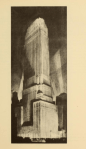
On a recent trip to the National Building Museum, I encountered a book of drawings by the architectural draftsman Hugh Ferriss, 1889-1962. The name was new to me, but the style was immediately recognizable: Muted, glowing cityscapes, rendered in charcoal, evoking the beauties of classical modernist architecture, as well as memories of a now-vanished future.
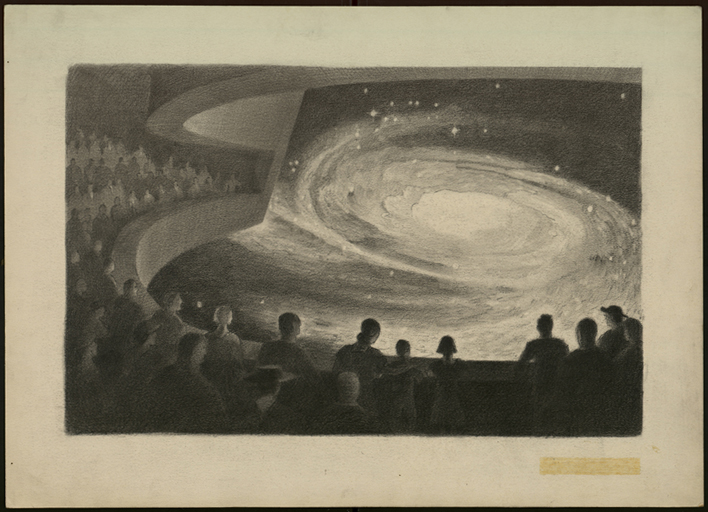
Some of his subjects are still around, of course. Ferriss, who was based in New York City, did architectural drawings for many familiar buildings, such as the United Nations and the Hayden Planetarium,
Hugh Ferriss, “Preliminary Report to the Hayden Planetarium Authority,” Nov 1941-Feb 1942.
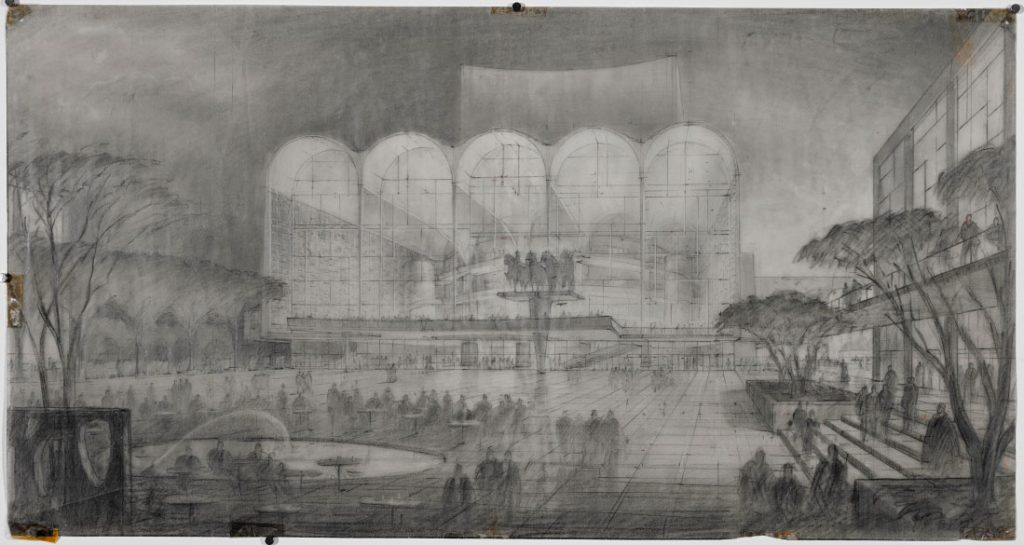
Lincoln Center for the Performing Arts. Center of the Center, 1958.
Another depicts a building that he didn’t live to see completed, the Metropolitan Opera House at Lincoln Center. (The trademark arches are clear, but otherwise the plaza doesn’t bear much resemblance to how it was built, much less how it is today. )
With a bit of digging, I found The Metropolis of Tomorrow, Ferriss’ poetic speculations, published in 1929 (in which 2018 must have seemed tomorrow and then some). In a charming introduction, he disclaims any particular prophetic ability, noting that he did these in his leisure moments, and that they reflect “wondering in drawings” about where then-current architectural trends might lead.
Fascinating to browse (even if some of his utopian visions are a bit totalitarian in character). A full imaginary city takes up the final section of the book, and has has zones for business, art, science, technology, etc., and a grand tower for philosophy, “where art and science meet.” You can browse the entire book at the link above.
Like most of the known universe, I am, however reluctantly, on LinkedIn. Today, following a contact request I was greeted with this.
For the innocents among you, Grindr is a gay social networking app. I have never heard it referred to as anything but a hookup app when described by gay men, but they perhaps find that a bit limiting. That they would want a former Congressional researcher, news librarian, and manager of an information service on opera is unlikely.
Still, I followed the link to their page and found this video.
I will refrain from additional comment about the combination of Grindr, hackathon, and security engineers who appear to be wearing unicorn pajamas.
P.S. Best use I have heard for Grindr: a guy in NYC who uses it to find bathrooms in the city when he needs a bathroom break, and no public facility is near by. Uber for when you need to pee!
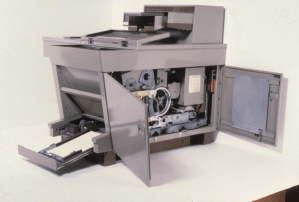
Farewell, my lovely. A Xerox copier from the 1960s, now at the Museum of American History in Washington, DC.
Xerox, a giant of my generation (its name had become a verb) seems to be breathing its last, as it is acquired by Fujifilm (story in today’s NYTimes).
“How Xerox fell so far is a case study in what management experts call the “competency trap” — an organization becomes so good at one thing, it can’t learn to do anything new.”
Somewhat undercutting this thesis, the writer mentions that Xerox did try to do a bunch of different things as the environment changed, just not all that successfully. Still the later point, made by a comparison with Apple, is that experience can actually inhibit certain kinds of innovation.
To wit: Xerox famously did pioneering work on computer interfaces, the mouse, and other technology well before the personal computer revolution. A young Steve Jobs visited Xerox Park in Palo Alto, a story that is now one of the foundational bed-time stories for Silicon Valley, and saw some of this technology, which later made into his products.
The Times piece concludes,
Over the years, Apple has had its own ups and downs. But whenever Mr. Jobs became convinced that something new was afoot, he moved forcefully and refocused the company. He did not fall into the competency trap, and today Apple is the most valuable corporation in the world.
Jobs was all kinds of things no doubt, but just yesterday I read this bit from a memoir of working with him, tweeted by Bethany Bongiorno, formerly an engineering director at Apple.
At one point Steve wanted to turn UIKit elements orange. Not just any orange, he wanted a particular orange from the button on a certain old Sony remote. We got a bunch of remotes from Sony with orange buttons to try and find the right one. in the end, Steve hated it.
That’s sure not the competency trap, what it is exactly probably couldn’t be summed up in a management concept, but it does hint at the pure wildness and level of detail the late CEO of the world’s most valuable tech company engaged with.
Will all my fussing about copyediting and usage, good to give the opposite view a chance…there is indeed something wonderful about errors, which this poem catches nicely.
Some of the world’s oldest printing presses, from the Museum Plantin-Moretus in Antwerp, one of the first commercial printing companies in Europe and now preserved as a world heritage site.
The Printer’s Error
by Aaron Fogel
Fellow compositors
and pressworkers!
I, Chief Printer
Frank Steinman,
having worked fifty-
seven years at my trade,
and served five years
as president
of the Holliston
Printer’s Council,
being of sound mind
though near death,
leave this testimonial
concerning the nature
of printers’ errors.
First: I hold that all books
and all printed
matter have
errors, obvious or no,
and that these are their
most significant moments,
not to be tampered with
by the vanity and folly
of ignorant, academic
textual editors.
Second: I hold that there are
three types of errors, in ascending
order of importance:
One: chance errors
of the printer’s trembling hand
not to be corrected incautiously
by foolish professors
and other such rabble
because trembling is part
of divine creation itself.
Two: silent, cool sabotage
by the printer,
the manual laborer
whose protests
have at times taken this
historical form,
covert interferences
not to be corrected
censoriously by the hand
of the second and far
more ignorant saboteur,
the textual editor.
Three: errors
from the touch of God,
divine and often
obscure corrections
of whole books by
nearly unnoticed changes
of single letters
sometimes meaningful but
about which the less said
by preemptive commentary
the better.
Third: I hold that all three
sorts of error,
errors by chance,
errors by workers’ protest,
and errors by
God’s touch,
are in practice the
same and indistinguishable.
Therefore I,
Frank Steinman,
typographer
for thirty-seven years,
and cooperative Master
of the Holliston Guild
eight years,
being of sound mind and body
though near death
urge the abolition
of all editorial work
whatsoever
and manumission
from all textual editing
to leave what was
as it was, and
as it became,
except insofar as editing
is itself an error, and
A while ago, a concert series I volunteer for presented baritone John Brancy and pianist Peter Dugan. They gave a memorable concert focused on music of the World War I ear (which they have subsequently released as a recording).
One of the most compelling moments was their arrangement of Danny Boy.
And that tune! Just two more versions because I’m like that, first Bill Evans:
And the beloved, and much missed Oscar Shumsky (who gave maybe the best violin recital I ever attended).
One of the interesting byproducts of my visit to the Outliers show at the National Gallery was learning about the “Index of American Design.” This was a Works Progress Administration project to document objects. It was accomplished by sending watercolorists all over the country to find design examples and create images. (Photography might seem a better medium for this kind of work, but in fact, the watercolors, with their detail and color, probably did more than photography could have offered in the 30s and 40s. And there is the practical possibility that more painters, rather than photographers, were the ones out of work. Certainly the results are beautiful.)
Took in the first day of a new show at the National Gallery of Art, Outliers and American Vanguard Art–outliers being a term broader than outsider art, and bridging a vast range of styles and people, Horace Pippin to Martín Ramírez, and Sister Gertrude Morgan to Zoe Leonard (who was there, and answered questions from curator Lynne Cooke in a fascinating Q&A).
It is fascinating, intriguingly curated show. Fosters lots of pondering of what an outlier is–which boundaries are being crossed, and the relationship of this show to the museum overall. You don’t always get a sense of adventure (sometimes a confounding adventure) in NGA shows, but you certainly do with this one.
In addition to documenting the value libraries have for their communities, Wiegand describes the perennial battles in libraries over their collections and what literature is suitable, particularly for children.
In the 1850s, the director of the Astor Library in New York was railing against the tastes of the youth of his era, who, in his view, preferred “the trashy…like Scott, Dickens, Punch, and The Illustrated News,” presumably instead of serious improving works like the classics. No Tale of Two Cities on the shelf for you.
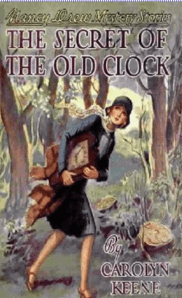
Series fiction, be it Horatio Alger in the 19th century or the wildly popular Nancy Drew novels first published in the 1930s, have always been particularly vexing. Children clamored to read them, caring not one whit whether they were literature, but librarians were undecided about whether to offer them.
Wiegand relates,
“Not censorship, but selection” masked other traditional cultural and literary biases within the profession. Despite the fact that the ALA revised the Library Bill of Rights in 1967 to include “age” as another group having the right to access all public library collections, many children’s and young adult librarians persisted in shunning series fiction. Those who did otherwise sometimes paid a price. For her first major acquisition as Rhinelander, Wisconsin children’s librarian in the mid- 1970s, Kris Wendt, who read Nancy Drew as a child, purchased three complete sets of Nancy Drew, Hardy Boys and Bobbsey Twins mysteries. Word of her transgression spread quickly. Several months later a forceful colleague—”incensed that Rhinelander broke ranks to acquire such ‘trash,’ … accosted me in the ladies room during a regional children’s services workshop… Arms folded across her ample monobosom and glowering as though she would like to alphabetize my internal organs,” she “cornered me against the sinks. In a voice like a silver dime she declared, “You have lowered the standard of children’s literature for the entire Wisconsin Valley!’ ” Wendt held her ground; Nancy stayed in the stacks much to the delight of Rhinelander’s children.
I’m glad she and many others held her ground. Nancy and the Hardy Boys were not my series, I read “Alfred Hitchcock and the Three Investigators” and the Encyclopedia Brown ones. Great literature they weren’t, but they were part of a habit that paved the way thereto–and the ability to enjoy the occasional trashy mystery to this day.
As if to immunize herself against criticism, [Favilla] begins by announcing her paucity of qualifications; she is neither a lexicographer nor an expert in linguistics. Previously, she worked at Teen Vogue. “I am constantly looking up words for fear of using them incorrectly and everyone in my office and my life discovering that I am a fraud”, she says. But despite the tone of chirpy self-satire, what follows is a small revolution. “Today everyone is a writer – a bad, unedited, unapologetic writer”, she says. “There’s no hiding our collective incompetence anymore.” Unlike the language scolds of yore, Favilla embraces the new ways, punctuating her writing with emoji, inserting screen-grabs of instant messages, using texting shortcuts such as “amirite?” Hers is a rule book with fewer rules than orders to ignore them. Humans are gushing out words at such a pace, they can’t be expected to bother with grammar, she says. More important is to be entertaining, on trend, popular (neatly matching the corporate goals of BuzzFeed). “It’s often more personal and more plain-languagey, and so it resonates immediately and more widely.”
Rachman, a reporter turned novelist, wrote this for the TLS, which still has copy-editors (although it is a less pristine publication than it was when I first started reading it as a library worker 30 years ago). Favilla started as the copy editor for Buzz Feed (singular verb on purpose). They may now have a few more. Honestly, a bit hard to tell.
The review also covers Harold Evans latest book, Do I Make Myself Clear? Why writing well matters, one of many to shelve in the bookstore section labeled “grumpy state of the language jeremiads.” Evans, retired editor of The Times of London, is of course a grandee of old school journalism (imagine starting your career when writing for a newspaper meant manual typewriters, hot lead type, and Gregg shorthand for interviews). He is not sanguine about the state of the English language.
Rachman summarizing Evans’ case,
[Evans is] correct to diagnose trouble. Public opinion is frighteningly confused today, with many citizens opposing what they support. They’re for health care, but against the policy providing it. Bewilderment also warps discussion of gun control and Brexit and global warming, leaving those without scruples to spin, while earnest news sources mount their factual cases – and are snubbed. Manipulative language has been around as long as public debate. But today’s lies linger because the internet has scuttled credibility, placing heaps of alluring junk beside small piles of dry honesty.
I think he’s right, but I have a harder time believing it can change, or hasn’t always been latent in news biz. Freedom of the press, as William Randolph Hearst is rumored to have put it, belongs to those who have one. Now everybody does.

 Some quotes on inequality; today, as in the past, a pressing issue. From David Cay Johnson’s reader, Divided: The Perils of Our Growing Inequality and other sources.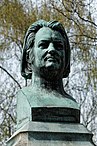







 ’s and young adult librarians persisted in shunning series fiction. Those who did otherwise sometimes paid a price. For her first major acquisition as Rhinelander, Wisconsin children’s librarian in the mid- 1970s, Kris Wendt, who read Nancy Drew as a child, purchased three complete sets of Nancy Drew, Hardy Boys and Bobbsey Twins mysteries. Word of her transgression spread quickly. Several months later a forceful colleague—”incensed that Rhinelander broke ranks to acquire such ‘trash,’ … accosted me in the ladies room during a regional children’s services workshop… Arms folded across her ample monobosom and glowering as though she would like to alphabetize my internal organs,” she “cornered me against the sinks. In a voice like a silver dime she declared, “You have lowered the standard of children’s literature for the entire Wisconsin Valley!’ ” Wendt held her ground; Nancy stayed in the stacks much to the delight of Rhinelander’s children.
 A Few Reasonable Words