Writer and physicist Alan Lightman’s take on what might be termed love at first sight.
SMILE
by Alan Lightman
Bubble chamber event, aka love?
It is a Saturday in March. The man wakes up slowly, reaches over and feels the windowpane, and decides it is warm enough to skip his thermal underwear. He yawns and dresses and goes out for his morning jog. When he comes back, he showers, cooks himself a scrambled egg, and settles down on the sofa with The Essays of E. B. White. Around noon, he rides his bike to the bookstore. He spends a couple of hours there, just poking around the books. Then he pedals back through the little town, past his house, and to the lake.
When the woman woke up this morning, she got out of bed and went immediately to her easel, where she picked up her pastels and set to work on her painting. After an hour, she is satisfied with the light effect and quits to have breakfast. She dresses quickly and walks to a nearby store to buy shutters for her bathroom. At the store, she meets friends and has lunch with them. Afterward, she wants to be alone and drives to the lake.
Now, the man and the woman stand on the wooden dock, gazing at the lake and the waves on the water. They haven’t noticed each other.
The man turns. And so begins the sequence of events informing him of her. Light reflected from her body instantly enters the pupils of his eyes, at the rate of ten trillion particles of light per second. Once through the pupil of each eye, the light travels through an oval-shaped lens, then through a transparent, jellylike substance filling up the eyeball, and lands on the retina. Here it is gathered by one hundred million rod and cone cells.
Cells in the path of the reflected highlights receive a great deal of light; cells falling in the shadows of the reflected scene receive very little. The woman’s lips, for example, are just now glistening in the sunlight, reflecting light of high intensity onto a tiny patch of cells slightly northeast of back center of the man’s retina. The edges around her mouth, on the other hand, are rather dark, so that cells neighboring the northeast path receive much less light.
Each particle of light ends its journey in the eye upon meeting a retinene molecule, consisting of 20 carbon atoms, 28 hydrogen atoms, and 1 oxygen atom. In its dormant condition, each retinene molecule is attached to a protein molecule and has a twist between the eleventh and fifteenth carbon atoms. But when light strikes it, as is now happening in about 30,000 trillion retinene molecules every second, the molecule straightens out and separates from its protein. After several intermediate steps, it wraps into a twist again, awaiting arrival of a new particle of light. Far less than a thousandth of a second has elapsed since the man saw the woman.
Triggered by the dance of the retinene molecules, the nerve cells, or neurons, respond. First in the eye and then in the brain. One neuron, for instance, has just gone into action. Protein molecules on its surface suddenly change their shape, blocking the flow of positively charged sodium atoms from the surrounding body fluid. This change in flow of electrically charged atoms produces a change in voltage that shudders through the cell. After a distance of a fraction of an inch, the electrical signal reaches the end of the neuron, altering the release of specific molecules, which migrate a distance of a hundred-thousandth of an inch until they reach the next neuron, passing along the news.
The woman, in fact, holds her hands by her sides and tilts her head at an angle of five and a half degrees. Her hair falls just to her shoulders. This information and much, much more is exactingly encoded by the electrical pulses in the various neurons of the man’s eyes.
In another few thousandths of a second, the electrical signals reach the ganglion neurons, which bunch together in the optic nerve at the back of the eye and carry their data to the brain. Here, the impulses race to the primary visual cortex, a highly folded layer of tissue about a tenth of an inch thick and two square inches in area, containing one hundred million neurons in half a dozen layers. The fourth layer receives the input first, does a preliminary analysis, and transfers the information to neurons in other layers. At every stage, each neuron may receive signals from a thousand other neurons, combine the signals – some of which cancel each other out – and dispatch the computed result to a thousand-odd other neurons.
After about thirty seconds – after several hundred trillion particles of reflected light have entered the man’s eyes and been processed – the woman says hello. Immediately, molecules of air are pushed together, then apart, then together, beginning in her vocal cords and traveling in a spring like motion to the man’s ears. The sound makes the trip from her to him (twenty feet) in a fiftieth of a second.
Within each of his ears, the vibrating air quickly covers the distance to the eardrum. The eardrum, an oval membrane about .3 inch in diameter and tilted fifty-five degrees from the floor of the auditory canal, itself begins trembling and transmits its motion to three tiny bones. From there, the vibrations shake the fluid in the cochlea, which spirals snail-like two and a half turns around.
Inside the cochlea the tones are deciphered. Here, a very thin membrane undulates in step with the sloshing fluid, and through this basilar membrane run tiny filaments of varying thickness, like strings on a harp. The woman’s voice, from afar, is playing this harp. Her hello begins in a low registers and rises in pitch toward the end. In precise response, the thick filaments in the basilar membrane vibrate first, followed by the thinner ones. Finally, tens of thousands of rod-shaped bodies perched on the basilar membrane convey their particular quiverings to the auditory nerve.
News of the woman’s hello, in electrical form, races along the neurons of the auditory nerve and enters the man’s brain, through the thalamus, to a specialized region of the cerebral cortex for further processing. Eventually, a large fraction of the trillion neurons in the man’s brain become involved with computing the visual and auditory data just acquired. Sodium and potassium gates open and close. Electrical currents speed along neuron fibers. Molecules flow from one nerve ending to the next.
All of this is known. What is not known is why, after about a minute, the man walks over to the woman and smiles.
Of great pianists there never seems to be any end. One of my favorite of the current roster is Polish pianist Piotr Anderszewski, restrained and poetic whether in Chopin or Szymanowski.
He has just released the second in a series of Mozart Concerti recording. Tipped off by a rave in Gramophone, I listened to trailer on YouTube and even these little bits enchant.
And here are two movements from Bach’s French Suite #5, from a 2000 performance in Miami (probably one that wouldn’t meet his current standards, if he doesn’t like his performance he gets the urge to walk out–and sometimes does).
He’s recorded this entire Bach Suite, with magical results, and also is the focus of an interesting documentary by Bruno Monsaingeon. Only the trailer is on YouTube, but if you have a public library card, you may be able to find it on their site.
Billie Holiday’s burned voice
had as many shadows as lights,
a mournful candelabra against a sleek piano,
the gardenia her signature under that ruined face.
(Now you’re cooking, drummer to bass,
magic spoon, magic needle.
Take all day if you have to
with your mirror and your bracelet of song.)
Fact is, the invention of women under siege
has been to sharpen love in the service of myth.
A few weeks back, CPU bugs Meltdown and Spectre (why the b-movie titles?) made headlines for the comprehensive threat they posed (and still do) to computer security.
[Jake Swearingen]: To me, a layman, it’s odd that CPUs require so much research, since the architecture is designed by humans. Why do they require so much outside research to sort of understand what they’re doing?
Diagram of a chip
[Researcher Anders Fogh] Because CPUs are remarkably complex. So to build a CPU, what you do is, you take a handful of sand, bit of epoxy, a tiny bit of metal, and a bit of pixie dust, and you stir it all together and you get this machine that basically runs our world today. You can imagine that that process has to be very, very complex. So down at the lowest level you have to deal with quantum phenomena; at the next level you have heat dissipation; on the next level you have to connect everything; and then the next level and next level all the way up, you actually have a piece of silicon that takes instructions, and that just turns out to be incredibly complex. For scale, a modern CPU, not even the newest and the biggest, has about 5 billion transistors in them. The Saturn V rocket that took man to the moon has about 3 million. So this is a really ridiculously complex machine, and they have been developed for longer than I have been alive.
Begins to get at why unwinding CPU-based vulnerablities is a formidable task.
Author Dan Pink has a new book out, When, his synthesis of research about timing in our lives. He makes reference to research on singing in a chorus (everyone doing something at exactly the same time). Some results suggest that its health benefits rival vigorous exercise.
I spent a little time trying to find the original data on this, and although I didn’t chase down the exact studies, I did find some interesting stuff. In a volume that rounds up recent research on music generally, Music, Health, and Wellbeing, the chapter on choral singing points out that Renaissance composer William Byrd was a strong fan of singing for health.
Here’s the relevant bit:
An early reference to the idea that singing can be good for health and wellbeing is found in the writings of William Byrd (1543-1623). In the preface to his Psalmes, Sonets & songs [of sadnes and pietie], published in 1588, Byrd outlined eight reasons ‘to perswade every one to learne to sing’. Four of these reasons resonate with contemporary views on the ‘therapeutic’ benefits of singing. Singing, he asserted, helps to maintain health, by being ‘delightfull to Nature’ (i.e. giving pleasure and joy), by exercising the musculature of the chest, by expanding the lungs and by helping to reduce stammering and improve voice quality.
Byrd summed up his advocacy for singing in a well-known couplet:
Since singing is so good a thing, I wish all men would learne to sing.
Remarkably, it is only now, over 400 years later, that scientific attention has begun to assess the merits of Byrd’s insights.
Everybody should learn to sing, although few do it with the elan of this gang, Voces8 in an arrangement of the folk song Shenandoah.
” After studying mathematics at the University of Birmingham, she [MLBL] spent the latter part of the Second World War working at the Telecommunications Research Establish (TRE), the secret centre of Britain’s radar development effort. With the war over she returned to her studies, before leaving Britain for the Mount Stromlo observatory in Australia in 1947, where she worked classifying the spectra of stars. In 1951 she returned to Britain and chanced across an advert for a job at Ferranti in Manchester that would change her life: “I was reading Nature and saw an advertisement one day for – saying, ‘Mathematicians wanted to work on a digital computer.’”
Reporter Danuta Kean provides this on a Theodore Dreiser sentence from An American Tragedy
“One of the best literary malapropisms in print appears in Theodore Dreiser’s 1925 classic An American Tragedy. In a passage of which Bad Sex award-winner Morrissey would be proud, two characters dance “harmoniously abandoning themselves to the rhythm of the music – like two small chips being tossed about on a rough but friendly sea”. Dreiser omits whether those chips were served with curry sauce.”
(Of Dreiser, an author many love to hate, I think H.L. Mencken had it right, ‘Dreiser possessed no talent, only genius.’ Their lifelong friendship and sparring would make a good play.)
Franzen, Joyce, and Henry Miller and Cormac McCarthy all get their due as well.
Cold and wet in Boston and DC (my two homes). So a topical bit of Edward Thomas (doomed WWI era poet, if only he had taken Robert Frost’s invitation to come to the U.S.)
Rain
By Edward Thomas
Rain, midnight rain, nothing but the wild rain
On this bleak hut, and solitude, and me
Remembering again that I shall die
And neither hear the rain nor give it thanks
For washing me cleaner than I have been
Since I was born into solitude.
Blessed are the dead that the rain rains upon:
But here I pray that none whom once I loved
Is dying tonight or lying still awake
Solitary, listening to the rain,
Either in pain or thus in sympathy
Helpless among the living and the dead,
Like a cold water among broken reeds,
Myriads of broken reeds all still and stiff,
Like me who have no love which this wild rain
Has not dissolved except the love of death,
If love it be towards what is perfect and
Cannot, the tempest tells me, disappoint.
Discovered the photography of San Francisco-based Todd Hido recently, through one of his “homes at night” series. Striking images, and perfect for a Shirley Jackson or Stephen Milhauser book jacket.
“This is the night of revelation. This is the night the dolls wake. This is the night of the dreamer in the attic. This is the night of the piper in the woods.–Steven Millhauser, Enchanted Night


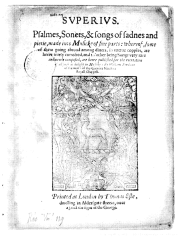 contemporary views on the ‘therapeutic’ benefits of singing. Singing, he asserted, helps to maintain health, by being ‘delightfull to Nature’ (i.e. giving pleasure and joy), by exercising the musculature of the chest, by expanding the lungs and by helping to reduce stammering and improve voice quality.



 Many of my ‘composer crushes’ over the years have come and gone, as they do. However, my love for G.F. Handel never fades.
 A Few Reasonable Words