Monday Morning: Winter Rain

Snow promised, but only rain so far in DC. Not quite Dickensian, but still poetic, as rain always seems to be (when it’s not dire, that is):

The Fitful Alternations of the Rain
By Percy Bysshe Shelley

The fitful alternations of the rain,
When the chill wind, languid as with pain
Of its own heavy moisture, here and there
Drives through the gray and beamless atmosphere.


"Alleys; Pedestrians; Umbrellas; Boston (Mass.)" from the BPL's great Flickr stream. (Courtesy of the Boston Public Library, Leslie Jones Collection.)
“Alleys; Pedestrians; Umbrellas; Boston (Mass.)” from the BPL’s great Flickr stream. (Courtesy of the Boston Public Library, Leslie Jones Collection.)


And for musical rain: Horowitz playing the “Raindrop” Prelude of Chopin, Op. 28, No. 15…although there seems to be some doubt about whether the “Raindrop” nickname really came from the composer or not.

Critical Words: Hindemith at the National Symphony

Screen Shot 2014-01-31 at 8.58.18 AM
Walt Whitman

On the face of it, it was probably a mistake to go hear DC’s National Symphony Orchestra in person after a week of listening to Claudio Abbado and his deluxe bands (Berlin Phil and his hand-picked Lucerne Festival Orchestra chief among them).  But a friend was singing in the chorus for Paul Hindemith’s “When Lilacs Last in the Dooryard Bloom’d,” a setting of Whitman’s poem; big, ambitious and, until last night, a little obscure to me (despite having heard it twice before).

The performance was superb; Hindemith is most sympathetic to Whitman’s long lines, which blur into prose

so often, and would seem to defy easy musical setting. The technique in the piece is dazzling–the big fugal passages evoke Bach’s grand architecture, and the text setting, particularly given the clear diction of last night’s soloists and chorus, is specific and haunting. (If occasionally a tad literal, do we really need “taps” in a piece of mourning?) But it’s the spine of the poem that Hindemith resonates with: dark threnody at some times, joyous release at others. This spine became a shared vision about the piece that came through from conductor Christoph Eschenbach, a champion of Hindemith, the orchestra, soloists Michelle DeYoung and Matthias Goerne, and Scott Tucker’s polished Choral Arts Society (who have been building from strength to strength this season).

Screen Shot 2014-01-31 at 8.57.42 AM
Paul Hindemith


In particular, Goerne is a freaky and compelling dude as a singer. Half way through, I jotted down that he was “somebody out of the Old Testament” on my program; but, I think “out of Beowulf” might be the better term.  His voice is not opulent exactly, but it does come right at you–every word pulled from some deep dark spot, and you are instantly in the thrall of a rapt story teller. And not a comfortable, cozy one. One whose stories seem lit by very old firelight and a little like an incantation. Completing the whole picture is the fact that he looks like he could be a cast member on Sons of Anarchy. Apparently he gave a Schone Mullerin earlier this week with Eschenbach at the piano to much

acclaim, although I’m skeptical.  That’s a piece about youthful ardor, and this is, in Whitman’s own words,

“As low and wailing, yet clear the notes, rising and falling, flooding the night,”

And that is what the man can do.

So, while no Abbado & the Berlin Phil, a worthwhile evening. Not made more so, alas, by the first half of the concert, which was given over to the Mendelssohn Violin Concerto. Charitably, I will assume that they didn’t have much time to rehearse this warhorse, which both the orchestra and the soloist, Josh Bell, have traversed–less clunkily–many times before. At least, one assumes that the out of tune and unbalanced brass passages, solo violin phrasing exaggerated to the point of “mugging for the camera,” and the “if we finish together it’s all okay, really” level of ensemble were not active musical choices. All concerned can do better.

But back to something inspiring: If you haven’t encountered Goerne and are into lieder, here he is in Mahler,

from a Proms concert. Singing as storytelling, not the only way to do it, but very well done indeed here.


Music: Remebering Claudio Abbado

Screen Shot 2014-01-30 at 6.53.01 AM
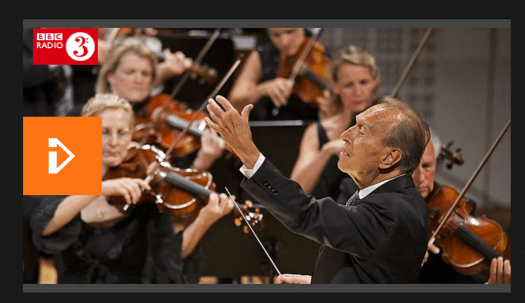
Claudio Abbado, 1933-2014. BBC replays his last concerts from the Lucerne Festival.

The great Italian conductor Claudio Abbado died Jan. 20, and tributes are pouring in. The Berlin Philharmonic’s Digital Concert Hall is offering free viewing of his concerts with the orchestra, which he led and The Guardian has excellent coverage including this tribute from British conductor Daniel Harding, who called him

“one of the wonders of the world”.

He added: “He created at least six orchestras, most of them for young people. Through this he did more than any single person in our time to educate an entire generation, maybe two generations, in what it means to play in an orchestra He was the greatest conductor I have ever seen or heard in person. Not always, not for all repertoire, but when he was in his element and comfortable with those around him then there was nobody to touch him.”

Digital Concert Hall
The Digital Concert Hall of the Berlin Philharmonic is offering free viewing of Abbado concerts with the orchestra.

The Guardian also has a list of YouTube clips worth watching selected by Andrew Clemens.

Journalists’ Words: Marty Baron at the Post aims to “enhance the overall reader experience”

Martin Baron, the recently installed executive editor of the Washington Post, now a bauble of Jeff Bezos, of course, has set his sights on improving the paper’s digital activity.  The Post embraced digital early: In the mid-90s, then publisher Don Graham took the web seriously and did  good work. But he did it as a separate unit, and in later years the governance and mission of digital, particularly when it was merged back into the paper seemed to foment such a mess that it became unfocused and lost ground. The paper’s not doing very well overall, either. Today’s site and related blogs aren’t much to write home about, and some of the Post’s stars in any format, like Ezra Klein, are leaving to do their own blogs. Digitally nimble is not an attribute of newspapers, or any big media, and the idea of a “start up” culture within it leaves me, a former news researcher there, scratching my head. But I wish them well. Baron did some similar things at the Boston Globe, his previous captaincy. Decent, if not amazing results. Presumably Bezos has a vision that this is only a small part of.

Here is Martin Baron’s full email tipped by Poynter Institute, a group that does professional development for journalism and also covers the industry.

To all:

As we put the final touches on the budget for 2014, I want to share our plans for a set of exciting initiatives. This will be a year of impressive investment in The Washington Post, with the primary goals of growth and digital transformation.

Recent announcements have offered a hint of what’s in the works.

We just announced that Adam Kushner, executive editor of the National Journal, will head a new digital initiative for online commentary and analysis. We now begin hiring for his team.

Before that, we announced that Fred Barbash would return to The Post from Reuters, where has been running White House and congressional coverage. He’ll head up an overnight staff to assure that readers have the most comprehensive, engaging reading experience when they wake up every morning.

We announced that Jim Tankersley, one of the best economics writers around, would lead a digital initiative, driven by data and narrative storytelling, that explains complex public policies and illuminates their human impact. We are hiring for that team while continuing our years of robust and enthusiastic investment in Wonkblog (and its most recent spinoff, KnowMore).

We also have announced some staff additions to The Fix blog and our politics strike force, key elements of our online political coverage. We have some more hiring to do. Altogether, our staff of politics reporters will grow by five early this year.

Along with the new writers we’ve introduced for Reliable Source, Helena Andrews and Emily Heil, we’re giving it a strong digital presence. That includes adding a staffer to produce Reliable Source video.

That is just a start.

We are hiring writers to author “verticals” on a wide array of subjects. These blogs will both deepen our reporting in The Post’s traditional areas of concentration and broaden the range of subjects we cover. Last year, we added highly popular blogs such as The Switch and GovBeat, complementing other policy-oriented blogs like WorldViews and Wonkblog. Some of our current blogs will get additional writers, enhancing our national and world report, and all of them will work with an expanded staff of photo editors and data visualization specialists. We’re hiring now for the additional graphics and photo staffers.

We also will embark on a long-planned site redesign that should improve load speeds and navigation while enhancing the overall reader experience. That will involve new hires. The Universal News Desk also will add to its staff to make sure that we are doing everything possible to engage readers when they come to the site.

Beyond the new overnight crew, we will create a breaking-news desk that will operate from 8 a.m. until midnight. Reporting to Justin Bank, it will position us to jump on the most captivating stories of the day at lightning speed.

Print is in the picture, too.

This spring, we will introduce an expanded Sunday magazine, bigger in dimension and in the number of pages, with a new design and a range of new features. This spring also will see us introduce a Sunday Style & Arts section that makes a forceful and elegant statement about our strengths in those areas.

You can tell that there is a lot going on. And there’s more than I mentioned. We can’t talk about everything just yet.

This is a news organization of extraordinary achievement. It is home to journalists of immense talent and dedication. With these initiatives, we can all look forward to a future of great promise.

Marty

Post Photo
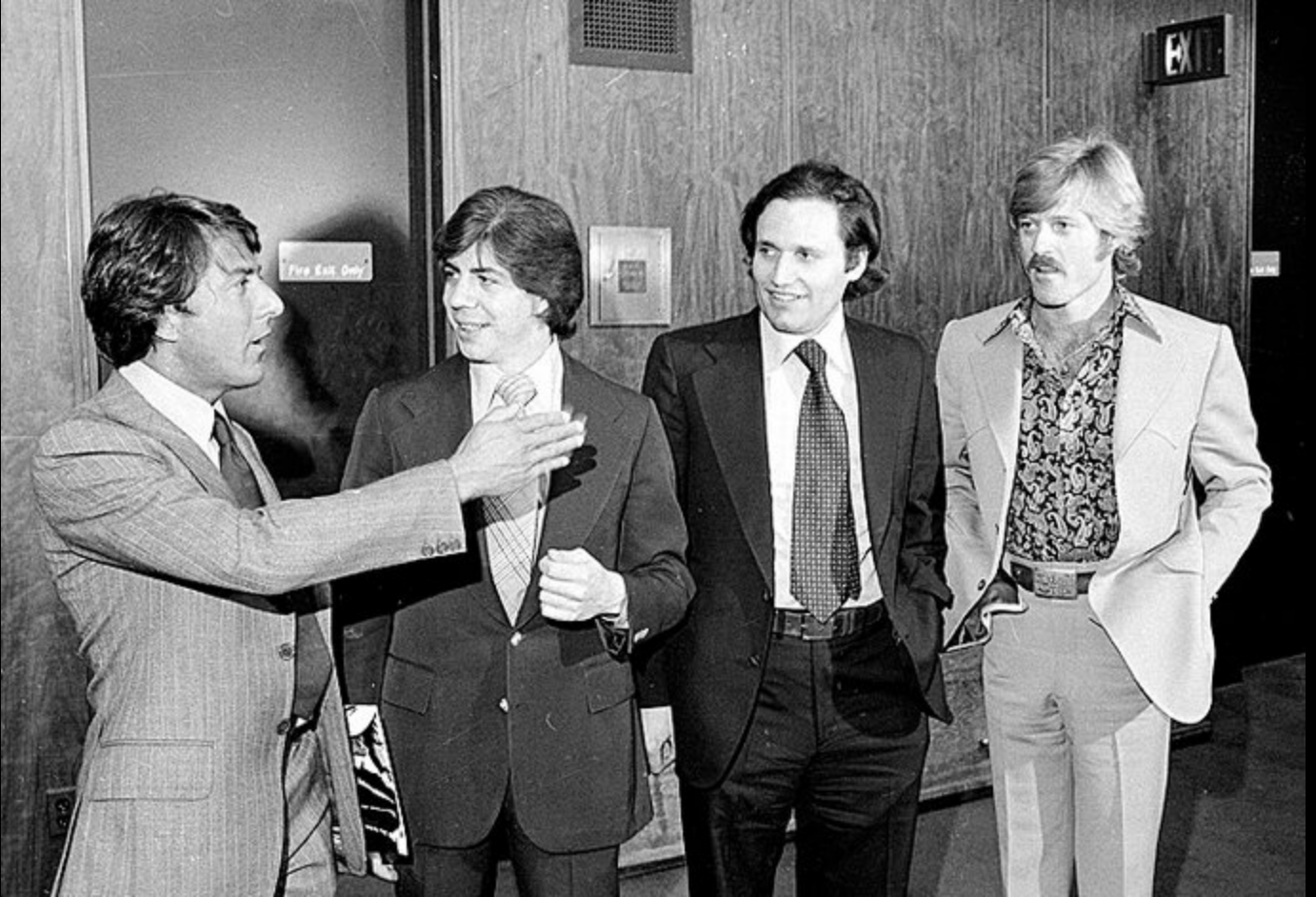
As the Post once was, when print wasn’t just “in the picture,” but the whole ball game. Dustin Hoffman, Carl Bernstein, Bob Woodward, and Robert Redford. The actors played the investigative duo in “All The President’s Men” and were on site to soak up the atmosphere and research their roles.

Snowy afternoon

Snow on Cambridge Common
Nice day to stay inside and listen to Russian opera.

And the Met is providing Eugene Onegin, fortunately.

Catching Up: What I have been up to

Lots to catch up on, busy getting a web site launched and much else. So got in the way of important things like blogging.

Here’s the most recent web site the VOX team and I just produced:

Narcolepsy Screen Shot
Narcolepsy Patient Education Web Site

This is one of a series of sites for the Harvard Division of Sleep Medicine I was executive producer on; previous modules have covered apnea, insufficient sleep, and healthy sleep. It’s a fascinating project, and narcolepsy–subject of many misconceptions and stigmatizing jokes–is both a serious disorder, but also a treatable one. The neurology behind it–and all of sleep–is fascinating.  So please check the site out, and  send the link along to anyone you think might be interested in it.  Narcolepsy typically begins in or just before the teen years, and is often misdiagnosed or missed entirely, so one hope for the site is to bring it to attention in relevant cases and get people in for evals and treatment.

I’ve been doing web sites a long time. But video is a new world for me, and the other project I finished recently is a series of teacher professional development videos for mathematics teachers. I was co-producer on 13 videos, and there’s a funny blog post called “web guy in video land” sometime in my future, but for now I’ll just link to the site, on PBS’ Learning Media. The collection is called “Making the Case” and it’s focused on the argumentation standard in the new Common Core Standards in Mathematics. I realize that most people are not as engrossed in math pedagogy as I am, and have been my whole life oddly enough. But if you are, or if you know a high school math teacher who is interested in learning about argumentation, check it out.

Making the Case
Teacher PD resources, with videos co-produced by Arthur!

It was a rewarding project, and a real honor to see great teaching and learning in high schools all over the country. Given the gloomy national narrative about K-12 education, I feel lucky that my work takes me into schools regularly, where, without fail, I see remarkable students and teachers. There are tough stories too, but a lot is working. My personal take on the endless school reform wars and the attendant litany about “our failing schools” is that we tell that story for rhetorical and political reasons: it’s not really about our schools per se. Our schools are multifaceted institutions. Some aspects of them could be better, some facets are amazing and moving. It’s important to tell ourselves, endlessly and in every generation, that our schools are failing. They have always been failing for some purposes by some yardsticks.  But the schools we captured for these videos, where great places to be in many ways, and the experiences these students were having were what I would hope for my own kids.

Reasonable Words: Getting past the “Love of Difficulty”

Reading a lot about playing the piano, in particular, how to practice effectively, something I’ve never mastered despite decades of playing. I got “The Musician’s Way” for Christmas, and successful practicing is a main theme. Early on in the book author Gerald Klickstein lights on this quote from Duke Ellington,

“The wise musicians are those who play what they can master.”

This hit me sort of like a zen koan–effective practicing starts by selecting pieces you have a chance of gaining some mastery of, or at least competence at. It’s a theme that is echoed in another book I’m thumbing through,”The Well-Tempered Keyboard Teacher,” which provides advice on ways to respond to students who bring in music that is just too hard for them, either at the time, or perhaps ever; the author’s advice: tactful refocusing the student on music that is pedagogically useful, musically rewarding, and not a challenge merely for a challenge’s sake.

Screen Shot 2014-01-07 at 9.51.47 PM
First page of the Goldberg Variations. Not in this lifetime for me (and not in this ridiculously Romanticized Czerny edition for anybody probably!)

Such good advice, so why is it so hard to follow? (and not just in matters musical.) What is the love of difficulty about–why do the “hard” pieces count, and the easy ones seem trivial? And whose yard stick applies? (particularly in an activity like playing the piano for pleasure for no audience)? Bach’s Goldberg Variations are beyond me (now and forever), but the 2- and 3-part Inventions are within my reach. For me, they have tricky bits–something I doubt they present to Peter Serkin, but that these tricky bits are surmountable is part of the fun.

So corollary to “play what you can master” is “choose profitable difficulties.” I remember years ago reading in a biography of Paul Erdős that he told a mathematician he was mentoring to “forget that problem, it’s too hard for you, do this one instead.” (Or something to that effect.) On the face of it pretty demoralizing, but if you put aside the ego and the worry about status, how wonderful to have a mentor who could keep you from burning up in pursuit of something he could see would not get you anywhere, but help you choose a “Goldilocks” problem–neither too easy or too hard, instead. The take away being that “hard” “easy” isn’t the important spectrum, and maybe not even a linear spectrum after all, but at least in part personal response depending on where are you are starting from. Different people could get different things out of the same experience based on who they are and what they were going for.

A nice idea, and perhaps one that will lead me to be happy with my “3-Part Invention” level of piano playing and get better in a feasible way…

No doubt not to the level of Andras Schiff. And I’m okay with that.

Quotable Words: Alice James on Memories and Wit

From Alice James’ (1848-1892) Diary, written in 1890, when she was an invalid in England. Recalling a childhood visit to Italy….

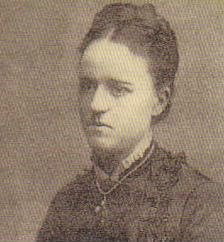
Alice JamesIt is very curious how, for the last year or two, I perpetually come across in my reading just what I have been thinking about, curious I mean, of course, because my reading is so haphazard. It reminds me of [William] in the old days when his eyes were bad and I used to begin and tell him something which I thought of interest from whatever book I might be reading, when he would invariably say, “I glanced into the book yesterday and read that.” I wonder what determines the selection of memory, why does one childish experience or impression stand out so luminous and solid against the, for the most part, vague and misty background? The things we remember have a firsttimeness about them which suggests that they may be the reason of their survival. I must ask Wm. Some day if there is any theory on the subject, or better, whether ’tis worth a theory.

I remember so distinctly the first time I was conscious of a purely intellectual process. ’Twas the summer of [18]56 which we spent in Boulogne and the parents of Mlle. Marie Boningue our governess had a campagne on the outskirts and invited us to spend the day, Perhaps Marie’s fête-day. A large and shabby calèche came for us into which we were backed, save Wm.; all I can remember of the drive was a never-ending ribbon of dust stretching in front and the anguish greater even than usual of Wilky’s and Bob’s heels grinding into my shins. Marie told us that her farther had a scar upon his face caused by a bad scald in his youth and we must be sure and not look at him as he was very sensitive. How I remember the painful conflict between sympathy and the desire to look and the fear that my baseness should be discovered by the good man as he sat at the head of the table in charge of a big frosted-cake sprinkled o’er with those pink and white worms in which lurk the caraway seed. How easy ’t would be to picture one’s youth as a perpetual escape from that abhorred object!—I wonder if it is a blight upon children still?—But to arrive at the first flowering of me Intellect! We were turned into the garden to play, a sandy or rather dusty expanse with nothing in it, as I remember, but two or three scrubby apple-trees, from one of which hung a swing. As time went on Wilky and Bob disappeared, not to my grief, and the Boningues. Harry was sitting in the swing and I came up and stood near by as the sun began to slant over the desolate expanse, as the dreary h[ou]rs, with that endlessness which they have for infancy, passed, when Harry suddenly exclaimed: “This might certainly be called pleasure under difficulties!” The stir of my whole being in response to the substance and exquisite, original form of this remark almost makes my heart beat now with the sisterly pride which was then awakened and it came to me in a flash, the higher nature of this appeal to the mind, as compared to the rudimentary solicitations which usually produced my childish explosion of laughter; and I can also feel distinctly the sense of self-satisfaction in that I could not only perceive, but appreciate this subtlety, as if I had acquired a new sense, a sense whereby to measure intellectual things, wit as distinguished from giggling, for example.

Her philosopher brother William was born in 1842. “Harry,”her brother, novelist Henry James, in 1843. He was devoted and attentive to her, if a somewhat scandalized admirer of her diary.

Funny Words: Devastating accretions of correspondence, incident to the festive season

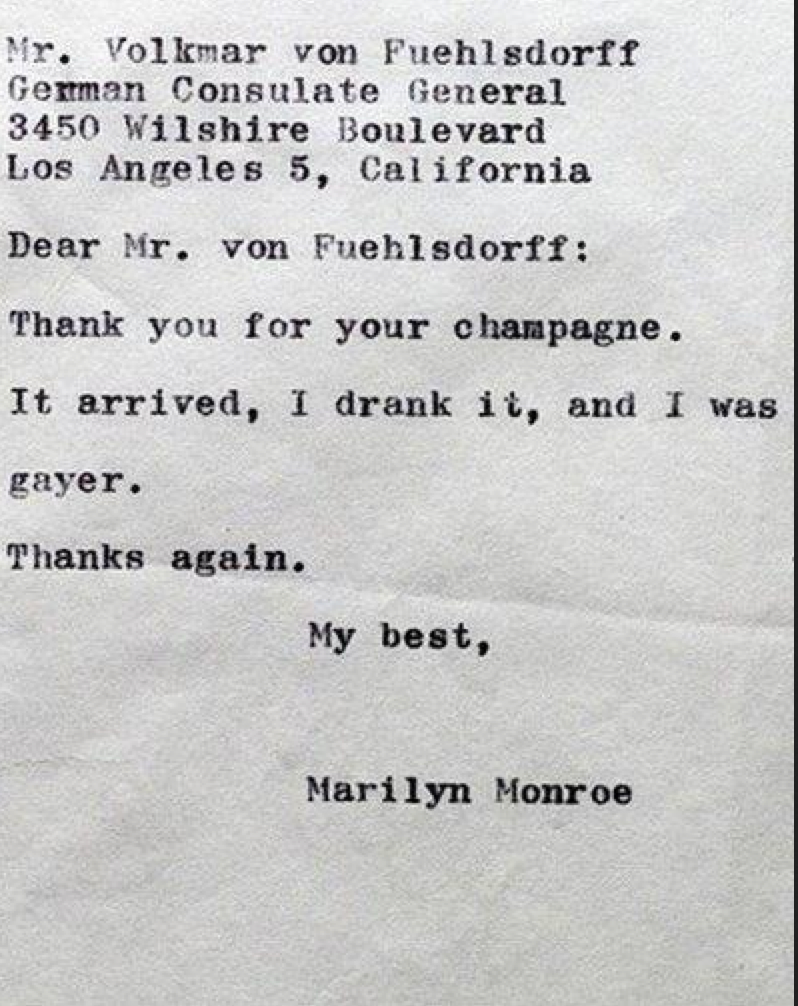
Monroe LetterAt a loss to write in holiday thank you cards, emails, Facebook messages?  Saki got there before you. Happy Boxing Day!

“Down Pens”

By Saki

“Have you written to thank the Froplinsons for what they sent us?” asked Egbert.

“No,” said Janetta, with a note of tired defiance in her voice; “I’ve written eleven letters to-day expressing surprise and gratitude for sundry unmerited gifts, but I haven’t written to the Froplinsons.”

“Some one will have to write to them,” said Egbert.

“I don’t dispute the necessity, but I don’t think the some one should be me,” said Janetta. “I wouldn’t mind writing a letter of angry recrimination or heartless satire to some suitable recipient; in fact, I should rather enjoy it, but I’ve come to the end of my capacity for expressing servile amiability. Eleven letters to-day and nine yesterday, all couched in the same strain of ecstatic thankfulness: really, you can’t expect me to sit down to another. There is such a thing as writing oneself out.”

“I’ve written nearly as many,” said Egbert, “and I’ve had my usual business correspondence to get through, too. Besides, I don’t know what it was that the Froplinsons sent us.”

“A William the Conqueror calendar,” said Janetta, “with a quotation of one of his great thoughts for every day in the year.”

“Impossible,” said Egbert; “he didn’t have three hundred and sixty-five thoughts in the whole of his life, or, if he did, he kept them to himself. He was a man of action, not of introspection.”

“Well, it was William Wordsworth, then,” said Janetta; “I know William came into it somewhere.”

“That sounds more probable,” said Egbert; “well, let’s collaborate on this letter of thanks and get it done. I’ll dictate, and you can scribble it down. ‘Dear Mrs. Froplinson – thank you and your husband so much for the very pretty calendar you sent us. It was very good of you to think of us.’ ”

“You can’t possibly say that,” said Janetta, laying down her pen.

“It’s what I always do say, and what every one says to me,” protested Egbert.

“We sent them something on the twenty-second,” said Janetta, “so they simply HAD to think of us. There was no getting away from it.”

“What did we send them?” asked Egbert gloomily.

“Bridge-markers,” said Janetta, “in a cardboard case, with some inanity about ‘digging for fortune with a royal spade’ emblazoned on the cover. The moment I saw it in the shop I said to myself ‘Froplinsons’ and to the attendant ‘How much?’ When he said ‘Ninepence,’ I gave him their address, jabbed our card in, paid tenpence or elevenpence to cover the postage, and thanked heaven. With less sincerity and infinitely more trouble they eventually thanked me.”

“The Froplinsons don’t play bridge,” said Egbert.

“One is not supposed to notice social deformities of that sort,” said Janetta; “it wouldn’t be polite. Besides, what trouble did they take to find out whether we read Wordsworth with gladness? For all they knew or cared we might be frantically embedded in the belief that all poetry begins and ends with John Masefield, and it might infuriate or depress us to have a daily sample of Wordsworthian products flung at us.”

“Well, let’s get on with the letter of thanks,” said Egbert.

“Proceed,” said Janetta.

” ‘How clever of you to guess that Wordsworth is our favourite poet,’ ” dictated Egbert.

Again Janetta laid down her pen.

“Do you realise what that means?” she asked; “a Wordsworth booklet next Christmas, and another calendar the Christmas after, with the same problem of having to write suitable letters of thankfulness. No, the best thing to do is to drop all further allusion to the calendar and switch off on to some other topic.”

“But what other topic?”

“Oh, something like this: ‘What do you think of the New Year Honours List? A friend of ours made such a clever remark when he read it.’ Then you can stick in any remark that comes into your head; it needn’t be clever. The Froplinsons won’t know whether it is or isn’t.”

“We don’t even know on which side they are in politics,” objected Egbert; “and anyhow you can’t suddenly dismiss the subject of the calendar. Surely there must be some intelligent remark that can be made about it.”

“Well, we can’t think of one,” said Janetta wearily; “the fact is, we’ve both written ourselves out. Heavens! I’ve just remembered Mrs. Stephen Ludberry. I haven’t thanked her for what she sent.”

“What did she send?”

“I forget; I think it was a calendar.”

There was a long silence, the forlorn silence of those who are bereft of hope and have almost ceased to care.

Presently Egbert started from his seat with an air of resolution. The light of battle was in his eyes.

“Let me come to the writing-table,” he exclaimed.

“Gladly,” said Janetta. “Are you going to write to Mrs. Ludberry or the Froplinsons?”

“To neither,” said Egbert, drawing a stack of notepaper towards him; “I’m going to write to the editor of every enlightened and influential newspaper in the Kingdom, I’m going to suggest that there should be a sort of epistolary Truce of God during the festivities of Christmas and New Year. From the twenty-fourth of December to the third or fourth of January it shall be considered an offence against good sense and good feeling to write or expect any letter or communication that does not deal with the necessary events of the moment. Answers to invitations, arrangements about trains, renewal of club subscriptions, and, of course, all the ordinary everyday affairs of business, sickness, engaging new cooks, and so forth, these will be dealt with in the usual manner as something inevitable, a legitimate part of our daily life. But all the devastating accretions of correspondence, incident to the festive season, these should be swept away to give the season a chance of being really festive, a time of untroubled, unpunctuated peace and good will.”

“But you would have to make some acknowledgment of presents received,” objected Janetta; “otherwise people would never know whether they had arrived safely.”

“Of course, I have thought of that,” said Egbert; “every present that was sent off would be accompanied by a ticket bearing the date of dispatch and the signature of the sender, and some conventional hieroglyphic to show that it was intended to be a Christmas or New Year gift; there would be a counterfoil with space for the recipient’s name and the date of arrival, and all you would have to do would be to sign and date the counterfoil, add a conventional hieroglyphic indicating heartfelt thanks and gratified surprise, put the thing into an envelope and post it.”

“It sounds delightfully simple,” said Janetta wistfully, “but people would consider it too cut-and- dried, too perfunctory.”

“It is not a bit more perfunctory than the present system,” said Egbert; “I have only the same conventional language of gratitude at my disposal with which to thank dear old Colonel Chuttle for his perfectly delicious Stilton, which we shall devour to the last morsel, and the Froplinsons for their calendar, which we shall never look at. Colonel Chuttle knows that we are grateful for the Stilton, without having to be told so, and the Froplinsons know that we are bored with their calendar, whatever we may say to the contrary, just as we know that they are bored with the bridge-markers in spite of their written assurance that they thanked us for our charming little gift. What is more, the Colonel knows that even if we had taken a sudden aversion to Stilton or been forbidden it by the doctor, we should still have written a letter of hearty thanks around it. So you see the present system of acknowledgment is just as perfunctory and conventional as the counterfoil business would be, only ten times more tiresome and brain-racking.”

“Your plan would certainly bring the ideal of a Happy Christmas a step nearer realisation,” said Janetta.

“There are exceptions, of course,” said Egbert, “people who really try to infuse a breath of reality into their letters of acknowledgment. Aunt Susan, for instance, who writes: ‘Thank you very much for the ham; not such a good flavour as the one you sent last year, which itself was not a particularly good one. Hams are not what they used to be.’ It would be a pity to be deprived of her Christmas comments, but that loss would be swallowed up in the general gain.”

“Meanwhile,” said Janetta, “what am I to say to the Froplinsons?”

Happy Mongrel Holiday!

Hope whatever your combatant status in the War on Christmas, you’ve had a jolly holiday.

Here’s my holiday greeting, a Yiddish version of “Rudolf the Red-nosed Reindeer.” Full on Klezmer joy, and a wonderfully strange video.

And courtesy of Jonathan Anker practical Yiddish for Christmas.

Merry Christmas in Yiddish