The Catalan composer Federico Mompou has sometimes been termed a sort of Iberian Satie, but that doesn’t do either of them justice. He had an idiosyncratic way with the piano, modern and antique at the same time–and often very haunting.
Here’s the marvelous Jenny Lin playing “Secreto,” one of his “Intimate Impressions:”
This weekend is the start of the Proms–the biggest (mostly) classical musical festival in the world, and all freely available on Radio 3 on the web (and on television for some lucky viewers, not in the U.S., alas.)
Lots of potential high points: Rattle and the Berlin Phil in J.S. Bach, continuing 300th birthday celebrations for his imaginative son, CPE Bach–fiddler Rachel Podger a likely magician in this rep. We’re also getting Kiss Me, Kate, and from silly to serious, Stravinsky’s oratorio, Oedipus Rex (not in the same concert, I hasten to add).
The opera offerings are probably not as likely to be as jaw-droppingly wonderful as the Barenboim Ring last year, still there are good line ups for Salome, Elektra, and Rosenkavalier.
Lots else, including Rufus Wainwright on the popular and jazz track. (They seem to be fixing links, so bear with them.)
More recommendations, musings, brickbats and praise as the concerts unfold. For music lovers, it really is the most generous of feasts. Thank you, BBC.
Professor Christensen did something “truly disruptive” in 2011, when he found himself in a room with a panoramic view of Boston Harbor. About to begin his lecture, he noticed something about the students before him. They were beautiful, he later recalled. Really beautiful.
“Oh, we’re not students,” one of them explained. “We’re models.” Harvard Class Day, 1906. The visitors are strolling down North Harvard Street to enter the stadium. The B-School didn’t even exist until 1908.
They were there to look as if they were learning: to appear slightly puzzled when Professor Christensen introduced a complex concept, to nod when he clarified it, or to look fascinated if he grew a tad boring. The cameras in the classroom — actually, a rented space downtown — would capture it all for the real audience: roughly 130,000 business students at the University of Phoenix, which hired Professor Christensen to deliver lectures online.
A minor bit in a fascinating piece: HBS is living out in real time the question of just what kind of innovation MOOCs embody? A Clay Christensen style disruption (something I heard him foretell in a commencement speech in 1999 at Marlboro College for their online MAT), or something that can be folded into a more incremental strategy (a la Michael Porter’s view of sticking to your core differentiation)?
A later bit in the piece describes what happens when your core differentiation gets dissolved: the “unbundling” potential of online ed (perhaps this era will be known as the “great unbundling of media.” Format, content, and platform are now all just a digital stew.)
“François Ortalo-Magné, dean of the University of Wisconsin’s business school, says fissures have already appeared. Recently, a rival school offered one of his faculty members not just a job, but also shares in an online learning start-up created especially for him. “We’re talking about millions of dollars,” Mr. Ortalo-Magné said. “My best teachers are going to find platforms so they can teach to the world for free. The market is finding a way to unbundle us. My job is to hold this platform together.”
Christensen’s bet? He, and many others like him, won’t be able to do it: Christensen’s on the record as saying, “half of the United States’ universities could face bankruptcy within 15 years.”
MOOCs, like many educational innovations that have come before them, are a flashpoint for certain kinds of rather tired arguments about the supposed eternal verities about what schooling should be. It’s a feeble flap, particularly since we are in not just early days but minute 1 or 2 of the whole change that online education will foment. The anti-MOOC case is also full of the weird mash up of empirical and conceptual carping that fights over education seem prone to. Two of the strands:
1. The philosophical opposition seems to go something like: MOOCs do not provide sufficient texture of experience to count as education, and are, further, an effort to outsource teaching via a technological approach, something which, for ineffable reasons, has to be, or is at least optimally, delivered in person as part of a (preferably, super-exclusionary) community.
2. The empirical complaint seems to be: look, they don’t work anyway, as most people don’t “complete” them, so therefore they can’t have any merit.
Both of these I think are refutable on their own, but they are basically self-refuting when mashed together. Good things those completion rates are low, even though that is arguably a meaningless metric, because, we shouldn’t be doing these things anyway.
I’m sanguine to optimistic about MOOCs and what they may lead to, and certainly feel deserve their chance to weave their thread in the Internet tapestry. My guess is that some of the growing pains result not from any problem in online delivery per se, but the sort of sad effort to replicate the format of a “course,” and the attendant forced march through the curriculum. (Curricula, whatever else they do, instantiate ideology and culture, something I’ll blather on about another time.)
Diderot’s Encyclopedia: The MOOC of its day?Getting a topic into some 13-week chunk for in-person delivery including the duly required mid-term, final, and term paper, is already artificial: an historical reenactment of an approach that was creaky 100 years ago. Preserving it online has never made any sense to me, except for laziness and resistance to change that academic institutions, and truthfully teachers, often fall into.
The other thing I think is not just promising about MOOCs, but here now and heartening, is how much humanities content they offer. In a time when there’s much stewing about the ailing state of the arts & humanities, there are crowds joining MOOCs on humanities topics and participating with enthusiasm. (Once upon a time you could get this subject on public broadcasting, even sometimes on commercial TV, but priorities have shifted.) Two, of many, examples: a course on the Beethoven Piano Sonatas with Jonathan Biss, and on Modern and Contemporary American Poetry, which is the closest I’ve found to busting open the idea of a course, it is really more of a community event, and the better for it.
Still, to give the opposition their say, here’s a delightful animation taking up the contra side (including an argument that it’s all about money that I’ll hang fire on until another day). Daphne, Sebastian, and Anant make such adorable video game characters, I think they should consider that as an add on career.
Many people are eager to know when Dai Congrong, the Chinese translator of Finnegans Wake, is going to produce the rest of the book. To date she has only published one third of her version and dropped no hints about when we might see the rest. A while back, quizzed by a reporter, she said: ‘May God give me the courage to finish it’ – which is surely a good call, even if you’re not a believer. Last month a journalist friend put the question again, and Dai simply replied: ‘Don’t ask me. I don’t know any more than you do.’ That, too, seems reasonable, given the size of the task. There’s plenty of Finnegans Wake that I’d be stumped to put into Mandarin. Browsing at random: ‘The fall (bababadalgharaghtakamminarronnkonnbronntonnerronntuonn-thunntrovarrhounawnskawntoohoohoordenenthurnuk!) of a once wallstrait oldparr is retaled early in bed and later on life down through all christian minstrelsy.’ I’m not sure this is convertible into any language, even an Indo-European one, but Dai’s translation has been a hit in China, as the Western media reported widely at the time of publication.
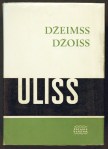
Ulysses in Latvian
French
Japanese
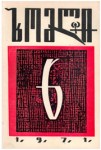
Georgian
Finnish
Greek
Nearly as formidable, Ulysses, has been translated into many languages, Japanese being one of the earliest. Here are some of the editions, from an exhibit at the University at Buffalo.
Tipped off by a great environmental blog, greenfriar.com, I, happened on some spectacular GoPro footage.
From Greenfriar: (If you visit, read the whole post so you get the context; video link is at the bottom).
The Bad News That At Least Comes With The Faintest Silver Lining
Alaska’s glaciers are all melting, but in the process they’re opening up a whole world of ephemeral, short-lived ice caves, so filmmakers from Firefight Films attached a GoPro to a drone and produced this breathtaking footage from inside the caves….
A great review of some Victorian mystery novels in the LRB (in particular the deliciously convoluted “Notting Hill Mystery“) tipped me off to this advice from mystery writer S.S. Van Dine.
“The dectective story is a kind of intellectual game. It is more — it is a sporting event. And for the writing of detective stories there are
T.S. Eliot called it the first and best detective novel–not the first it turns out, but still one of the best. I gobbled it up in high school instead of doing my algebra homework.
very definite laws — unwritten, perhaps, but none the less binding; and every respectable and self-respecting concocter of literary mysteries lives up to them. Herewith, then, is a sort Credo, based partly on the practice of all the great writers of detective stories, and partly on the promptings of the honest author’s inner conscience. To wit:
1. The reader must have equal opportunity with the detective for solving the mystery. All clues must be plainly stated and described.
2. No willful tricks or deceptions may be placed on the reader other than those played legitimately by the criminal on the detective himself.
3. There must be no love interest. The business in hand is to bring a criminal to the bar of justice, not to bring a lovelorn couple to the hymeneal altar.
4. The detective himself, or one of the official investigators, should never turn out to be the culprit. This is bald trickery, on a par with offering some one a bright penny for a five-dollar gold piece. It’s false pretenses.
5. The culprit must be determined by logical deductions — not by accident or coincidence or unmotivated confession. To solve a criminal problem in this latter fashion is like sending the reader on a deliberate wild-goose chase, and then telling him, after he has failed, that you had the object of his search up your sleeve all the time. Such an author is no better than a practical joker.
6. The detective novel must have a detective in it; and a detective is not a detective unless he detects. His function is to gather clues that will eventually lead to the person who did the dirty work in the first chapter; and if the detective does not reach his conclusions through an analysis of those clues, he has no more solved his problem than the schoolboy who gets his answer out of the back of the arithmetic.
7. There simply must be a corpse in a detective novel, and the deader the corpse the better. No lesser crime than murder will suffice. Three hundred pages is far too much pother for a crime other than murder. After all, the reader’s trouble and expenditure of energy must be rewarded.
8. The problem of the crime must he solved by strictly naturalistic means. Such methods for learning the truth as slate-writing, ouija-boards, mind-reading, spiritualistic se’ances, crystal-gazing, and the like, are taboo. A reader has a chance when matching his wits with a rationalistic detective, but if he must compete with the world of spirits and go chasing about the fourth dimension of metaphysics, he is defeated ab initio.
9. There must be but one detective — that is, but one protagonist of deduction — one deus ex machina. To bring the minds of three or four, or sometimes a gang of detectives to bear on a problem, is not only to disperse the interest and break the direct thread of logic, but to take an unfair advantage of the reader. If there is more than one detective the reader doesn’t know who his codeductor is. It’s like making the reader run a race with a relay team.
10. The culprit must turn out to be a person who has played a more or less prominent part in the story — that is, a person with whom the reader is familiar and in whom he takes an interest.
11. A servant must not be chosen by the author as the culprit. This is begging a noble question. It is a too easy solution. The culprit must be a decidedly worth-while person — one that wouldn’t ordinarily come under suspicion.
12. There must be but one culprit, no matter how many murders are committed. The culprit may, of course, have a minor helper or co-plotter; but the entire onus must rest on one pair of shoulders: the entire indignation of the reader must be permitted to concentrate on a single black nature.
13. Secret societies, camorras, mafias, et al., have no place in a detective story. A fascinating and truly beautiful murder is irremediably spoiled by any such wholesale culpability. To be sure, the murderer in a detective novel should be given a sporting chance; but it is going too far to grant him a secret society to fall back on. No high-class, self-respecting murderer would want such odds.
14. The method of murder, and the means of detecting it, must be be rational and scientific. That is to say, pseudo-science and purely imaginative and speculative devices are not to be tolerated in the roman policier. Once an author soars into the realm of fantasy, in the Jules Verne manner, he is outside the bounds of detective fiction, cavorting in the uncharted reaches of adventure.
15. The truth of the problem must at all times be apparent — provided the reader is shrewd enough to see it. By this I mean that if the reader, after learning the explanation for the crime, should reread the book, he would see that the solution had, in a sense, been staring him in the face-that all the clues really pointed to the culprit — and that, if he had been as clever as the detective, he could have solved the mystery himself without going on to the final chapter. That the clever reader does often thus solve the problem goes without saying.
16. A detective novel should contain no long descriptive passages, no literary dallying with side-issues, no subtly worked-out character analyses, no “atmospheric” preoccupations. such matters have no vital place in a record of crime and deduction. They hold up the action and introduce issues irrelevant to the main purpose, which is to state a problem, analyze it, and bring it to a successful conclusion. To be sure, there must be a sufficient descriptiveness and character delineation to give the novel verisimilitude.
17. A professional criminal must never be shouldered with the guilt of a crime in a detective story. Crimes by housebreakers and bandits are the province of the police departments — not of authors and brilliant amateur detectives. A really fascinating crime is one committed by a pillar of a church, or a spinster noted for her charities.
18. A crime in a detective story must never turn out to be an accident or a suicide. To end an odyssey of sleuthing with such an anti-climax is to hoodwink the trusting and kind-hearted reader.
19. The motives for all crimes in detective stories should be personal. International plottings and war politics belong in a different category of fiction — in secret-service tales, for instance. But a murder story must be kept gemütlich, so to speak. It must reflect the reader’s everyday experiences, and give him a certain outlet for his own repressed desires and emotions.
20. And (to give my Credo an even score of items) I herewith list a few of the devices which no self-respecting detective story writer will now avail himself of. They have been employed too often, and are familiar to all true lovers of literary crime. To use them is a confession of the author’s ineptitude and lack of originality. (a) Determining the identity of the culprit by comparing the butt of a cigarette left at the scene of the crime with the brand smoked by a suspect. (b) The bogus spiritualistic se’ance to frighten the culprit into giving himself away. (c) Forged fingerprints. (d) The dummy-figure alibi. (e) The dog that does not bark and thereby reveals the fact that the intruder is familiar. (f)The final pinning of the crime on a twin, or a relative who looks exactly like the suspected, but innocent, person. (g) The hypodermic syringe and the knockout drops. (h) The commission of the murder in a locked room after the police have actually broken in. (i) The word association test for guilt. (j) The cipher, or code letter, which is eventually unraveled by the sleuth.”


 The Catalan composer Federico Mompou has sometimes been termed a sort of Iberian Satie, but that doesn’t do either of them justice. He had an idiosyncratic way with the piano, modern and antique at the same time–and often very haunting.






 A Few Reasonable Words