With fruit the vines that round the thatch-eves run;
To bend with apples the moss’d cottage-trees,
And fill all fruit with ripeness to the core;
To swell the gourd, and plump the hazel shells
With a sweet kernel; to set budding more,
And still more, later flowers for the bees,
Until they think warm days will never cease,
For summer has o’er-brimm’d their clammy cells.
Who hath not seen thee oft amid thy store?
Sometimes whoever seeks abroad may find
Thee sitting careless on a granary floor,
Thy hair soft-lifted by the winnowing wind;
Or on a half-reap’d furrow sound asleep,
Drows’d with the fume of poppies, while thy hook
Spares the next swath and all its twined flowers:
And sometimes like a gleaner thou dost keep
Steady thy laden head across a brook;
Or by a cyder-press, with patient look,
Thou watchest the last oozings hours by hours.
Where are the songs of spring? Ay, Where are they?
Think not of them, thou hast thy music too,—
While barred clouds bloom the soft-dying day,
And touch the stubble-plains with rosy hue;
Then in a wailful choir the small gnats mourn
Among the river sallows, borne aloft
Or sinking as the light wind lives or dies;
And full-grown lambs loud bleat from hilly bourn;
Hedge-crickets sing; and now with treble soft
The red-breast whistles from a garden-croft;
And gathering swallows twitter in the skies.
Dumbarton Oaks, a museum and garden in Washington DC. A photo I took last fall on a visit when I had the place to myself. No lambs were bleating, however.
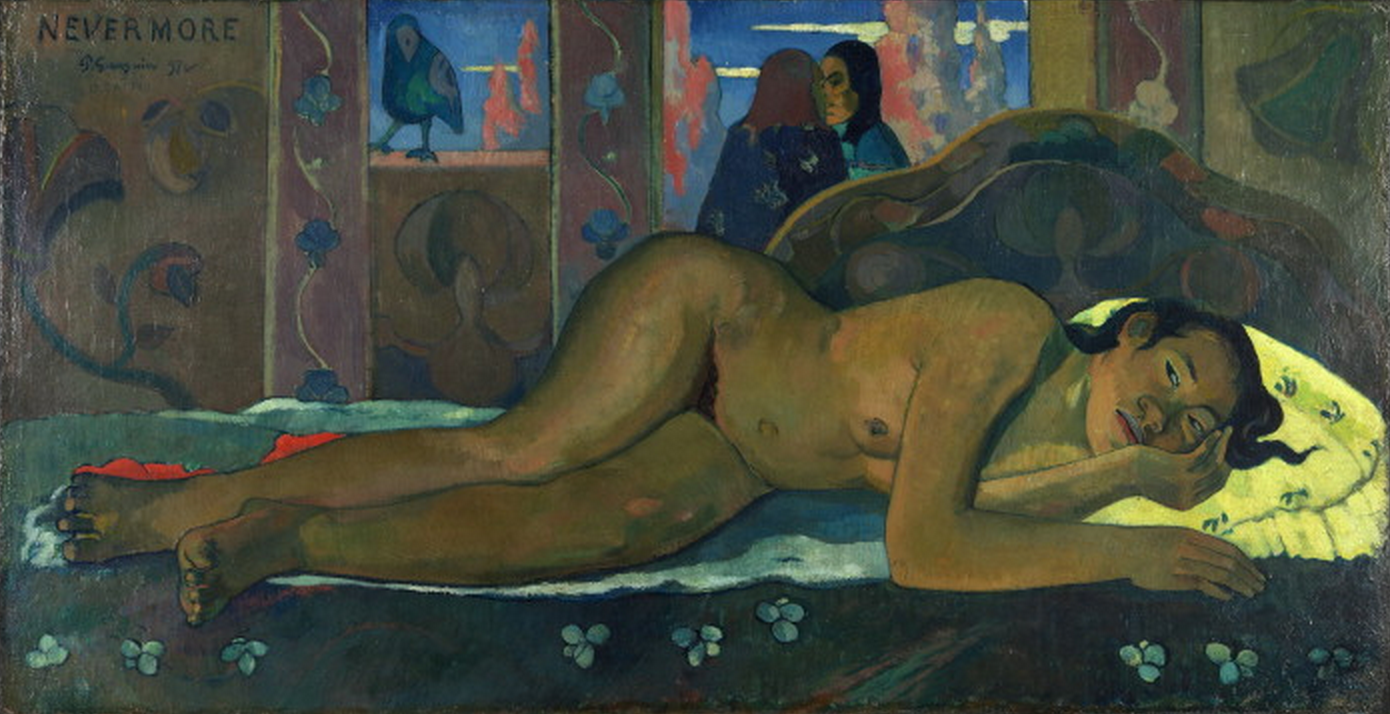
Reading Written on Water, a book of essays by Eileen Chang, I came across this evocative description of a Gauguin painting.
There are some paintings I will never be able to forget, but only one of them is famous, Gauguin’s “Nevermore.” A Hawaiian [Tahitian] woman lies naked on a couch, quietly listening to the conversation of a man and a woman as they walk past her door. The rosy sunset glow of springtime in the background seems to spray skyward like mist, giving a feeling of transcendence to the scene, and yet for this robust woman, who looks about thirty years old, everything is over and done. The woman’s face is coarse, with narrow slitted eyes, and she cups her cheek in her hand, sending her gaze slanting upward in a slyly flirtatious gesture so reminiscent of many a young Shanghainese woman that it strikes us as being quite familiar. Her body is the golden brown of hardwood. The dark brown of the sofa, though, is rendered in a shade more like ancient bronze, and little white flowers are visible on the sofa cover, semitranslucent like mother-of-pearl. Inlaid on this dark bronze background is the atmosphere outside: colored glass, blue sky, red and blue trees, a pair of lovers, a big clumsy bird from a children’s fairy tale perched on a stone railing. Glass, bronze, and wood: these three textures seem to encompass the different worlds that we can touch with our hands, in a way that is as tangible as the woman herself. She must have loved with every fiber of her being and now “Nevermore.” Although she sleeps on a civilized sofa, her head nestled on a ruffled pillow embroidered with lemon-yellow flowers, there is still a primal sadness here. It is nothing like our own society, in which a woman no longer in her prime who wants love but has already lost it will almost certainly be confronted with countless little indignities and grinding difficulties, to the point where her self-respect is torn and shredded. This woman is not prone to the same sedimented sadness, because she retains a sense of clarity and resignation. On her golden brown face, there’s still a trace of an irrelevant smile, as if a mirror had cast a fugitive fragment of the sunlight outside across her face.
Chang is the author of Lust, Caution a superb read, also made into a film by Ang Lee.
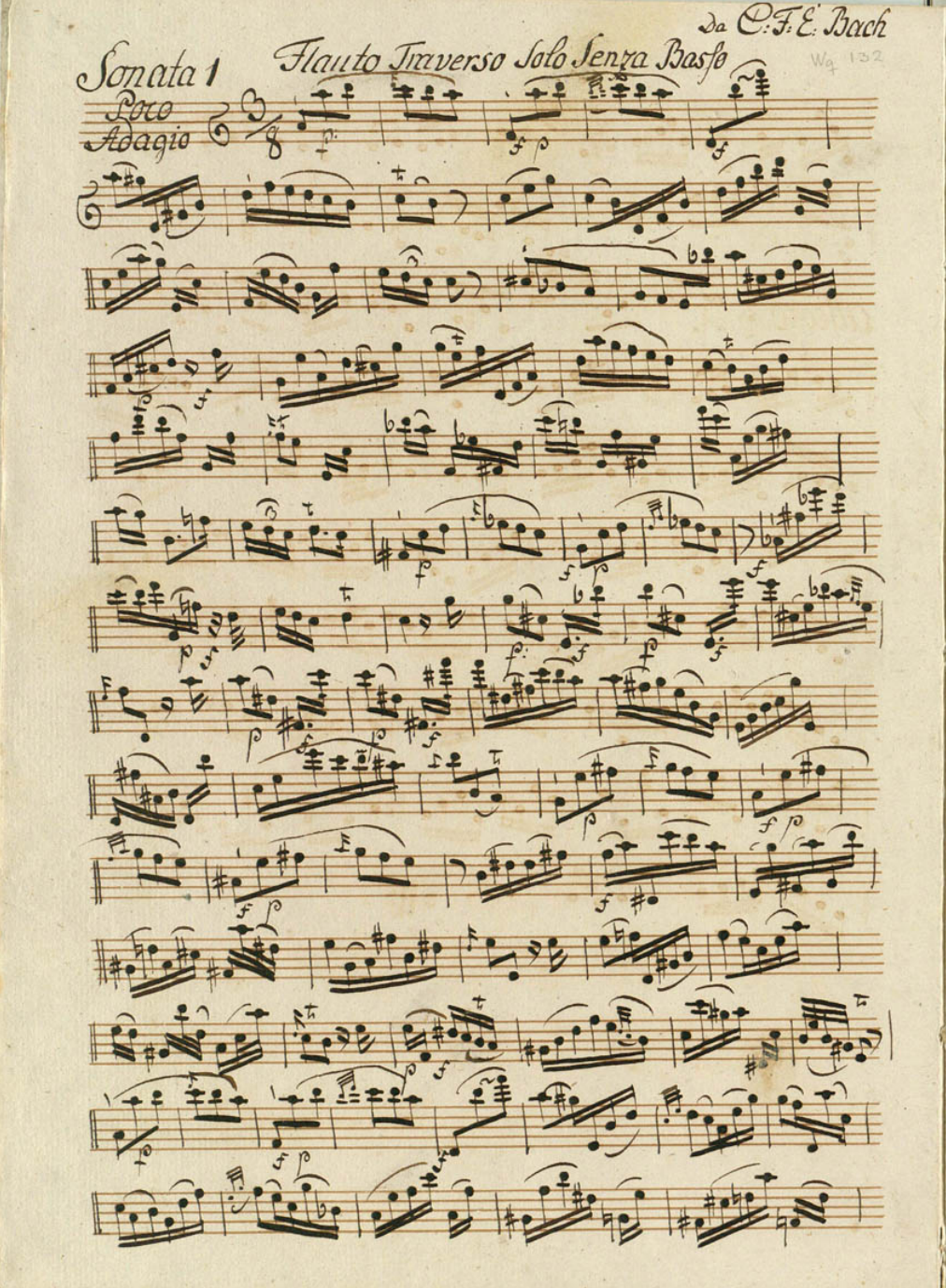
The manuscript (but perhaps not in CPE’s hand) of the Flute Sonata in A.
CPE Bach’s music, long overshadowed by his father’s achievement, has been finding its way back onto concert programs. I heard Peter Wispelway give one of Emanuel Bach’s Cello Concerti with the Boston Symphony a few years back and was delighted by the charm and scale (the teeny-tiny little development section in the sonata-form first movement was clearly done tongue in cheek.)
I encountered CPE, like many student pianists, through the Solfegietto in C-minor (page 12 or so of ’59 Piano Solos You Like To Play’) courtesy of my childhood piano teacher. (She couldn’t help sniffing at it a bit, the junior Bachs, no matter how revered in their own era, have been overshadowed by JSB).
Years later, I’m no longer worried whether CPE was an epigone, or a fine composer in his own right, today I simply enjoy listening and playing his music both for the feeling of expressive improvisation, sly virtuosity, and also a very tender way with a slow movement melody. So what if the father built cathedrals in sound, while the son merely finely-wrought pieces of classical furniture? There is room for both.
To wit two examples:
A gorgeous performance by flautist Denis Bouriakov of the Solo Sonata in A Minor.
And a harp sonata of his that I found on YouTube, while looking for an acceptable performance of the Solfeggietto (couldn’t find one). This is harpist Marie-Claire Jamet recorded from an old Nonsuch LP (complete with surface noise, which I somehow find endearing). The performance is droll and lively: a beautiful, optimistic way to start your day (which in Cambridge is a perfect wash of September sun with a touch of briskness).
Novelist and math professor Manil Suri penned a lovely op-ed yesterday advocating studying math for the beauty of the experience, as one might take a course in music appreciation or enjoying art.
“As a mathematician, I can attest that my field is really about ideas above anything else. Ideas that inform our existence, that permeate our universe and beyond, that can surprise and enthrall. Perhaps the most intriguing of these is the way infinity is harnessed to deal with the finite, in everything from fractals to calculus. Just reflect on the infinite range of decimal numbers — a wonder product offered by mathematics to satisfy any measurement need, down to an arbitrary number of digits.”
Even though I’m hardly any wiz at math (he would likely furrow his brow at the phrase), it was mostly my favorite subject, and I took a lot of it, somewhat to the surprise of my journalist parents. What caught my interest were just these interesting and sort of unfathomable ideas, but which you could work with despite not being able to “get your head around them.” Suri mentions infinity, and my elementary school apprehension (in both senses of the word?) that you could just “keep going” out there in whole numbers without ever stopping was amazing. Later, realizing that there was an infinity “in between” any two fractions–getting smaller and smaller and smaller–was also head spinning, and even later that it was possible to talk about sizes of different infinities, some were bigger than others, well, that one still keeps me going.
Another idea, picked at random, was n-dimensional space, which a teacher or a book simply illuminated for me as adding more coordinates to the plane old Cartesian grid provided that same fizzy head spin. Two coordinates get you up and over, three (z) adds dimension “out”, the fourth maybe time, but no reason to stop there, even though we can’t visualize (or at least I can’t visualize) past four, you can have 9-dimensional space, it’s a coordinate grid where a point is described by 9 coordinates.
It’s all wonderful ideas once you get past the paperwork: non-Euclidean geometry, about which I wanted to write a play in college (didn’t). And then there is catastrophe theory, the subject of an intriguing little book, Mathematics And the Unexpected, by Ivar Elkund, which I only half-understood, but that engrossed me totally. (It had a Bruegel on the front cover, keeping with the theme of art and mathematics that Suri started with.)
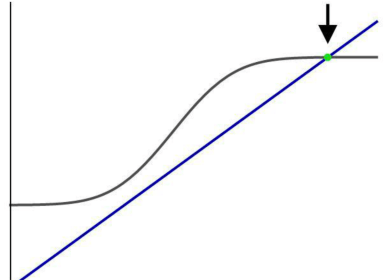
Recently there was a post about catastrophe theory by Steven Strogatz, a math blogger for the NYTimes who wrote about it as applied to, among other things, sleep. I’ll let him explain it and leave you with an intriguing animation from his article, demonstrating why things that seem to be working in an orderly, predictable way based on clear rules, can have unexpected outcomes.
As one of the comments on Strogatz’ blog post puts it:
“Easy to see why Mathematicians fall heads-over-heels in love with their subject.”
The 2013 BBC Proms in under 4 minutes. Great festival and great trailer!
The BBC Proms have just finished, but you can still watch some video clips and hear a few of the last concerts over on the BBC site. The famous “last night” (this year with Marin Alsop, Joyce DiDonato, and bad-boy violinist Nigel Kennedy, among others) will be available for another day, and was a good show.
Anybody remember the origin of Yahoo!’s name? Remember when it was practically the only search game in town? (Sure, Altavista, and a few others were available, but Yahoo! ruled supreme during the Web’s elementary school years.)
The name came from “Yet Another Hierarchical Officious Oracle” (amusing backstory on the relevant Wikipedia page). And the logo looked like this in 1996.
Not a thing of beauty, but did play up the jokes encoded in the name (a tech version of how a Swiftian ‘yahoo’ might sign his name?).
After many years, the company is saying good-bye to those hick serifs and that FF0000 red, and going for something sleek, optimal and “whimsical.”
The Yahoo logo design process represents the worst aspects of someone who doesn’t understand or accept that type design, typography, and graphic design in general are professions that benefit from years or decades of training. Mayer explains the process they employed to create the new logo. If I had attempted to present the reasoning she used to any of my graphic design teachers in college, any of the people I worked for at studios or on a freelance basis, or to a client who had hired me, I would have been laughed at and told to get real, or fired.
A case of “every one is a designer” gone wrong? But lousy design in itself: how is this a headline? It’s all around us all the time.
On a personal level, I love brands, logos, color, design, and, most of all, Adobe Illustrator. I think it’s one of the most incredible software packages ever made. I’m not a pro, but I know enough to be dangerous 🙂
So, one weekend this summer, I rolled up my sleeves and dove into the trenches with our logo design team: Bob Stohrer, Marc DeBartolomeis, Russ Khaydarov, and our intern Max Ma. We spent the majority of Saturday and Sunday designing the logo from start to finish, and we had a ton of fun weighing every minute detail.
God, I hope she wrote this herself, and that she keeps up this “The Secret Diary of Marissa Mayer, Aged 13¾” as she does everything else she is going to do to with Yahoo!. What other trenches will she dive into? What other incredible packages have caught her eye? Are any divisions of Yahoo! safe from things she loves on a personal level?
So many questions! I’d even add, can you really get through Stanford without encountering a writing teacher? Does Yahoo! really lack sufficient dineros to employ a (adult, full-sized) PR person to vet things? Did anyone except the CEO think that relaunching a national brand via a “how I spent a weekend” camp story was a good idea? Could they tell her? Did she ask?
But there is something wonderful about a web wunderkinder turning out to be just a bit thick. It reminded me of the interview that Washington Post TV critic did with Tom Shales with Phyllis George, a briefly famous media star, in the 80s. In fairness, George was no wunderkinder, at least not of technology, maybe of cheekbones. But there are parallels; sometimes the best copy is just letting a famous person talk on, unfiltered. To wit: Phyllis on the welcome mat she failed to receive on being made co-anchor of the The CBS Morning News:
Does the hostile press tick her off? “What would you think? Of course it does!“ she says. But she also adds, “I`m fine, I`m comfortable with who I am and what I`m doing, and I`ve got a lot to learn, and I`m the first to admit it, and I`ll grow doing it. But when they start getting nitpicky, it hurts.
“You know, all the money I was touted as getting, and all the thises and the thats, it became more important than what my job was, and this is a serious job to me. I wouldn’t have taken this if I didn’t think I could handle it, for God’s sake.“ Besides, she has it on good authority that the show is getting better. “My mother,“ she says, “just loves it.“
Later, she is sitting in the back of a limousine, wearing a fur coat, looking like several million dollars, and saying over and over, “I am a real person! I am a real person!“
Read the whole thing. It’s some kind of masterpiece. And I’m sure that Marissa’s mom just loves that new logo. She loves it!
Yesterday, zombie grammar rules and today zombie opera companies. Some might argue that New York City Opera (a place dear to many, including to me, as their first entrée into the art form–Turandot, 1976) is already the walking dead, unsteadily traversing different venues, with neither a set home nor a sufficient budget. Dead, and nearly dead companies are not unknown in recent years: not a happy roll call: Opera Boston was borked while I was still up there, Cleveland Opera, Opera Pacific…these are just the ones I can mention from memory. I’m sure there are others.
City Opera is different, not only because it was (despite at least two near-death experiences earlier in its history) a big part of the NYC and national opera scene, full season, launching pad for many starry careers (Sills and Domingo get mentioned most, but Ramey and von Stade were also NYCO babies once upon a time and their web site claims Reneé Fleming too). It also, particularly during the Julius Rudel years, in retrospect likely to be considered the company’s golden age, did first-rate work in an adventurous and plucky way. To pick one, not quite at random, milestone–the production in 1966 of Handel’s Julius Caesar by NYCO with Sills as Cleopatra (she sort of extorted Rudel into casting her instead of Phyllis Curtin) was a big hit, adding energy to what would become a world-wide interest in Handel’s stage works, now part of most opera companies’ rep.
More recently though, things seem like a mess, particularly on the business side of the house. The ill-fated Gerald Mortier appointment was head-scratching for many in and out of the biz. Venue problems, labor problems, board and governance discord. George Steele, the general manager and artistic director, and who some considered over-parted in at least the gm part of the role, (a Rodolfo cover being asked to sing Siegmund?), has been credited with leading some artistically daring and successful projects (in the NYCO tradition) but he has not done well, at least by my lights, in solving the biggest problem the company faces, namely creating an identity for NYCO as anything other than a permanent invalid.
Granted, forging an identity can be a tricky thing. Big personalities like Sills don’t come along every day. The Met has stolen some of what was once NYCO’s thunder–young talent shows up there first (the phenomenal Pretty Yende might have been a City Opera find a generation ago, yet earlier this year she went straight to the Met); The Met’s GM Peter Gelb has also championed new works, innovative directors, and then there is the Met in HD, which, for all its pleasures, cannibalizes even the Met’s own subscribers.
But an identity is not something an arts organization can opt out of. City Opera’s desperate answer to the “who are we?” question is “We are the People’s Opera,” flogged as a phrase to rally around. It shows up in my FB feed, and they have opened a KickStarter campaign to raise $1 million (a fraction of what they need). Like most KickStarter campaigns, it’s got a video, and that left me unfazed, in fact a little hostile.
No, NYCO, I’m not giving you money just because you need it. To me “The People’s Opera” rings false because it describes what the company once was, not what it is today. I would give money because I identify in some way with the organization, believe in it as it is now, and have a reasonable expectation that what it is becoming will provide some artistic meaning and experiences worth the magnitude of the ask. Tell me that story (better yet, let others —audience members, composers, and artists, for instance—speak for themselves on what the company is and means to them). (Even if Steele is the right NYCO head, he cannot be the only voice, given the doubts, justified or not, many have about his leadership.) Make it clear to me that the company has a chance to be functional business-wise and coherent enough artistically to be around along enough to make good on my support.
In short, tell me why I should come along on what looks like a zombie road trip with you. “Salve me, fons pietatis,” won’t suffice. And although, I ardently hope it’s not Mimì’s death scene, frankly that is preferable, for me at least, to indefinite zombie operatic hospice.
A memento of a better era in City Opera’s history: Sills’ spectacular Cleopatra. (Excuse the terrible video.)
The Chicago Manual of Style puts out a monthly Q&A that is both droll, and well punctuated. One of this month’s questions sent me scrambling to Google, where I found, to my shock, that it is okay to do many of the things that unhinged my 9th grade English teacher.
The query in question:
Q. In the August Q&A, you did not correct the correspondent’s misuse of the word entitled (“a poster authored with Smith entitled ‘Measuring . . .’”). Were you just being kind, or did you not want to distract from the question being asked?
A. You might prefer the more economical word title in your own writing, but entitle is widely used, and many writers think it makes a better verb. The belief that entitle must not be used in place of title is one of many spurious “zombie rules” clung to by writers and editors and teachers. If you Google “grammar superstitions” or “grammar zombie rules,” you might be surprised at how many of your own habits are out of date!
I did just that and found the Baltimore Sun, no less, giving up the ghost on “who” and “whom,” being (too) tolerant of lapses in observing the distinction between “which” and “that,” and (sort of) smiling on the use of they/their as singular. Oh the horror! This from John E. McIntyre, a past president of the American Copy Editors Society!
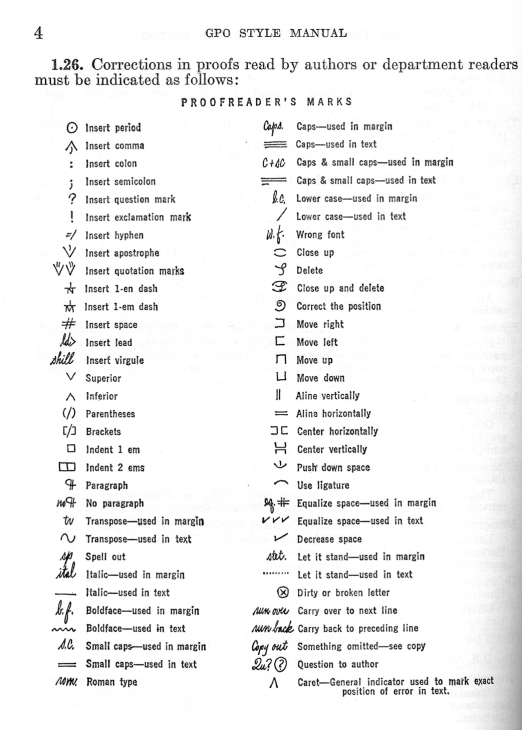
The Government Printing Office Style Manual of yesteryear, when rules were rules, and no infinitives were ever split.
For the commonplace book, to file under “nothing new under the sun.” Here’s the opening paragraph of a review from a recent TLS,
“To write and have something published is less and less something special,” complained Charles-Augustin Sainte-Beauve in 1839. “At least once in his life, everyone will have his page, his discourse, his publisher’s brochure, his toast, everyone will be an author once…’Why not me too?’ everyone asks.” One of the recurrent motifs of this latest installment of the “monumental” Cambridge History of Literary Criticism (as it rather immodestly describes itself on its dust jacket) is the challenge posed to traditional notions of literary and cultural value by what Sainte-Beuve, perhaps the most influential critic of the nineteenth century, called “industrial literature.” The period covered by this volume is characterized by rapid changes in the technology of literary production, the emergence of new audiences for literature, and deepening anxieties about the best way of distributing the “golden treasury” of high literary culture to the masses without debasing the currency.
Too many people publishing, new technical platforms disrupting once-sacrosanct cultural values, new audiences doing new (sometimes messy and inconvenient) things. 1839? 1997? 2013? Sounds like blogging to me…
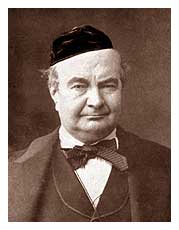
Charles-Augustin Sainte-Beuve, dean of the 19th-century literary critics. A face that says: “No, I’m not on twitter, and I don’t ‘follow’ anyone!”






 A Few Reasonable Words