Uchida is both an extraordinary pianist, and also one with thought-provoking things to say about music and the arts. She was asked by a trust in London to kick off a panel on various aspects of the music business. She addressed the question “Is Talent Enough?” with candor and charm.
Here she is playing the slow movement of Mozart’s C Major Sonata (K. 545). Selah.
Because I can’t and won’t do the 30 days of novel writing that thousands of bloggers do each November, but nonetheless like the idea of doing something daily, this November I’ll post a tidbit on music each day, be it a mention of a book, a particularly engaging performance, a resource, or my blathering on about some personal music topic such as finally learning to practice after 40 years of playing the piano.
To start, a hurrah for the best novel on a musical topic I’ve encountered (and I’ve plowed through my fair share), Gerontius by James Hamilton-Patterson. The focus of the book is the trip that composer Edward Elgar took to Brazil–a real life journey but one that is mostly a blank spot in the Elgar biography. The author uses this mystery to great effect, subtly evoking the musings of an artist late in life reflecting and wondering what is to come. He also “brings you along” as the best travel writing can do (Jan Morris springs to mind) with vivid scenes of shipboard life.
It reset my sense of Elgar, taking me past my view of him as a complacent late Victorian, helping me see him as a searcher after a new music synthesis, no less than his revolutionary peers (though using very different tools). This reassessment was aided by going to Colin Davis’ vibrant performances of Elgar works with the Boston Symphony Orchestra including a performance of Elgar’s masterwork “The Dream of Gerontius.”
Here is mezzo Sarah Connolly singing “Softly and gently, dearly-ransomed soul” from one of those BSO concerts (a radiant performance, if dangerously slow for the chorus):
For today, the last ghost story for this Halloween, M.R. James’ “The Mezzotint,” a “prints and photographs” chiller (which I think Rod Serling’s Night Gallery riffed on.)
Monte James‘ elegant ghost stories were influenced by his day job as an archivist and a medievalist. They often have books or historical artifacts that turn out to be sinister, and his tone manages to combine the cozy and genuinely creepy. The central object in “The Mezzotint” betrays a story of a long-ago crime via the form of a seemingly innocuous print of a country house.
A taste:
“It was by this time rather late in the evening, and the visitors were on the move. After they went Williams was obliged to write a letter or two and clear up some odd bits of work. At last, some time past midnight, he was disposed to turn in, and he put out his lamp after lighting his bedroom candle. The picture lay face upwards on the table where the last man who looked at it had put it, and it caught his eye as he turned the lamp down. What he saw made him very nearly drop the candle on the floor, and he declares now that if he had been left in the dark at that moment…”
And for a bit of bewitching music, here is Liszt in a Mephistophelean and melancholy mode:
First Boris Berezovsky in Liszt’s Mephisto Waltz #1.
(With a camera person who was asleep at the wheel in the last moments, or perhaps so dazzled by the virtuosity that he forgot to get the Boris’ bow in frame?)
and Lang Lang playing the Liszt “Romance”
His performance is lovely, the video production is overwrought, and yet Liszt would likely have loved it.
This little Tango by Isaac Albeniz was something I discovered as a kid–it is one of the first pieces in “59 Piano Solos You Love to Play,” and I strummed through it many times. But a few years back, I discovered that the great virtuoso Leopold Godowsky made an arrangement that refracted it through something that almost seemed bi-tonal. The main tune is there, but there are other voices murmuring away in other rooms, a wonderful effect.
There are many fetching performances, but Shura Cherkassky’s may be the best.
The rain is coming down cats and dogs in DC today, so two pieces come to mind:
The “Raindrop” Prelude of Chopin (Op. 28, #15) played by Martha Argerich (as the comments note, a force of nature).
and
The third movement of Brahms’ First Violin Sonata, based on his rain motif, a gentle romantic patter, here played by Itzhak Perlman and Vladimir Ashkenazy (who is successful in keeping Itzahk from over egging the cream).
Lots of Wagner, Liszt, and Strauss listening of late–for some reason summer is prompting an appetite for overheated romantic music. But here are two non-excessive bits of Liszt from his set Années de pèlerinageYears of Pilgrimage. This was a musical travel diary for him, with sketches evoking sights, landscapes, artworks headed by bits of related poetry (often overheated bits of Byron).
Here are two from the first volume, Switzerland, “Au lac de Wallenstadt” and “Au bord d’une source,” beautifully illuminated by the gentle artistry of Wilhelm Kempff.
Lake Walenstadt, Switzerland. Perhaps Liszt had this very view. Wonderful photo from Martin Fisch’s flickr stream. https://www.flickr.com/photos/marfis75/ CC 2.0
Trying to catch up on posting…a lot in the backlog.
But for now, two videos from the week’s surfing that stayed with me.
The first comes from the Hay Festival of Literature & the Arts, where Sherlock, er, I mean, Benedict Cumberbatch, among others, was on hand to read a group of inspiring letters. There were many wonderful readings apparently, but the finale, Kurt Vonnegut’s letter to the Drake School Board–the famous “I am very real” letter–was something special.
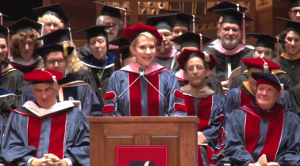
The other inspiration is in the form of good advice from mezzo Joyce DiDonato, delivered during her commencement speech to this year’s graduating class at Julliard, which she disarmingly admits she wouldn’t have been admitted to.
The text of the speech is on this page, with video embedded at the end.
“[You are] now servants to the ear that needs quiet solace, and the eye that needs the consolation of beauty, servants to the mind that needs desperate repose or pointed inquiry, to the heart that needs invitation to flight or silent understanding, and to the soul that needs safe landing, or fearless, relentless enlightenment.”
I certainly find safe landing in this, her gorgeous singing of “Ombra mai fu,” one of those Handel arias of unearthly beauty. (There are so many!)
Involved as I have been over the years in classical piano recitals (mostly attending and writing about them, rather than giving them), I’ve thought a lot about how the programs are put together. One template is the anthology. It goes something like this: kick off with Scarlatti Sonatas (or a Bach WTC Prelude and Fugue), then offer a first course of Mozart Sonata in C K. 330, (or more adventuresomely, his lovely Duport Variations). Main course closing the first half will be something hearty, but in parts, one of the Schumann sets, maybe Waldszenen. And when people come back after intermission, it’s time for a trip up the mountain . The most frequently encountered vehicle for the journey seems to be one of the late Schubert Sonatas, but Beethoven of course will also be considered, and there are offerings by many others–one of the best second halfs I ever heard was the complete Études-Tableaux of Rachmaninoff.
There’s still a lot of life in this plan, but it does risk monotony. As well, although the performer no doubt puts a lot of thought into the order and meaning of the pieces as a larger experience, the audience can miss this. The familiar format can, and often does, let the audience off the hook from any effort to figure out what is going on.
Not so in this wonderful recital by Israeli pianist Matan Porat. “Variations on a theme by Scarlatti” takes a Scarlatti sonata as an opening, but observing the stepwise character in this piece’s material, builds out a program that riffs on that as a set of variations that lasts the whole concert/CD. Works from different styles, periods, and emotional registers come together, but with something related, and a really engrossing musical conversation ensues. At first pieces seem plucked randomly (one piece from within Waldszenen, side by side with Boulez, and Ligeti too?) Soon, you do the work as you listen, finding the connections within pieces, and from piece to piece in the whole set. I found myself asking what idea is repeated, what is varied, and why? How do these things relate? By the end, I was hearing new things in works I know very well, and hearing familiar things in works that were new to me.
It’s a wonderful idea, and a great inspiration for thinking about a recital as a work of art in and of itself.
Here’s a video of the start of the program, and the whole thing is on Naxos Music Library (where I heard it) but also I’m sure on iTunes and Amazon, and Porat has a web site.

 Uchida is both an extraordinary pianist, and also one with thought-provoking things to say about music and the arts. She was asked by a trust in London to kick off a panel on various aspects of the music business. She addressed the question “Is Talent Enough?” with candor and charm.



 A Few Reasonable Words