Spooky Words: Ghost Story Season is Upon Us

Sized_Ghost_ImagesHerewith my first annual round-up of ghost story collections–there are many wonderful ones, and seldom does an October go by that I don’t find a new anthology (or at least one new to me).

I’ll roll out an entry each day this week.

For starters:

1) The Collected Ghost Stories of E.F. Benson. The British writer is best known for the Mapp and Lucia series of social comedies set among the English smart set of the Twenties. He wrote a large number of elegant–if often shiver-free–ghost stories, often set among the same Masterpiece Theater crowd, and evoking the dappled shadows of leaves falling on windows of great country houses, where a face appears and then dissolves.

The opening of “How Fear Departed from the Long Gallery” provides a good idea of what he’s up to:

Church-Peveril is a house so beset and frequented by spectres, both
visible and audible, that none of the family which it shelters under
its acre and a half of green copper roofs takes psychical phenomena
with any seriousness. For to the Peverils the appearance of a ghost is
a matter of hardly greater significance than is the appearance of the
post to those who live in more ordinary houses. It arrives, that is to
say, practically every day, it knocks (or makes other noises), it is
observed coming up the drive (or in other places). I myself, when
staying there, have seen the present Mrs. Peveril, who is rather
short-sighted, peer into the dusk, while we were taking our coffee on
the terrace after dinner, and say to her daughter:

“My dear, was not that the Blue Lady who has just gone into the
shrubbery. I hope she won’t frighten Flo. Whistle for Flo, dear.”

(Flo, it may be remarked, is the youngest and most precious of many
dachshunds.)

Blanche Peveril gave a cursory whistle, and crunched the sugar left
unmelted at the bottom of her coffee-cup between her very white teeth.

“Oh, darling, Flo isn’t so silly as to mind,” she said. “Poor blue
Aunt Barbara is such a bore! Whenever I meet her she always looks as if she wanted to speak to me, but when I say, ‘What is it, Aunt Barbara?’ she never utters, but
only points somewhere towards the house, which is so vague. I believe
there was something she wanted to confess about two hundred years ago,
but she has forgotten what it is.”

Here Flo gave two or three short pleased barks, and came out of the
shrubbery wagging her tail, and capering round what appeared to me to
be a perfectly empty space on the lawn.

“There! Flo has made friends with her,” said Mrs. Peveril. “I
wonder why she dresses in that very stupid shade of blue”


Not all the ghosts at Church-Peveril are quite so domesticated it turns out, and they cause more than just sartorial dismay.

Ghost_Post

Commonplace Book: Ronald Blythe on Laurie Lee

Here’s a bit of a beautifully done TLS review of books by Laurie Lee, the British walker and writer who would have been 100 this year.

Read the full review at: http://www.the-tls.co.uk/tls/public/article1460182.ece

And so it would go on all through his life, the writing down of his vision of things, the careful affair he had with prose, the mapping of his territory. And also the shifting on from idyll to terror. A Moment of War (1991) finds him in the death cell at Albacete. There is always an element of “walking into it” as well as walking out of it with Lee. Neither politics nor religion provides a reason. The only permanency he feels – and is determined to hold on to – lies in the intensity of “going on”. He was ill and he could have walked away from the war (as some did). But reading him now reveals someone on endless journeys for subjects, from belated parenthood to the firing squad, from wayside flowers to flying visits to Mexico and Barbados. Anywhere, everywhere, and always fresh words to describe them. Lee doesn’t so much wear well as not wear at all. He is prime mid-twentieth century, writing with huge care but also with passion, a very English word-painter.

All around him were those who were sickeningly grateful to be in work but before long a boiling anger would make Lee drop tools and walk off the building site. His descriptions of London in the 1930s, the digs and the back streets, are cinematic and supply a counter-balance to what he found in urban Spain. He couldn’t bear to part with all this for the sake of security. It would be insecurity that would make him thrive. He tried to see London with eight-year-old eyes.

“This London, with its hollow, drum-like name, is neither England nor abroad but something on its own, a walled fantasy of remembered tales . . . . A roar is heard, as of a great pot boiling, chimneys pour sulphur into the heavy sky, banners and gory heads droop from the walls . . . . It is neither night nor day there, but a rouged perpetual twilight, during which notable calamities are all happening at once.”

Writing for Lee was very much about recognizing life’s traps and getting out of them. He is relentlessly observant and original. His first readers would have been nowhere and so he takes enormous trouble to pass on to them unforgettable accounts of his foreign adventures. These began at home when he was a child, when the gooseberry and rhubarb garden became the wastes of Africa. With Lee not a step or mouthful of life must be forgotten. He clings to everything he has touched or seen or heard, hoarding it like a grateful miser, fixing it to the page. His captured small talk is often part of the story which he never ceases to spin about his life. In it he is always unheroic and in his twenties – and rarely at home.

Here he is in Ireland: “The pub in Ireland is still a kind of chapel of ease and shows the Irishman on top of his time. The television, for instance, will usually be kept in a small back room and will be killed when a man is talking”. When Lee played his fiddle in one, “an old man struck the bar with his cap, ‘Englishman’, he said, ‘we forgive you’”. If Lee has a message for today it is to make the most of everything and write it down. Also to read a lot. And to make it up, for some things should have happened but did not have time to. And whatever you do, don’t get old. There is no need to if you are a writer.

The review is by Ronald Blythe, just 9 years short of 100 himself, and still writing his weekly column, termed a treasure by the Guardian. Blythe’s collection of diaries is also a gem. berries

Commonplace Book: E.B. White

Back from a Labor Day weekend in the Adirondacks (highly recommended, particularly including a little time on the water, and the Adirondack Museum).  A selection from lots of photos I took, including–that deep blue one–the view from the porch of our lodge looking out onto Blue Mountain Lake on a late summer evening.

To complete it, a bit from E.B. White’s 1941 essay, “Once More to the Lake.” He was talking about Maine, but the spirit is the same. 


Summertime, oh summertime, pattern of life indelible, the fade-proof lake, the woods unshatterable, the pasture with the sweetfern and the juniper forever and ever, summer without end; this was the background, and the life along the shore was the design, the cottages with their innocent and tranquil design, their tiny docks with the flagpole and the American flag floating against the white clouds in the blue sky, the little paths over the roots of the trees leading from camp to camp and the paths leading back to the outhouses and the can of lime for sprinkling, and at the souvenir counters at the store the miniature birch-bark canoes and the post cards that showed things looking a little better than they looked. This was the American family at play, escaping the city heat, wondering whether the newcomers at the camp at the head of the cove were “common” or “nice,” wondering whether it was true that the people who drove up for Sunday dinner at the farmhouse were turned away because there wasn’t enough chicken.

Perhaps he seems a bit-old fashioned, even Norman Rockwell-esque now, but it’s hard to overestimate what an influence White’s prose had over Americans who tried to write a sentence in English in my generation.  He’s still a lodestone to me.

Reasonable Words: Poetry

Today a poem by David Slavitt, a member of the “100 Club” and a writer with a wide range (from Latin translations to potboiler best-sellers) and impish sense of humor.

Tryma

A tryma is a nutlike drupe.
No one in your playground is likely to respond
to such an observation in any reasonable way, but
you can always explain that a drupe has a single endocarp,
which is true but not, perhaps, helpful.

A pneuma is, by extension, a breathlike trope?
That, we may agree, would be horsing around, but
a drupelet, which is a small drupe, as, for example the pulpy grain of the blackberry,
would have, logically, an endocarplet.
When it rains, as it may, from time to time,
I can imagine you running through the meadow exclaiming,
“Ah, see the droplets on the drupelets!”

You will be an exquisite child,
or, rather, are already but you will proclaim it
in such a way as to defy the world.
And will they call you on the carplet?
Defy them, defy them.

The trauma of the tryma
is with us always, as are the poor
in spirit, who will stare at you blankly
on in resentment ask,
“Wha’? Who?”
Answer them smartly and tell them
the wahoo is a kind of Euonymous
(which is also a good name)
with arillate seeds.
Tell them your grandfather said so.

If that doesn’t work, and it won’t, you can take some comfort
from knowing that the false aril originates
from the orifice instead of the stalk of an ovule,
as in the mace of the nutmeg, which is an arillode.

It follows, I suppose, that a true aril is a false arillode,
although people seldom say so,
but never let that stop you.

David R. Slavitt

John Dunstall Walnuts and Hazelnuts 1666

Beautiful Words: Adam Foulds’s “The Quickening Maze”

FouldsSavoring Adam Fould’s 2009 novel about John Clare, rural poet, sort of a 19th century outsider artist, who spent time in at High Beach, an asylum near London run by Matthew Allen. A young Alfred Tennyson is there to care for his ailing brother, as is a cast of other family members and inmates, drawn sensitively but with sharp lines.

Such fictional filling out of literary lives can be a rocky path for a contemporary novel: if it succeeds, you may just want to put down the new novel and read the protagonists’ own work instead. Fould’s book certainly does make me want to return to Clare and Tennyson, but the quiet smiles in Fould’s writing keep you hooked, as does the rest of the production–narrative drive, character, and gorgeous descriptive writing.

A taste from early on: Matthew Allen is speaking about his therapeutic method with the newly arrived Alfred Tennyson.

‘Yes, the disclosure of personal fears and unhappinesses. Often I find encouraging patients through a conversational, what shall we call it, memoir is terribly useful.’

Tennyson huffed out a big mouthful of uninhaled smoke. ‘So you’ll be hearing all about my family.’

‘Probably. But I make no certain inferences from the testimony of unhappy individuals. That really isn’t the point. At any rate, families, well…’ He smiled. ‘Nowhere more productive of mental difficulty. I attach no shame to coming from one. It is not a matter in which we generally have a choice.’

‘You’ll see. You’ll be mired in it. The black blood of the Tennysons.’

‘So there is a predisposition – to melancholy, or other disturbances? Very often …’

‘There are quieter barnyards. Somehow we don’t take life easily.’

Impossible feats?

Hard: Reading Finnegan’s Wake.

Harder: Translating Finnegan’s Wake into a Western language that uses a Latin Alphabet.

Hardest: Translating Finnegan’s Wake into Chinese.

From a recent brief in the London Review of Books about Dai Congrong’s effort:

Many people are eager to know when Dai Congrong, the Chinese translator of Finnegans Wake, is going to produce the rest of the book. To date she has only published one third of her version and dropped no hints about when we might see the rest. A while back, quizzed by a reporter, she said: ‘May God give me the courage to finish it’ – which is surely a good call, even if you’re not a believer. Last month a journalist friend put the question again, and Dai simply replied: ‘Don’t ask me. I don’t know any more than you do.’ That, too, seems reasonable, given the size of the task. There’s plenty of Finnegans Wake that I’d be stumped to put into Mandarin. Browsing at random: ‘The fall (bababadalgharaghtakamminarronnkonnbronntonnerronntuonn-thunntrovarrhounawnskawntoohoohoordenenthurnuk!) of a once wallstrait oldparr is retaled early in bed and later on life down through all christian minstrelsy.’ I’m not sure this is convertible into any language, even an Indo-European one, but Dai’s translation has been a hit in China, as the Western media reported widely at the time of publication.


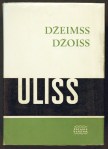
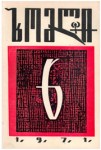
Nearly as formidable, Ulysses, has been translated into many languages, Japanese being one of the earliest. Here are some of the editions, from an exhibit at the University at Buffalo.