Tipped by Neverending Search, I’ve been looking at a course (aimed at kids I think) on How Computers Work. First full episode here (I would skip the content-free intro by one Bill Gates).
They are fun, if a tad heavy hyperactive in the video editing. Useful whether new info, checking what you know, or in teaching and learning contexts. It’s from the code.com people.
One of the many benighted opinions of my youth was a certain disdain for Franz Josef Haydn. Somehow I bought into a line of thinking that Haydn was the epigone of Mozart (just as Dvorak was the epigone of Brahms), with the result that their glories were overlooked. Now I couldn’t live without either one of them.
Part of that is because of Alfred Brendel’s (and others’) advocacy of the piano sonatas. Here he is in a favorite.
The conductor Christopher Hogwood had a nice line about Mozart versus Haydn in a radio interview I heard years ago. To CH, Mozart was like a great master chef, whose mysterious ways were hidden in a kitchen you could not see, you received these fantastic meals of impossible polish and technique and couldn’t figure out how such a thing could have been devised. Haydn let it all hang out, he cut up the ingredients right at the table, and cooked all the food in front of you–no cosmic mystery, it’s all right there, and you listen along as he has his, often humorous way, with everything–you included.
The result, delightful, moving, and well crafted, is deeply satisfying and soul enriching to listen to.
Nosing around the web for online Shakespeare resources (full report later), found this nice list of everyday terms that are “quoting Shakespeare.”
“All our yesterdays”— (Macbeth)
“As good luck would have it” — (The Merry Wives of Windsor)
“As merry as the day is long” — (Much Ado About Nothing / King John)
“Bated breath” — (The Merchant of Venice)
“Be-all and the end-all” — (Macbeth)
“Neither a borrower nor a lender be” — (Hamlet)
“Brave new world” — (The Tempest)
“Break the ice” — (The Taming of the Shrew)
“Brevity is the soul of wit” — (Hamlet)
“Refuse to budge an inch” — (Measure for Measure / The Taming of the Shrew)
“Cold comfort” — (The Taming of the Shrew / King John)
“Conscience does make cowards of us all” — (Hamlet)
“Crack of doom” — (Macbeth)
“Dead as a doornail” — (Henry VI Part II)
“A dish fit for the gods” — (Julius Caesar)
“Cry havoc and let slip the dogs of war” — (Julius Caesar)
“Devil incarnate” — (Titus Andronicus / Henry V)
“Eaten me out of house and home” — (Henry IV Part II)
“Faint hearted” — (Henry VI Part I)
“Fancy-free” — (A Midsummer Night’s Dream)
“Forever and a day” — (As You Like It)
“For goodness’ sake” — (Henry VIII)
“Foregone conclusion” — (Othello)
“Full circle” — (King Lear)
“The game is afoot” — (Henry IV Part I)
“Give the devil his due” — (Henry IV Part I)
“Good riddance” — (Troilus and Cressida)
“Jealousy is the green-eyed monster” — (Othello)
“Heart of gold” — (Henry V)
“Hoist with his own petard” — (Hamlet)
“Ill wind which blows no man to good” — (Henry IV Part II)
“In my heart of hearts” — (Hamlet)
“In my mind’s eye” — (Hamlet)
“Kill with kindness” — (The Taming of the Shrew)
“Knock knock! Who’s there?” — (Macbeth)
“Laughing stock” — (The Merry Wives of Windsor)
“Live long day” — (Julius Caesar)
“Love is blind” — (The Merchant of Venice)
“Milk of human kindness” — (Macbeth)
“More sinned against than sinning” — (King Lear)
“One fell swoop” — (Macbeth)
“Play fast and loose” — (King John)
“Set my teeth on edge” — (Henry IV Part I)
“Wear my heart upon my sleeve” — (Othello)
“Wild-goose chase” — (Romeo and Juliet)
And some nice bits on Shakespeare’s Sonnets–ever surprising works–from a recent TLS.
Writers as well as readers have found the sonnets irresistible – not only because of their quasi-autobiographical subject material, but also because of their raw exploration of why anyone would bother to write at all. These poems have indeed enjoyed extraordinarily complex and rich afterlives. Jonathan Post’s chapter on “regifting” the sonnets attends to new work by British and American poets including Jen Bervin, Carol Ann Duffy, Don Paterson, Elizabeth Bishop and Allen Ginsberg. The boorish speaker of Wendy Cope’s “Strugnell’s Sonnets”, in Making Cocoa for Kingsley Amis, keeps twisting Shakespeare’s opening lines: “The expense of spirits is a crying shame”. In an altogether different register, the American poet Alice Fulton’s collection Barely Composed contains a poem which scrambles a series of prefixes, suffixes and homonyms from Shakespeare’s Sonnet 87. As Post puts it, “how strange and barely recognisable, yet so it is”. The title of Fulton’s poem, “Peroral”, refers to the practice of taking a dose of medicine by the mouth – and this suggests, to Fulton and perhaps to Post, a new way of doing creative justice to poetry from the distant past. Reading the sonnets is no longer simply therapeutic, as if influence were a form of influenza. It seems more purposeful to work collaboratively (instead of competitively) with these poems in order to create bright new redactions
Souvenirs of a trip to Hawaii around this time last year. Was not on my bucket list–was just a convenient work add on, but turned out to be pretty amazing.
That interior is the Bishop Museum, strongly recommended if you find yourself in Honolulu. And of course my informal (and unattainable) quest to visit every public library in America continued.
Writer and physicist Alan Lightman’s take on what might be termed love at first sight.
SMILE
by Alan Lightman
Bubble chamber event, aka love?
It is a Saturday in March. The man wakes up slowly, reaches over and feels the windowpane, and decides it is warm enough to skip his thermal underwear. He yawns and dresses and goes out for his morning jog. When he comes back, he showers, cooks himself a scrambled egg, and settles down on the sofa with The Essays of E. B. White. Around noon, he rides his bike to the bookstore. He spends a couple of hours there, just poking around the books. Then he pedals back through the little town, past his house, and to the lake.
When the woman woke up this morning, she got out of bed and went immediately to her easel, where she picked up her pastels and set to work on her painting. After an hour, she is satisfied with the light effect and quits to have breakfast. She dresses quickly and walks to a nearby store to buy shutters for her bathroom. At the store, she meets friends and has lunch with them. Afterward, she wants to be alone and drives to the lake.
Now, the man and the woman stand on the wooden dock, gazing at the lake and the waves on the water. They haven’t noticed each other.
The man turns. And so begins the sequence of events informing him of her. Light reflected from her body instantly enters the pupils of his eyes, at the rate of ten trillion particles of light per second. Once through the pupil of each eye, the light travels through an oval-shaped lens, then through a transparent, jellylike substance filling up the eyeball, and lands on the retina. Here it is gathered by one hundred million rod and cone cells.
Cells in the path of the reflected highlights receive a great deal of light; cells falling in the shadows of the reflected scene receive very little. The woman’s lips, for example, are just now glistening in the sunlight, reflecting light of high intensity onto a tiny patch of cells slightly northeast of back center of the man’s retina. The edges around her mouth, on the other hand, are rather dark, so that cells neighboring the northeast path receive much less light.
Each particle of light ends its journey in the eye upon meeting a retinene molecule, consisting of 20 carbon atoms, 28 hydrogen atoms, and 1 oxygen atom. In its dormant condition, each retinene molecule is attached to a protein molecule and has a twist between the eleventh and fifteenth carbon atoms. But when light strikes it, as is now happening in about 30,000 trillion retinene molecules every second, the molecule straightens out and separates from its protein. After several intermediate steps, it wraps into a twist again, awaiting arrival of a new particle of light. Far less than a thousandth of a second has elapsed since the man saw the woman.
Triggered by the dance of the retinene molecules, the nerve cells, or neurons, respond. First in the eye and then in the brain. One neuron, for instance, has just gone into action. Protein molecules on its surface suddenly change their shape, blocking the flow of positively charged sodium atoms from the surrounding body fluid. This change in flow of electrically charged atoms produces a change in voltage that shudders through the cell. After a distance of a fraction of an inch, the electrical signal reaches the end of the neuron, altering the release of specific molecules, which migrate a distance of a hundred-thousandth of an inch until they reach the next neuron, passing along the news.
The woman, in fact, holds her hands by her sides and tilts her head at an angle of five and a half degrees. Her hair falls just to her shoulders. This information and much, much more is exactingly encoded by the electrical pulses in the various neurons of the man’s eyes.
In another few thousandths of a second, the electrical signals reach the ganglion neurons, which bunch together in the optic nerve at the back of the eye and carry their data to the brain. Here, the impulses race to the primary visual cortex, a highly folded layer of tissue about a tenth of an inch thick and two square inches in area, containing one hundred million neurons in half a dozen layers. The fourth layer receives the input first, does a preliminary analysis, and transfers the information to neurons in other layers. At every stage, each neuron may receive signals from a thousand other neurons, combine the signals – some of which cancel each other out – and dispatch the computed result to a thousand-odd other neurons.
After about thirty seconds – after several hundred trillion particles of reflected light have entered the man’s eyes and been processed – the woman says hello. Immediately, molecules of air are pushed together, then apart, then together, beginning in her vocal cords and traveling in a spring like motion to the man’s ears. The sound makes the trip from her to him (twenty feet) in a fiftieth of a second.
Within each of his ears, the vibrating air quickly covers the distance to the eardrum. The eardrum, an oval membrane about .3 inch in diameter and tilted fifty-five degrees from the floor of the auditory canal, itself begins trembling and transmits its motion to three tiny bones. From there, the vibrations shake the fluid in the cochlea, which spirals snail-like two and a half turns around.
Inside the cochlea the tones are deciphered. Here, a very thin membrane undulates in step with the sloshing fluid, and through this basilar membrane run tiny filaments of varying thickness, like strings on a harp. The woman’s voice, from afar, is playing this harp. Her hello begins in a low registers and rises in pitch toward the end. In precise response, the thick filaments in the basilar membrane vibrate first, followed by the thinner ones. Finally, tens of thousands of rod-shaped bodies perched on the basilar membrane convey their particular quiverings to the auditory nerve.
News of the woman’s hello, in electrical form, races along the neurons of the auditory nerve and enters the man’s brain, through the thalamus, to a specialized region of the cerebral cortex for further processing. Eventually, a large fraction of the trillion neurons in the man’s brain become involved with computing the visual and auditory data just acquired. Sodium and potassium gates open and close. Electrical currents speed along neuron fibers. Molecules flow from one nerve ending to the next.
All of this is known. What is not known is why, after about a minute, the man walks over to the woman and smiles.
Of great pianists there never seems to be any end. One of my favorite of the current roster is Polish pianist Piotr Anderszewski, restrained and poetic whether in Chopin or Szymanowski.
He has just released the second in a series of Mozart Concerti recording. Tipped off by a rave in Gramophone, I listened to trailer on YouTube and even these little bits enchant.
And here are two movements from Bach’s French Suite #5, from a 2000 performance in Miami (probably one that wouldn’t meet his current standards, if he doesn’t like his performance he gets the urge to walk out–and sometimes does).
He’s recorded this entire Bach Suite, with magical results, and also is the focus of an interesting documentary by Bruno Monsaingeon. Only the trailer is on YouTube, but if you have a public library card, you may be able to find it on their site.
Billie Holiday’s burned voice
had as many shadows as lights,
a mournful candelabra against a sleek piano,
the gardenia her signature under that ruined face.
(Now you’re cooking, drummer to bass,
magic spoon, magic needle.
Take all day if you have to
with your mirror and your bracelet of song.)
Fact is, the invention of women under siege
has been to sharpen love in the service of myth.
A few weeks back, CPU bugs Meltdown and Spectre (why the b-movie titles?) made headlines for the comprehensive threat they posed (and still do) to computer security.
[Jake Swearingen]: To me, a layman, it’s odd that CPUs require so much research, since the architecture is designed by humans. Why do they require so much outside research to sort of understand what they’re doing?
Diagram of a chip
[Researcher Anders Fogh] Because CPUs are remarkably complex. So to build a CPU, what you do is, you take a handful of sand, bit of epoxy, a tiny bit of metal, and a bit of pixie dust, and you stir it all together and you get this machine that basically runs our world today. You can imagine that that process has to be very, very complex. So down at the lowest level you have to deal with quantum phenomena; at the next level you have heat dissipation; on the next level you have to connect everything; and then the next level and next level all the way up, you actually have a piece of silicon that takes instructions, and that just turns out to be incredibly complex. For scale, a modern CPU, not even the newest and the biggest, has about 5 billion transistors in them. The Saturn V rocket that took man to the moon has about 3 million. So this is a really ridiculously complex machine, and they have been developed for longer than I have been alive.
Begins to get at why unwinding CPU-based vulnerablities is a formidable task.
Author Dan Pink has a new book out, When, his synthesis of research about timing in our lives. He makes reference to research on singing in a chorus (everyone doing something at exactly the same time). Some results suggest that its health benefits rival vigorous exercise.
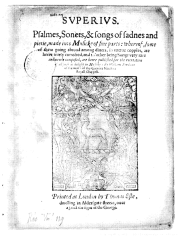
I spent a little time trying to find the original data on this, and although I didn’t chase down the exact studies, I did find some interesting stuff. In a volume that rounds up recent research on music generally, Music, Health, and Wellbeing, the chapter on choral singing points out that Renaissance composer William Byrd was a strong fan of singing for health.
Here’s the relevant bit:
An early reference to the idea that singing can be good for health and wellbeing is found in the writings of William Byrd (1543-1623). In the preface to his Psalmes, Sonets & songs [of sadnes and pietie], published in 1588, Byrd outlined eight reasons ‘to perswade every one to learne to sing’. Four of these reasons resonate with contemporary views on the ‘therapeutic’ benefits of singing. Singing, he asserted, helps to maintain health, by being ‘delightfull to Nature’ (i.e. giving pleasure and joy), by exercising the musculature of the chest, by expanding the lungs and by helping to reduce stammering and improve voice quality.
Byrd summed up his advocacy for singing in a well-known couplet:
Since singing is so good a thing, I wish all men would learne to sing.
Remarkably, it is only now, over 400 years later, that scientific attention has begun to assess the merits of Byrd’s insights.
Everybody should learn to sing, although few do it with the elan of this gang, Voces8 in an arrangement of the folk song Shenandoah.
” After studying mathematics at the University of Birmingham, she [MLBL] spent the latter part of the Second World War working at the Telecommunications Research Establish (TRE), the secret centre of Britain’s radar development effort. With the war over she returned to her studies, before leaving Britain for the Mount Stromlo observatory in Australia in 1947, where she worked classifying the spectra of stars. In 1951 she returned to Britain and chanced across an advert for a job at Ferranti in Manchester that would change her life: “I was reading Nature and saw an advertisement one day for – saying, ‘Mathematicians wanted to work on a digital computer.’”

#/media/File:First-page-first-folio-measure-for-measure.jpg)


 contemporary views on the ‘therapeutic’ benefits of singing. Singing, he asserted, helps to maintain health, by being ‘delightfull to Nature’ (i.e. giving pleasure and joy), by exercising the musculature of the chest, by expanding the lungs and by helping to reduce stammering and improve voice quality.
 A Few Reasonable Words