Modest Pleasures: The CMOS Q&A on Grammar Zombie Rules

The Chicago Manual of Style puts out a monthly Q&A that is both droll, and well punctuated.  One of this month’s questions sent me scrambling to Google, where I found, to my shock, that it is okay to do many of the things that unhinged my 9th grade English teacher.

The query in question:

Q. In the August Q&A, you did not correct the correspondent’s misuse of the word entitled (“a poster authored with Smith entitled ‘Measuring . . .’”). Were you just being kind, or did you not want to distract from the question being asked?

A. You might prefer the more economical word title in your own writing, but entitle is widely used, and many writers think it makes a better verb. The belief that entitle must not be used in place of title is one of many spurious “zombie rules” clung to by writers and editors and teachers. If you Google “grammar superstitions” or “grammar zombie rules,” you might be surprised at how many of your own habits are out of date!

I did just that and found the Baltimore Sun, no less, giving up the ghost on “who” and “whom,” being (too) tolerant of lapses in observing the distinction between “which” and “that,” and (sort of) smiling on the use of they/their as singular. Oh the horror!  This from John E. McIntyre, a past president of the American Copy Editors Society!

Screen Shot 2013-09-10 at 8.13.41 AM
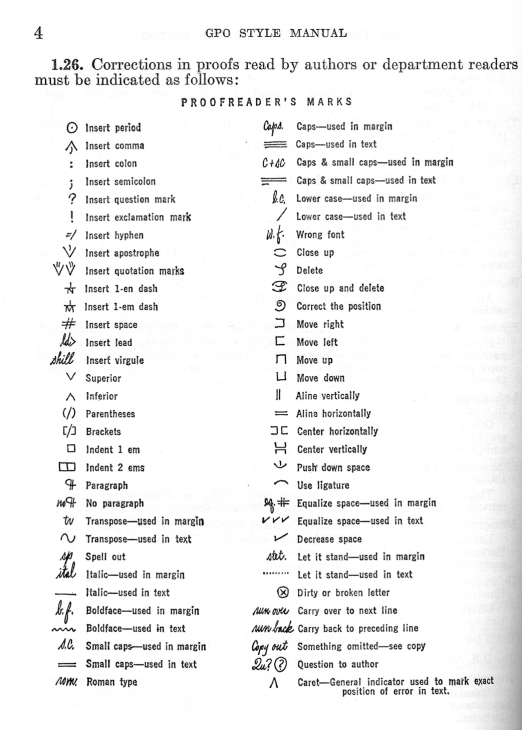
The Government Printing Office Style Manual of yesteryear, when rules were rules, and no infinitives were ever split.

Reasonable Words: “Oh, you publishing scoundrels!”

For the commonplace book, to file under “nothing new under the sun.” Here’s the opening paragraph of a review from a recent TLS,

“To write and have something published is less and less something special,” complained Charles-Augustin Sainte-Beauve in 1839. “At least once in his life, everyone will have his page, his discourse, his publisher’s brochure, his toast, everyone will be an author once…’Why not me too?’ everyone asks.” One of the recurrent motifs of this latest installment of the “monumental” Cambridge History of Literary Criticism (as it rather immodestly describes itself on its dust jacket) is the challenge posed to traditional notions of literary and cultural value by what Sainte-Beuve, perhaps the most influential critic of the nineteenth century, called “industrial literature.” The period covered by this volume is characterized by rapid changes in the technology of literary production, the emergence of new audiences for literature, and deepening anxieties about the best way of distributing the “golden treasury” of high literary culture to the masses without debasing the currency.

Too many people publishing, new technical platforms disrupting once-sacrosanct cultural values, new audiences doing new (sometimes messy and inconvenient) things. 1839? 1997? 2013? Sounds like blogging to me…

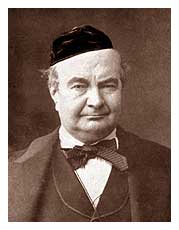
AVT_Charles-Augustin-Sainte-Beuve_2628
Charles-Augustin Sainte-Beuve, dean of the 19th-century literary critics. A face that says: “No, I’m not on twitter, and I don’t ‘follow’ anyone!”

Beautiful Pictures: Hugh Mangum

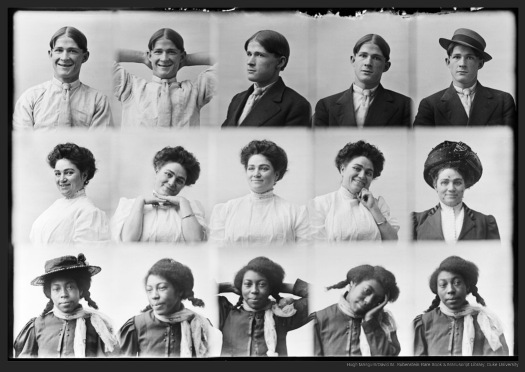
The NYTImes Lens blog has a feature on an unknown Reconstruction-era photographer named Hugh Mangum, who took “penny pictures” of ordinary people.  I thought the title came from sitters paying a penny for a photo, but apparently it refers to the camera itself.

His portraits, presented many on a page, are full of life. I couldn’t help wondering about the stories of the individuals and the relationships.  A nice find.


Screen Shot 2013-09-07 at 3.25.55 PM

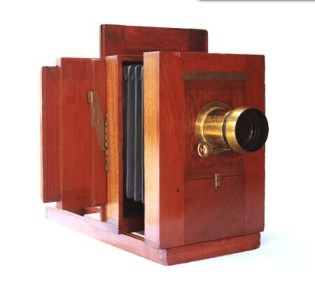
Here’s the type of camera he used.

The “Penny Picture Camera.”


And there are more of his photos at Duke University Libraries’ Digital Collections.

Beautiful Music: Two Symphony Broadcasts

The BBC Proms are wrapping up: “Last Night at the Proms,” usually a rowdy blast of a concert, is tonight in London at 7:30 pm, that is, now, and available live and for 7 days on the BBC site. Joyce DiDonato is the star, with everything from Handel to “Over the Rainbow,” which she added for political reasons.

Screen Shot 2013-09-07 at 2.14.46 PM

Promises to be a great show.

The All-Star Orchestra is kind of an all-state for grown ups, and bows on PBS tomorrow. It’s the brain child of conductor Gerald Schwarz and seems, atScreen Shot 2013-09-07 at 2.17.44 PM first glance a least, to be less of a sure bet. Although any effort to get classical music on television in good in theory,  neither Tony Tomassini’s take in the Times, “Schwarz…. no one’s idea of a probing maestro,” and the premise itself–that bringing a bunch of first chair stars together is a recipe for something special–does much for me.  Still, I’ll give it a try, and report back.

Poetic Words: Library Verse

Given my love of libraries and poetry (and the fact that there was at least one great poet, Philip Larkin who was also a librarian), odd that I haven’t posted anything on the intersection of these worlds.  But here’s a nice one by American poet Rita Dove.

Maple Branch Library, 1967

For a fifteen-year-old there was plenty
to do: Browse the magazines,
slip into the Adult Section to see
what vast tristesse was born of rush-hour traffic,
décolletés, and the plague of too much money.
There was so much to discover—how to
lay out a road, the language of flowers,
and the place of women in the tribe of Moost.
There were equations elegant as a French twist,
fractal geometry’s unwinding maple leaf;

I could follow, step-by-step, the slow disclosure
of a pineapple Jell-O mold—or take
the path of Harold’s purple crayon through
the bedroom window and onto a lavender
spill of stars. Oh, I could walk any aisle
and smell wisdom, put a hand out to touch
the rough curve of bound leather,
the harsh parchment of dreams.

As for the improbable librarian
with her salt and paprika upsweep,
her British accent and sweater clip
(mom of a kid I knew from school)—
I’d go up to her desk and ask for help
on bareback rodeo or binary codes,
phonics, Gestalt theory,
lead poisoning in the Late Roman Empire,
the play of light in Dutch Renaissance painting;
I would claim to be researching
pre-Columbian pottery or Chinese foot-binding,

but all I wanted to know was:
Tell me what you’ve read that keeps
that half smile afloat
above the collar of your impeccable blouse.

So I read Gone with the Wind because
it was big, and haiku because they were small.
I studied history for its rhapsody of dates,
lingered over Cubist art for the way
it showed all sides of a guitar at once.
All the time in the world was there, and sometimes
all the world on a single page.
As much as I could hold
on my plastic card’s imprint I took,

greedily: six books, six volumes of bliss,
the stuff we humans are made of:
words and sighs and silence,
ink and whips, Brahma and cosine,
corsets and poetry and blood sugar levels—
I carried it home, past five blocks of aluminum siding
and the old garage where, on its boarded-up doors,
someone had scrawled:

I can eat an elephant
if I take small bites.

Yes, I said, to no one in particular: That’s
what I’m gonna do!

———————————————————

Turns out Larkin did pen one:

 Library Ode

New eyes each year
Find old books here,
And new books, too,
Old eyes renew;
So youth and age
Like ink and page
In this house join,
Minting new coin.
 
————————————
 
Although, as a heavy user, I have multiple suppliers, for many years my main library was the Somerville Central Library, quirky but with its own kind of hipster grandeur. Somerville Library

Happy Labor Day

Hope your Labor Day was enjoyable–and free of labor!


Screen Shot 2013-09-02 at 5.37.09 PM

MadeInAmerica-Forever-Block12-BGv1

More about the holiday at the Smithsonian Blog: http://blog.americanhistory.si.edu/osaycanyousee/2012/08/the-making-of-labor-day.html.

“Labor Day, in its origins a 19th century celebration of the dignity of work, swiftly evolved into today’s pleasant pause at the end of summer before the coming of new, chillier seasons and life indoors. Arguably a response (in the United States, Canada, and an assortment of other countries) to the widespread socialistic celebration of Mayday, which coincides with the age-old rituals of spring, Labor Day sets off the New World, or at least North America, from the traditions of the Old.”

Remembering Seamus Heaney

Reading the many obits and tributes for Seamus Heaney has been occupying my time. The NYTimes obit is great; herewith, a few choice bits:

The eldest of nine children of a cattle dealer, Seamus Justin Heaney was born on April 13, 1939, at Mossbawn, his family’s farm in County Derry, west of Belfast. The farm’s name would appear throughout his work. Mr. Heaney’s intoxication with language, he said in a 1974 lecture, “Feeling into Words,” “began very early when my mother used to recite lists of affixes and suffixes, and Latin roots, with their English meanings, rhymes that formed part of her schooling in the early part of the century.”

Later in the lecture, he ventured an alternative scenario: “Maybe it was stirred by the beautiful sprung rhythms of the old BBC weather forecast: Dogger, Rockall, Malin, Shetland, Faroes, Finisterre; or with the gorgeous and inane phraseology of the catechism; or with the litany of the Blessed Virgin that was part of the enforced poetry in our household: Tower of Gold, Ark of the Covenant, Gate of Heaven, Morning Star, Health of the Sick, Refuge of Sinners, Comforter of the Afflicted.”

More on Heaney from around the web:

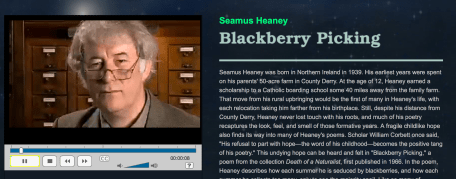
From WGBH/PBS’s Poetry Everywhere, a Poetry Break with the poet reading “Blackberry Picking.”
Screen Shot 2013-09-02 at 9.43.07 AM

And a long, rewarding ramble of a piece by Andrew O’Hagan from the LRB about a trip he, Heaney, and Karl Miller, the founding editor of the LRB and long-time friend and publisher of Heaney, took around 2000 I think. They set out to drive around the Celtic Lands, drinking attending to the “ground of literature” and the ground itself. One of the best things I’ve ever read in the paper: given the LRB’s level of writing, that’s saying something.

One of many fine bits:

We passed by Offaly and Seamus asked me if I knew what a Biffo was.
‘No.’
‘It means a Big Ignorant Fucker from Offaly.’
I was looking out at the landscape as we drove beyond the Irish midlands. If you come from a Protestant country, where the hedges are trimmed and evened-up to within an inch of their lives, the mad tangle of Irish hedges is striking. I imagine Scotland’s hedges speak of order and repression, of a land heavily demarcated, parsed and owned, but in Ireland a certain bucolic anarchy obtains. Ireland presents itself as an entity that might again revolt against the people. The landscape appears to have a mind, a vengeful one, an Old Testament one, if you think of the potato famine.
Karl and Seamus were discussing the notion of writers being either ‘branch men’ or ‘head office’. This came from a story Seamus was telling about T.S. Eliot. Lloyds Bank decided to throw a party a few years ago for Mrs Eliot, and Seamus went as the representative poet. Some knight or other was giving a speech and he said that Eliot wasn’t the only poet ever to work for Lloyds. Cardiff’s Vernon Watkins gave a lot of time to his writing but refused to take days off, preferring to come to his desk. Then again, the gentleman said, ‘Watkins was a branch man and Eliot was very much head office.’
We stopped for lunch at a favourite place of Seamus’s called Moran’s. They gave us a table to ourselves in the snug. There was a nice bottle of Alsace and we all three had chowder. Seamus once wrote a poem after coming here, called ‘Oysters’:
We had driven to that coast
Through flowers and limestone
And there we were, toasting friendship,
Laying down a perfect memory
In the cool of thatch and crockery.

Worth reading every bit, and not behind the paywall.

And to close, a poem of his called, appropriately, Postscript. Screen Shot 2013-09-02 at 9.49.21 AM

Postscript

And some time make the time to drive out west
Into County Clare, along the Flaggy Shore,
In September or October, when the wind
And the light are working off each other
So that the ocean on one side is wild
With foam and glitter, and inland among stones
The surface of a slate-grey lake is lit
By the earthed lightning of a flock of swans,
Their feathers roughed and ruffling, white on white,
Their fully grown headstrong-looking heads
Tucked or cresting or busy underwater.
Useless to think you’ll park and capture it
More thoroughly. You are neither here nor there,
A hurry through which known and strange things pass
As big soft buffetings come at the car sideways
And catch the heart off guard and blow it open.