Herewith, a couple of engaging graphic arts encountered in my traversing of the web. First, Design Facts, a collection of brief, fascinating snapshots of design history.
There are lots and lots of reasons that this is, if not a great logo, then certainly a better logo than the one it’s replacing. The old symbol, that beloved (albeit to my eyes kind of generic and clip-artsy) Pacioli M, needed to be captioned with the full name of the institution: five words, ten syllables, twenty-six letters, all in poor old Trajan. This was cumbersome in every sense, particularly as the institution prepares to open in the former Whitney Museum building on Madison Avenue (to be renamed The Met Breuer after its architect). That new site, along with the less-visited but utterly lovely Cloisters, makes the Met a citywide complex that demands not a monolithic identity, but a way to connect up all the pieces. The new logo, a self-reading wordmark that acknowledges the institution’s two-syllable colloquial name, will serve effectively as the hinge for the whole system.
When you get a quarter you put it in the piggy bank. The piggy bank is on a shelf in your closet. Your mom knows this and she checks on it every once in a while, so she knows when you put more money in or spend it.
Now one day, you might decide “I don’t want mom to look at my money.” So you go over to Johnny’s house with an extra piggy bank that you’re going to keep in his room read full post
That secret tax-free piggy banks are popular among elected officials, who are paid, of course by taxes, is not surprising, but does seem particularly odious.
There are lots of dimensions to the Apple/FBI tousle, but Charlie Stross uncovered one that I didn’t know about, the speculation Apple is going to be your solution to banking (as Amazon is to buying books). And it has technical resources no bank in the world could match.
Well worth reading in full, if, like me, Apple’s every move in object of morbid fascination.
Ultimately the banks are going to discover—the hard way—that getting into bed with Apple was a bad idea, about the same way that getting into bed with Amazon over ebooks was a bad idea for the Big Five publishers. Apple is de facto an investment bank, right now: all it needs is a banking license and the right back end and regulatory oversight and risk management and it will be able to go toe-to-toe with the likes of Chase or Barclays or HSBC as a consumer bank, too. And Apple has a very good idea of how risky their customers’ behavior is because unlike the banks and the credit card settlement network they’re not running on incrementally upgraded legacy infrastructure designed in the 1950s. Note those two words a couple of sentences ago: “risk management”. Banks are not in the business of holding your money or making loans; they live or die by how well they manage risk. Apple, like Google, has a much richer relationship with their customers than any bank. They can (for example), with a customer’s position, know roughly where the customer’s phone or watch is moving, and thereby spot faked payment credentials if someone clones the device and tries to use it to buy something a thousand miles away. The CC networks have velocity checking but it’s a really crude metric for spotting fraud: Apple can massively improve on it.
Some of his speculations are a little out there (iPhones doing retina scans and matches with genomic info for bio-metric authentication). Still, it’s a very thought- provoking piece, and good comments.
I do wonder what organizations with vast amounts of data about peoples’ personal and financial lives do with it for the “long game”; and it would seem that Discover + Amazon may be ahead in this particular race. Personally, I always thought airlines would create some de facto new currency based on frequent flyer miles. In some ways, liquid currency, payable on demand was just a solution to an information and convenience problem. People didn’t want to haul around goats for every transaction and trade them for crops. Computers presumably solve this problem painlessly.
Have been playing chamber music with a bunch of amateur musicians recently, and although it’s mostly strings and piano (a classic combo), a friend who is a good bassoonist is part of the mix.
This tenory-y double reed is the underappreciated star of the woodwinds, and I have no less an authority than the Grove Dictionary of Music to back me up:
In [18th century] Germany the bassoon was considered indispensable in the orchestra (even if not always given an independent part) as a means of consolidating and clarifying the bass line. Writing in 1784–5, C.F.D. Schubart asserted that the bassoon was able to ‘assume every role: accompany martial music with masculine dignity, be heard majestically in church, support the opera, discourse wisely in the concert hall, lend lilt to the dance, and be everything that it wants to be.’
True, it generally gets typecast as the woozy uncle, or offers a few sarcastic farts to take down the strings’ insufferable ardor now and then. Yet many orchestral wizards brought out the lover, the scamp, and even the ballerina in it. In particular, Prokoviev and Shostakovich deployed it with skill, disclosing a variety of color and character.
As you probably haven’t had your daily hit of bassoon music, here’s a beautiful sonata by Telemann:
and if you worried about typecasting the Bassoon, bet you didn’t know there were accomplished jazz bassoonists around. Here is one: Paul Hanson (also an accomplished sax player).
So if learning about a double reed was on your Monday morning list, “check” that’s done.
“If you believe that feeling bad or worrying long enough will change a past or future event, then you are residing on another planet with a different reality system.” — William James
“My life has been full of terrible misfortunes most of which never happened.” — Michel de Montaigne
The levels of Tzedakah (charity) as explained by Maimonides
Giving begrudgingly
Giving less than you should, but giving it cheerfully
Giving after being asked
Giving before being asked
Giving when you do not know the recipient’s identity, but the recipient knows your identity
Giving when you know the recipient’s identity, but the recipient does not know your identity
Giving when neither party knows the other’s identity
Chris Lehmann, of the soon to be shuttered Al Jazeera America Website and news channel, is going out with a bang and calls the brave new world of content marketing as he sees it. And what he sees sure isn’t journalism. Worth reading if this is your gig.
“The polite euphemism for such rampant self-prostitution in our brave new digital media world is “sponsored content” — i.e., writing that’s made to look, feel and read like actual journalism while promoting a paid-for commercial agenda.”
There were border skirmishes between editorial and advertising in the old days (meaning my own and my parents’ generation as newspaper people). But the importance of the division was honored. In part, as Ira Basen points out, to get away from the frankly commercial world of 19th century journalism which was often indistinguishable from political positions and commercial interests. There was a specific meaning and category denoted by the subhead “An Independent Newspaper” that some carried.
Today I suppose there really isn’t an independent newspaper to be found that is not scared for its life, and what constitutes an “independent news” digital property is a hard nut to crack. Lehmann makes a good case that VOX it isn’t, and BuzzFeed never pretended to be. In fact their business genius seems to be premised on the foundation that there is no difference between the data that drives advertising and the data that drives content. Get them both aligned and voila! you make money.
Journalists are glum about this, but of course it could be that these developments just chase journalism elsewhere, and atomize it (into blogs for instance, serious ones, not mine, I hasten to add). Perhaps that’s not a bad outcome in some ways, but does raise questions. Investigative journalism can require a costly collective effort–if nothing else technically and it other ways too. Individual bloggers do get some big wins, but expecting a whole generation of Upton Sinclairs to emerge on WordPress is a shaky (but not impossible) proposition.
More intractable is the problem of editing. Newspaper editorial desks made up of reporters and editors imposed a culture of accountability and collaborative effort (possibly combative, but respected). Somebody else always read and edited what a reporter wrote (at good papers, no story got in, however trivial, if it hadn’t been vetted by three pairs of eyes, one of whom was a often socially deficient copy editor with a brain like a computer for AP Style and native distrust of writers’ orthographic waywardness.
This meant content was checked, questions were asked, fairness and newsworthiness debated, not always and not necessarily to the best conclusion, but there was a mechanism. This also built some time and rhythm into the system. There was time to think about what you were doing. Not just a blinking “publish” button, or the fear that Twitter was running away with your story, or live streaming it.
Again, there are modern ways to respond to the change in editing, and effective approaches may well emerge. It all seems pretty tough, though: crowd sourced editing and sourcing, an understanding of what drafts and breaking news look like in this 24/7 digital world all have a pretty messy profile right now, and would be good to remember what of the old system was worth keeping, while acknowledging that there is no money to pay for it in its epic luxury and size any more. I suppose a copy desk for Tweets sounds like a comedy skit, but putting a little more thinking in the process would not be amiss.
The Massachusetts Spy, a colonial paper, pretty bloggy by modern standards
My mid-life of music listening has been enriched by coming back to or meeting for the first time composers I undervalued during my years as a SERIOUS MUSIC PERSON. I guess this re-calibration is natural, if you love Tchaikovsky’s B-flat minor Piano Concerto as a teen, comes a time when you will look back at it as gauche, and then when you’ll back at that backwards glance as silly in turn.
There are some things that there is no going back to. Turandot was my favorite opera as a teenager, and like people who are still listening to Carmina Burana at fifty, I think if I still were a Turandot fancier, it would be hard to refute the conclusion that something had gone wrong with my life in the music department.
One passion that has emerged for me is Rachmaninoff. This will probably seem surprising to many, who know the big tunes and the lush orchestral works: what’s not to love? I’m a creature of my time, however. For context, Rachmaninoff was not even taught as “20th century music” when I was a music student, although he died in 1943, just 2 years shy of Bartók, the pinnacle of 20th century musical modernism. Rachmaninoff’s tunefulness, a turn towards the broad gesture particularly in the work he wrote in the U.S., did him no favors with the composers and critics looking for a new path. A piano teacher friend of mine dismissed tunes in his Paganini Rhapsody as “schmaltz enlivened by music for the title credits to Bonanza” (Bonanza was a terrible western-themed evening soap opera of my youth.)
There is some truth to the charge–it is pretty corny, but there are responses as well. If the American Rachmaninoff could be a throwback, the Russian one was at least sometimes a modernist, if of gentle mien. Now we (or at least I) can see works like the Third Symphony (given a knock-out performance by the National Symphony Orchestra and their music director designate, Gianandrea Noseda, last fall, as an integrated part of the history of the symphony and a superb one, not a guilty pleasure.
As a taste of this, here is a song by Rachmaninoff, Daisies, both in a piano arrangement, played by the incomparable Emil Gilels
and sung by, Julia Lezhevna, a young Russian soprano with a crystalline voice.
This isn’t my usual thing, but I was helping some co-workers with financial questions today, so I am sharing this on the chance that it would be useful to others. I promise I’ll get back to poetry and music posts soon.
It pays to save regularly and to start doing it as soon as you can. I remember hearing this as a person in my 20’s and sort of half paying attention to it. But what did catch my attention was a chart that somebody showed me to the effect that if you save $100 a month earning compound interest from age 22-32 and then let it sit there for 30 more years doing nothing, you still will have more at age 62 than if you waited 10 years and saved at the same rate for the next 30.
This is because of the time value of money. The principal accumulated during those first 10 years has 30 more years to grow, and if you start late you don’t catch up. Every period of interest you miss reduces your chance for growth.
I poked around to find something like chart I remembered, but didn’t find it so made one by myself in Excel–I’m sure I made some typos, and there are some rough assumptions about compounding intervals, etc.,– but the underlying concept is sound: even a small monthly nut put away regularly for a long time can pay off handsomely. But it can’t wait. Presumably anybody over 30 has figured this out, but if you are under 30 (I probably have 1 reader in that category), this tip’s for you.
Here’s the chart & table.
Savings $100 a month for 40 years at 10% Per Annum Compound Interest
Ages 22-62
Total you invest: $48,000
Total interest: $589,678
At age 62 you’ll have: $637,678
Savings $100 for first 10 years at 10% Per Annum Compound Interest
Savings from age 22-32 only, then principal earns interest for remaining 30 years
Total you invest: $12,000
Total interest: $397,745
At age 62 you’ll have: $409,745
Waiting until you are 32 to start saving your $100 a month, and then doing so for the next 30 years, same 10% compound interest
Total you invest: $36,000
Total interest: $193,932
At age 62 you’ll have: $229,932
The geometric series showing the detail is pretty too, so if you like that kind of thing, go fire up Excel or Mathematica and make it yourself, just after you’ve set up your regular $100/monthly savings.
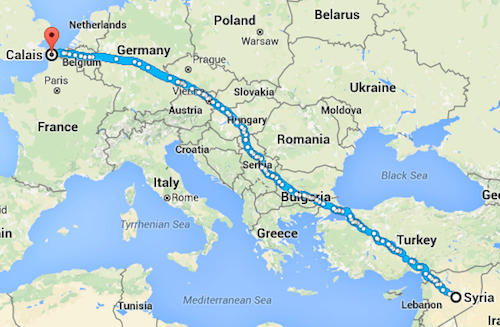
Turns out working a big arts festival like Glastonbury gives you a good background for helping refugees.
London’s Independenthas the story, and makes the point that given the confusion over the official status of the refugees, and thus a lack in government help, the itinerant arts workers are critical in setting up food and shelter for thousands.
From the story:
The men – three British and one American – are members of an unlikely task force. Part of a growing number of volunteers with extensive experience in staging music and art festivals, they are applying their skills to the plight of the Calais refugees.
“We have a particular way of working which makes us very suitable to this situation,” says Kit Johnson, a 32-year-old traveller originally from Macclesfield. “We might not make it pretty, but we can build things fast and make them safe.”
He has worked at festivals for many years, swiftly making fields around the world hospitable to thousands of people. For Johnson and the others, it was a short step to tackling the difficulties posed by the camp.
….
“I’ve started taking Thursdays off to work on Glastonbury, which I’m having to do over the phone. It’s difficult. Not to belittle the festival industry at all, but it’s hard to sit there and think about what DJ to book when I know there are thousands of people walking from Syria.”


 he piggy bank. The piggy bank is on a shelf in your closet. Your mom knows this and she checks on it every once in a while, so she knows when you put more money in or spend it.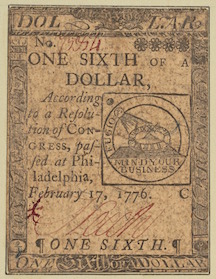
 Have been playing chamber music with a bunch of amateur musicians recently, and although it’s mostly strings and piano (a classic combo), a friend who is a good bassoonist is part of the mix.
 “If you believe that feeling bad or worrying long enough will change a past or future event, then you are residing on another planet with a different reality system.” — William James
 happened.” — Michel de Montaigne
 The levels of

 My mid-life of music listening has been enriched by coming back to or meeting for the first time composers I undervalued during my years as a SERIOUS MUSIC PERSON. I guess this re-calibration is natural, if you love Tchaikovsky’s B-flat minor Piano Concerto as a teen, comes a time when you will look back at it as gauche, and then when you’ll back at that backwards glance as silly in turn.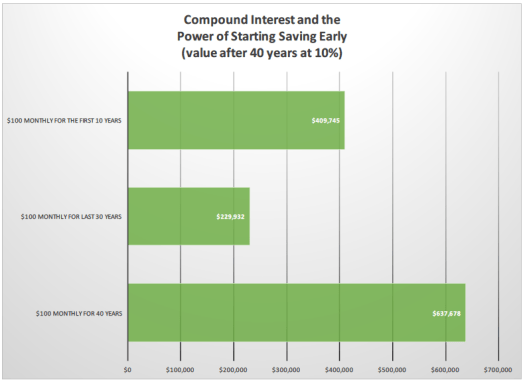
 A Few Reasonable Words