Lists All Around Us

Are we in a list moment? They seem to be all around us, even gaining their own silly term, listicle. But humans and lists go way back (one of the earliest cuneiform relics is of course a list of kings). List making is perhaps definitional of humans (my list of potential blog entries, most never written, could be my own exhibit A).

This all occurred to me perusing the plethora of lists on Gramophone’s web site. (Gramophone is a classical music magazine published in the UK, and mostly concerned with reviews of recordings. It’s been around a long time and this, plus its focus on classics, is basis for dismissing it out of hand, or treasuring it. I alternate positions.)

Like most digital publications, Gramophone has gotten in line with lists in a big way. Playlists on many topics (Hall of Fame Sopranos, Great Violinists, Inspirational Castratos (that is modern performances of work original written for castratos, not modern inspirational castratos, I hasten to say). This push you to a streaming service after you have read a pithy paragraph or two. I was pleased that the violin list  reminded me of how wonderful the fiddling of Arthur Grumiaux was.

They also have numerous compilation lists, “50 Greatest Chopin Recordings” “50 Greatest Schubert Recordings” and so forth. Since they are aiming at record collectors, and we are nerds by definition, they also have “The 50 Greatest Classical Recordings You’ve (Probably) Never Heard.” (If you want a count, I own or have owned three of the 50  (am a streamer now), heard some others, but more than a few are tantalizing unknowns to me: to wit, soprano Gertrud Grob-Prandl,  & composer, Johann Heinrich Schmelzer; I also didn’t know Stokowski did one of his technicolor arrangements of Wagner’s “Magic Fire Music” with the Houston Symphony–(a whole LP of magic fire for reals?)

Although music is ideal fodder for listomania, it’s hardly limited to that. Every bookstore I go in seems to have at least some entries in book series titled “1000 [insert noun here] before you die” with varied nouns:
Places to see
Books to Read
Songs to Listen To
etc.

The spoof writes itself, just slot in a different noun:

1000 Episodes of Law and Order to See Before You Die
1000 Starbucks Latte Varieties to Drink Before You Die
1000 Arguments to Have With Your Spouse, Children, Roommate, Dog About Where They Leave Their Stuff

Granted mine don’t have the ‘bucket list’ frisson of visiting Corfu or reading Ulysses, but they do have the virtue of being easily achieved.
Oddly, there is, at least as far as I know, no parallel “1000” series about things to avoid (call it the anti-bucket list). The 1000 Books Not To Read Before You Die (so many choices!) would be a hit I bet. I can contribute a few entries.

In addition to being easy, lists do emit at least a weak signal as a bit of rhetoric. Little doubt that most composition teachers and editors would discourage lists in prose. Writing-wise their challenges (parallel or not? what order? list within lists?) aren’t very taxing (certainly not the furniture moving-level effort required in the typical essay).

Yet they are writing, and sometimes can shine. That list of guests at Gatsby’s party is a miracle. And lists spin through Stephen Millhauser’s magical novels. Just now, I’m deep into Robert Macfarlane’s The Old Ways, inspired by the life of naturalist and poet Edward Thomas, whose guides to rambling through the British Isles are quiet classics, and whose bleak-beautiful poetry is newly appealing to me. Macfarlane has this delectable bit for the list-o-mane.

pilgrim paths
green roads
drove roads
corpse roads
trods
leys
dykes
drongs
sarns
snickets

he goes on “—say the names of paths out loud and at speed and they become a poem or rite–holloways, bostles, shutes, driftways, lichways, ridings, halterpaths, cartways, carneys, causeways, herepaths.”

Macfarlane’s book is beautifully written, and carries its literary and geographic learning with a light touch.

There is, of course, course another famous list, Ko-Ko’s from The Mikado of potential victims for the Lord High Executioner. Frequently updated, but at its most swell, perhaps, in Martyn Green’s classic recording.

So that ends today’s list!

Igor Levit and Copy Editors

A couple of things tipped by the NYTimes:

First, pianist Igor Levit’s encore from the first night of the BBC Proms a few days ago:

This is the Ode to Joy, aka the Official Anthem of the European Union, in an arrangement by Franz Liszt. A Russian-German pianist, playing an iconic piece of music by greatest composer in the classical canon, as arranged by perhaps the most cosmopolitan pan-European of composers. Not only a beautiful performance (capping a dazzling take on  Beethoven’s Piano Concerto in C minor) but in London, in July 2017, for a worldwide audience: making an eloquent vote for unity rather than division during fractious times.


On a different note, the Times also has a poignant take on the layoff (and restructuring) of copy editing at “The Grey Lady.”  (This may be behind a paywall–sorry.)


If you don’t work in the scribbling trade or hang with people who do, you may not be aware of copyediting, its storied past, and uncertain future. As the Times piece points out, it is the immune system of any serious publication. Copy readers correct spelling, grammar, and usage errors, and vastly improve writing, often one tiny fix at a time: changes that tighten, clarify, and smooth out prose. They also impose ‘house style’ on a publication, which though derided and often annoying to writers (the diaereses in “reëlect” and “coöperate” that The New Yorker insists on must vex to all concerned), still matters. Style guides save time, e.g,, no ad hoc decision on the serial comma necessary. And they regularize content, be it in print or online and this helps readers, humans or algorithms, parse sentences.

Copyediting is an odd skill (and I certainly can’t do it). You have to read both for content understanding, which provides the context for the piece of writing, but also attend assiduously to the surface level in order to catch those mechanical issues. For a general interest newspaper, you also have to have a sixth sense about working with up wildly varying content. (When my mother was in journalism school in the 1940s, the professors handed out the copy-editing test then in use at the Times. It was a complicated story about auto-racing, and nobody, including my mother who had a sharp pencil, did very well.)

Copyreaders also write headlines and captions for photos (cutlines), an art in itself, and a task that is complicated now that print, web, and social media headlines have to be created. It would seem an odd moment to reduce this workforce, but the challenges papers are up against are mighty.

One unremarked benefit of copy editing, at least in my case, is the education in writing that a really good line editor/copy editor can provide. Although I have had lots of experience in writing and editing in most of my jobs, it was when I worked on book-length manuscripts for websites (ironically for a TV station) and had professional editors from the publishing world scrub my own and other writers’ copy–in those far off days with red ink on manuscript–that I really figured out how to clean up prose. (I was in my late 30s!)  An editorial assistant and I worked through this mark up, discussing each change as we finished the website. These editors fixed the mechanical errors, but more importantly pressed hard on the writing itself, flagging and fixing anything fusty, flabby, or unfocused, and pointing out where the rhythm, sense, or precision was lacking. Their reworks of things were eye-opening, even when I took issue with them.

There is nothing like this for improving your own prose (and your ability to edit others’ work). It wasn’t part of my writing education, now some years back, and I wonder if it is any more frequent today.  (The revered writing teacher Don Murray, a former Boston Globe writer and UHN prof, recommended something very similar in his writing workshops and it’s possible that it is more common.)  As Murray points out, writing is a process, editing and revising being key. And also is much more of a team sport than would seem apparent from high school and college assignments. The grim private penance of slogging through a 500 word theme or term paper, is, for me at least, completely different from writing for a sharp-eyed editor who is out to improve your writing; things go so much better when you are engaged in a process together, and working towards an effective draft.

I’m sure the Times of all places is not turning its back on editing, but still, there is something less than reassuring about the prestige press going public about not needing so many of those squirrelly, superb, and effective people who read copy.

Being a Better Helper

Have you ever asked somebody for computer help? Been asked? Offered advice unasked?  Received said unsolicited advice?

I’ve been in all four categories, and I suspect anybody reading this blog has as well. It can be a grim business the ‘computer helping’ game. (If I did reality shows instead of educational media, I’d pitch ‘Family Tech Support’ intense relationship drama. Probably too full of bad language for cable even. “But I don’t even see the enter key any where? Why the #$#!~*& is it called enter if it means ‘return?” A question for the ages.)

But there’s hope: earlier today, I encountered the best advice for helping somebody use a computer I’ve seen–and it’s 21 years old. Comes from a post by the Phil Agre, who was then at UCLA. The entire thing is at http://polaris.gseis.ucla.edu/pagre/ but here is the first bit…

Computer people are fine human beings, but they do a lot of harm in the ways they “help” other people with their computer problems. Now that we’re trying to get everyone online, I thought it might be helpful to write down everything I’ve been taught about helping people use computers.

First you have to tell yourself some things:

Nobody is born knowing this stuff.

You’ve forgotten what it’s like to be a beginner.


Good advice for teaching in general…Speaks to keeping the experience and the goals of the learner in mind, rather than a primary focus on what the teacher is doing. Simple, but hard to do…

Tip of the hat to www.librarian.net/stax/4749/ask-a-librarian-when-do-you-touch-a-patrons-computer/ for the link.

Commonplace Book: William Trevor

Reading William Trevor’s After Rain, had avoided the late Irish short story writer and novelist, as he was often paired with Chekhov, something which seemed overblown to me. (When any writer gets heaps of adulation, and friends clutch your elbow and say “you must read this” my default reaction is resistance. )

But the Chekhov comparison is not overblown. Trevor explores similar themes, subtle but devastating moments of personal choice, and the cadence of the his prose, (also like Chekhov’s or at least Constant Garnett’s translation thereof) is quiet, but musical in its restraint. No detail is extra. Here’s family dinner at the Leesons in “Lost Ground,”

after_rainHaving paused while the others were served– that, too, being a tradition in the family– Milton began to eat again. He liked the champ best when it was fried. You could warm it in the oven or in a saucepan, but it wasn’t the same. He liked crispness in his food– fingers of a soda farl fried,  the spicy skin of a milk pudding,  fried champ. His mother always remembered that. Milton sometimes thought that his mother knew everything about him and he didn’t mind: it made him fond of her that she bothered. He felt affection for her when she sat by the Esse on winter’s evenings or by the open back door in the summer, sewing and darning. She never read the paper and only glanced up at the television occasionally. His father read the paper from cover to cover and never missed the television News. When Milton was younger he’d been afraid of his father, although he’d since realized that you knew where you were with him, which came from the experience of working with him in the fields and the orchards. ‘He’s fair,’ Mrs. Leeson used to repeat when Milton was younger, “Always remember that.” 

Trevor was also a master of crafting a  deft, quietly devastating last move in a short story. Novels mostly need ‘finales’; short stories can end with a stab to the heart. (Nothing better in this line than the end of “The Lottery.” Annie Proulx is no slouch either, “There was some open space between what he knew and what he tried to believe, but nothing could be done about it, and if you can’t fix it you’ve got to stand it.”)

Part of what makes these endings possible is that stories are quick glances, not synoptic panoramas. From the obit for him in the Guardian.

“…In a 1989 interview, Trevor compared writing short stories to impressionist art. “I think it is the art of the glimpse. If the novel is like an intricate Renaissance painting, the short story is an impressionist painting. It should be an explosion of truth. Its strength lies in what it leaves out just as much as what it puts in, if not more. It is concerned with the total exclusion of meaninglessness. Life, on the other hand, is meaningless most of the time. The novel imitates life, where the short story is bony, and cannot wander. It is essential art,”

Creative Commons New Image Search

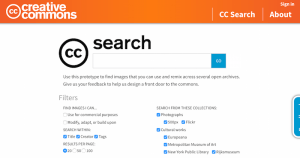
Creative Commons (the effort to provide a platform and legal framework for individuals to share their work legally through a simple licensing scheme) has released a prototype multi-source image search. For anybody who has looked for images to use by going to individual websites and repeating the same search laboriously (bloggers, media producers, and the like) this is potentially a real time saver.

One search result:

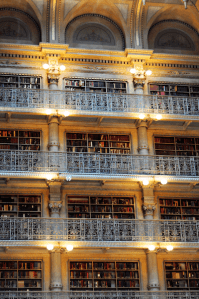
A nice shot of the Peabody Library in Baltimore. Courtesy of Kimberly Vaderman.


Commonplace Book: Dinu Lipatti’s last concert

Today, an excerpt From Paul Bailey’s quiet, moving and beautifully controlled novel Uncle Rudolf. The narrator recollects being taken to a life-changing concert the pianist Dinu Lipatti. (The uncle in question, a fellow Romanian, is a successful tenor in light music, and rueful for an operatic career that never quite arrived.)


It was no spectre who began to play Bach’s First Partita. The apparition became on the instant radiantly animated. Were we aware of the perseverance, and superhuman fortitude, that propelled him that September afternoon? If we were, that would have been our sentimental illusion, since his undoubted fortitude was kept hidden by the pianist behind a necessary mask of civility. It was afterwards – after we had listened in coughless silence to the Mozart Sonata in A minor, two Schubert sonatas and a captivating string of Chopin waltzes – that we realized what an Olympian event we had been privileged to attend. We had not been watching a showman display his skills, nothing so predictable or commonplace. Lipatti was above display and superficial cleverness. He had played for us exactly what the composers had intended us to hear.

Uncle Rudolf was too moved to speak, and so was I. In the years to come, he would often refer to the miracle that had taken place in Besançon, for Lipatti never performed again in public, and died on the second of December that same year.

Lipatti is, at least to music lovers of a certain age, a cult figure of the piano–a transcendent talent, who died young, and left recordings that like Callas’s are instantly recognizable, The word NYTimes critic Harold Schonberg used to sum up his playing was virility, but an aristocratic virility, not brawn rather a strength in reserve inbued with sovereign elegance.

Uncle Rudolf and his nephew are not wrong…and Paul Bailey has written an unusual thing, a novel about a life in music that has a sotto voce ring of truth. (Perhaps because it is shot through with regret…)

The Trump Docs

Not that I am going to get political–but I do think most would agree that, if nothing else, the present moment is a rich one for satire. The Onion has topped its already fine record with their release of the “The Trump Documents.”

http://www.theonion.com/trumpdocuments

Don’t miss Kushner’s recusing himself, or the daily security briefing…

The Case Against Little Free Libraries

I always thought they were kind of cute, but a Toronto librarian makes a strong case to the contrary.

https://www.citylab.com/navigator/2017/05/the-case-against-little-free-libraries/523533/

“[Little Free Libraries] are a highly visible form of self-gratification cleverly disguised as book aid, and the effects of this visibility can be better understood through a consideration of their role in a landscape . . .”

This kind of “branded philanthropy” serves as a vehicle for virtue-signaling by the homeowners who install Little Free Libraries in their front yards, Schmidt and Hale say. They’re particularly ubiquitous in hyper-educated, affluent, crunchy blue enclaves across the country—your Ithacas, Berkeleys, and Takoma Parks, where residents tend to wear their shabby progressivism on their sleeves. But the Little Librariest neighborhoods may be tucked away in the Midwest, where the movement got its start.

As pointed out earlier in the piece,

““There was something that kind of irked me about the title,” says Jane Schmidt, librarian at Ryerson University in Toronto. “As a librarian, my gut reaction to that was, ‘You know what else is a free library? A regular library.’”

The big free library in Somerville, MA

Mahler and Diva Recitals

Nosing around the Washington Performing Arts site, I noticed that classical vocalists are almost completely absent from the 2017-18 line up. (There is a master class with Denyce Graves, and some singers in orchestral programs, but the solo recital by a big star is nowhere on the ground.)

Whether this is lack of audience in DC or supply of name brand talent is unclear–opera singers are rarely public figures no, and except for Renée Fleming and Placido Domingo, I doubt any classical singer could sell out a large D.C. venue. And Domingo is past his solo recital days by decades.

This is probably the way of things, and perhaps just a change and not a lamentable one–there is still a lot of wonderful singing in D.C. just not this particular dimension.  Still it was reassuring to me to see that NYC still has a robust series of big names and up and commers at Carnegie Hall (three cycles in fact). Most of the names are familiar (many having bowed on Vocal Arts DC stages in previous seasons). Ruby Hughes’ name was new to me so I checked her out on YouTube. Here she is singing Mahler’s ‘Ich bin der weld abhanden angekommen’ Radiant, and jaw-dropping in its poise. (Doesn’t hurt that it’s one of the most gorgeous of Mahler’s stunning songs.)


Books as Luxury Goods

TechCrunch has an interesting piece on the difference between print and e-books. It is written by Chris Lavergne, identified as “the CEO of Thought.is and the publisher of Thought Catalog” both unknown to me. (And visits to the sites are a bit mystifying–I think I miss some of the context, or are so far from the core audience that it goes over my head.)

But the bit of the article that caught my eye was a discourse about electronic publishing versus real books:

“The medium is indeed the message

We were surprised to learn that print books and digital books were almost two distinct businesses with totally different operating models. While a print book and an e-book share identical content, they reflect diametrically opposed media formats. Print books are luxury goods and e-books are utility, and this has real implications in the strategy and workflow behind the marketing and production of each.

This technical distinction is also present in consumer behavior. E-books — with their instant access and cheap prices — sell generally 6x more quantities than print books for us. That said, a print book will generally generate 7x more revenue than an e-book. It’s hard to generate revenue on an e-book because the whole premise of the platform is: I want this quickly and at the cheapest price possible. The premise of a print book in the digital age is driven by luxury: I read better on paper… or… I like the feeling of turning a page.

You can’t create much markup on utility, whereas you can create a great deal of markup on luxury. This has been perhaps one of the most important insights driving Thought Catalog Books’ growth. The print books department needs to be run like a luxury goods company, while the e-book department needs to be run like a technology company. The content is the same, but the medium dictates an entirely different business model.”


This seems plausible (if arguable) to me. I’m not much of an e-book reader, not because I’m opposed to the format, but just because of the long habit of print books, and more cognitive comfort and personal efficiency with them. (But I do read them once in a while, because I don’t buy them they tend to be oddball classics I can get off of Project Gutenberg. Currently it’s Three Men and a Boat, and previously I read News from Nowhere on my IPad, a singularly inappropriate title for an e-reader, given William Morris’ attitudes about technology).

Books aren’t luxury items for me–luckily enough, but I can see that for somebody who was born digital, books, magazines and eventually newspapers too, are prestige items (like the encyclopedia sets of my youth, or the solemn, and generally unread, volumes by Will and Ariel Durant). It’s an odd thought: a once dominant (and for me still far more companionable and effective) medium is now becoming a prestige lifestyle accessory. What could that status mean for libraries and for publishers? And how might ebooks with their different business model (if the article is correct) find an incentive to address access and literacy world-wide, given that more people have access to electronic devices now than have access to toilets according to the U.N.