Poetic Words: Mary Oliver

A favorite from a Provincetown, MA poet.

Poppies
Mary Oliver

The poppies send up their
orange flares; swaying
in the wind, their congregations
are a levitation

Ian Britton Field of Poppies

of bright dust, of thin
and lacy leaves.
There isn’t a place
in this world that doesn’t

sooner or later drown
in the indigos of darkness,
but now, for a while,
the roughage

shines like a miracle
as it floats above everything
with its yellow hair.
Of course nothing stops the cold,

black, curved blade
from hooking forward—
of course
loss is the great lesson.

But I also say this: that light
is an invitation
to happiness,
and that happiness,

when it’s done right,
is a kind of holiness,
palpable and redemptive.
Inside the bright fields,

touched by their rough and spongy gold,
I am washed and washed
in the river
of earthly delight—

and what are you going to do—
what can you do
about it—
deep, blue night?

Bookstore Quotes and Memories

Loving bookstores and libraries is a trait I inherited from my parents (and theirs) and probably share with many readers of this blog.

Sad to say they are a dwindling breed in D.C. (although far from extinct).  Years ago we had the Trover Shops (three, including a wonderfully quirky one on Capitol Hill), Chapters, on 15th, and Borders (various places including the one where a clothing store is now).  There were lots of others too…Crown Books (a  chain, but would suffice in a pinch. Walden Books similarly.)

There was a drama bookshop in Dupont Circle, as well as Lambda Rising (LGTB bookstores becoming a thing of the past provides a bittersweet touch to progress).  Olsson’s was all over, downtown, Georgetown, and a particularly charming one in Old Town Alexandria. Two stories and lots of wood.

We still have a good set. In fact, Politics and Prose has opened another branch in the Navy Yard, which is encouraging. But I do miss that downstairs at Trover Shop, where Congressional biographies, and tomes on tax law would jostle Chekhov and Shirley Jackson. You never knew what you would find.


And to wrap up, a bit from Calvino on the actual sections of a bookstore:

– Books You Haven’t Read
– Books You Needn’t Read
– Books Made for Purposes Other Than Reading
– Books Read Even Before You Open Them Since They Belong to the Category of Books Read Before Being Written
– Books That If You Had More Than One Life You Would Certainly Also Read But Unfortunately Your Days Are Numbered
– Books You Mean to Read But There Are Others You Must Read First
– Books Too Expensive Now and You’ll Wait ‘Til They’re Remaindered
– Books ditto When They Come Out in Paperback
– Books You Can Borrow from Somebody
– Books That Everybody’s Read So It’s As If You Had Read Them, Too
– Books You’ve Been Planning to Read for Ages
– Books You’ve Been Hunting for Years Without Success
– Books Dealing with Something You’re Working on at the Moment
– Books You Want to Own So They’ll Be Handy Just in Case
– Books You Could Put Aside Maybe to Read This Summer
– Books You Need to Go with Other Books on Your Shelves
– Books That Fill You with Sudden, Inexplicable Curiosity, Not Easily Justified
– Books Read Long Ago Which It’s Now Time to Re-read
– Books You’ve Always Pretended to Have Read and Now It’s Time to Sit Down and Really Read Them”
— Italo Calvino, If on a Winter’s Night a Traveler

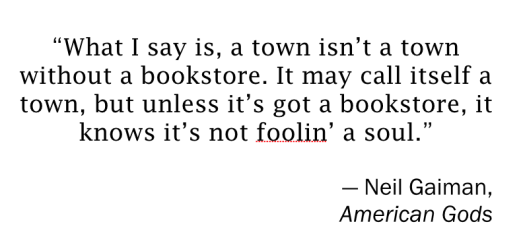
“What I say is, a town isn’t a town without a bookstore. It may call itself a town, but unless it’s got a bookstore, it knows it’s not foolin’ a soul.”  — Neil Gaiman, American Gods

Picture Thursday: Spring Flowers

The East Coast had summer yesterday, back to normal today. But we’ll have blooms soon.

Today a few souvenirs of a trip a few years ago to Keukenhof, public spring gardens outside Amsterdam. Nice visit (perfect balm for jetlag) even though things weren’t yet in high bloom.

Three Tenore di Grazia

Inspired by the quiz during last Saturday’s Met b’cast, here is a quick explanation of “Tenore di Grazia,” that is, graceful tenors, not the heroic breed required for Wagner or heavy Verdi, but rather the elegant, perfectly controlled sound that makes bel canto music shine.  (Tenors of any kind are a rare breed, and a true tenor di grazia is a particular treasure.) Javier Camerana, one of the current ideals of this type, named three of his favorites during his quiz appearance. Here’s a sampling of all three:

The German tenor Fritz Wunderich, golden sound, perfect production with evenness of tone across the whole range, and attentive to the words.  Here in a deceptive simple Handel aria. If you don’t have a feel for cantilena, the long singing line, this number falls flat.

Talk about a long line, and not one moment of vocal pressure!

Next, the great Spanish tenor Alfredo Kraus, spectacular range, sensitivity to text and ability to inflect it to a ‘part per million’ and the fearlessness required to sing softly when the piece calls for it. (Harder than singing loud for most opera singers, and why “can belt-o” is so applicable in the opera house, or for that matter in Broadway musicals.) Here he is in Roméo’s aria from Gounod’s Roméo & Juliette, a role he owned during his very long career.

Finally, a tenor from an earlier generation also beloved by Javier and many others, Cesare Valletti. Here he is in an aria from Massenet’s Werther, exhibiting an almost superhuman poise, while singing in the highest range of voice. You hear the heartsick obsession of the young man, it seems to pour out of him in a single breath. And this was live on the radio!

Finally, for good measure, here is Javier himself, who set me off on this enjoyable visit to tenore di grazia of yesteryear. An excerpt from  his performances in Rossini’s Semiramide currently at the Met (live March 10 on the radio).

Wonderful line, agile, warm sound, with a smile in his voice. Love that in the great tenor tradition, he has to stand on a box so as not to be shorter than his love interest. (Tenors, dear reader, on the whole are shorter than those they woo. It’s just how it goes. I know whereof I speak.)

Happy Wednesday!

Web Production Tips, Redux

A while back, I got asked for tips on Web production, a little random but offered what it’s worth. Slightly updated from an earlier post, 2/20/2018. Feel free to share with those in the web game.

Random Website Production Tips courtesy of Arthur Smith

  • Sign your work: I’ve found it useful to make sure people put their names (or at least initials) on all concept stage and later docs (specs, treatments, mission statements, wireframes, page designs, whatever). I used to only ask for dates, but “signing your work” may actually improve quality and it is also a godsend later when you are trying to track something down from an archive.
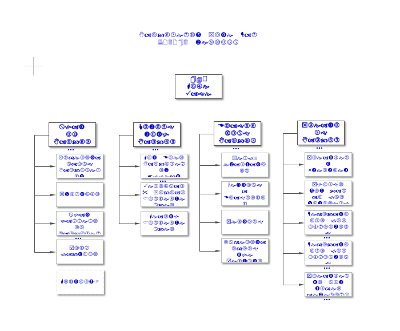
  • Number wireframes: Decimal numbering navigation trees on wireframes/screen comps has been helpful. (That is, assigning a number to each path (Home page =1, a sub-page like “about us” = 1.1 etc.) although as complicated hierarchies become less prevalent on sites, may not be as important.
  • Responsive from the get go: Checking responsive view compatibility really early and being psychologically prepared to clip the wings of a really nice design solution and content strategy if it’s not feasible.
  • Workflow realism: Be prepared for clients’ (or partners) non-use of proposed workflow tools for content, delivery and review etc. To paraphrase Dorothy Parker, you can lead a client to BaseCamp, Google Drive, DropBox, SharePoint or whatever, but you can’t make them click. Most people are reluctant to add another tool to their work ecosystem, and a vendor seldom has the leverage to persuade them to do so. I ask how clients already work with copy, visual assets, and do review for existing projects, and then work out an approach based on that that’s bearable for the web team. It is often email attachments, the bane of any web producer, but then I put them in the tool I need and name them using the production convention. I work on small sites, and I realize something this ad hoc may not scale.
  • Milestones: Rally around a fixed external event to shape client schedules and expectations (even if it’s a sort of made up event). It’s best if there is a plausible date to tie production milestones to, but even if not, designate one based on something on the calendar. For instance, end of a semester for an academic client, annual meeting for a non-profit, etc. Some public version of a deliverable should be tied to this., “e.g., we will focus group the alpha at the next regional meeting.” What’s key is that be such a date be front of mind for client and feasible for you. End of contract dates don’t necessarily work this way. For one thing, they can be amended, but dates of public meetings cannot. If you have to keep looking up a date to see when something major is due, it’s a bad sign.
  • Presentation tools for sketches: Consider Keynote, (or if you must, PowerPoint ) for concept and design stage work. If your designers are comfortable with it and particularly if you are working from a family of templates, have designers create plausible Keynote “page shells” that then can be updated by producers and writers to iterate content strategy. This is sort of a hack, and it’s not what Keynote is for, per se, but it is much more convenient (and less costly) that working on content revisions in a designer/Photoshop workflow. For one thing, text in Keynote is much easier to move around and chunk, and the graphics tools are sufficient at least to wireframe, or even do simple page design. Photoshop (or other image tools, are not text friendly). Don’t leave the designer and developer out of this phase, though. It’s possible to create something in Keynote that is insane to execute. Periodic check ins on feasibility and implications are good, as is working from a shell that both the designer and developer have seen and ok’d, or better participated in.
  • Start early on copy and other content: Also, if you are careful, you can get a jump on cleaning up the copy, and sort out images, rights etc., in this Keynote stage, not just resolve the content strategy problems. Interestingly enough, now that I work mostly in WordPress, I still find that this Keynote workflow helps. WordPress sort of tempts you to think you can do iterative content development if you have chosen the right theme etc. This hasn’t worked for me: it’s a publishing content management approach (presentation and content wrangling) it’s not a content creation tool, at least for anything editorially intensive. Google docs or DropBox Paper/Hackpad can be your friend here, but most of all choose a tool that your team is likely to use.
  • Map editorial workflows: figure out in advance how copy (and other assets) are getting from the client or the writer to the site, and how revisions, proofreading/copyediting and publishing will be done. Note who’s job it is, and do a ‘pre-flight’ to make sure this approach will work. Particularly important for big sites or conversion jobs.
  • Restrain your theme addiction: If you are in a WordPress world, or other theme-based platform, don’t move to the theme choice stage until content strategy is established. (This is really hard for me, and others I’m betting. There are so many themes, and it’s fun to think in a preliminary way about your project and then go “theme shopping”.) The danger is you start thinking about the project in terms of what the theme will do, rather than what the project goals are. (It’s a version of having all those typefaces available in a design program: sort of irresistible to try them out early on.) It’s also a waste of time learning a theme and its quirks, only to find out you won’t use it later. (Although this only happens once in my experience!) If you are building a theme from scratch, or redoing most or all of the CSS, then this would not necessarily apply. Still good to have a clear idea of what success looks like for your content first.
  • Stay in touch: Do a weekly report email to clients, include milestones from your project spreadsheet or PM tool, and color code tasks: on time (green), behind, (red) ahead (blue), not started (black), so it can be glanced at (but not edited).
  • Keep track: Document as you go. (Like flossing easy to say, hard to do).
  • If timelines change, be realistic: If some stage takes a lot more time than it was scheduled and budgeted for, the natural tendency is to believe the “Just So story” that you will “catch up” later. If the first stage took twice as long, it’s likely that the other stages will take twice as long. Make an alternate Plan-B version of the schedule that uses this delay as a factor for all remaining stages. For example, if it took the client 10 weeks instead of 5 to provide copy and signoff on concept spec, multiply all remaining stages (page designs, alpha, testing, whatever) by 2 and see where that gets you. Figure out how you could manage such a schedule, and find a professional and respectful way to address this with your client. This isn’t very comfortable, but even if you are just thinking through it yourself is useful. As difficult as it may be to bring up a delay like this with a client, it is easier than trying miraculously do work in half the time. Even if you end up eating the time, your client and team may well respect you for being realistic about it.
Web site don'ts: Labeling everything in dingbats!
Web production don’ts: Labeling everything in dingbats on your sitemap!

• Love your content: Finally, it’s my experience that if you like the content and do right by it, many workflow problems either don’t occur or are easier to solve. Even neutral professional content that isn’t your particular specialty can be rewarding to work on, and if everybody believes it is valuable to get it out to the people who need it, that gives you some basis for working together and solving problems when they come up.  On the other hand, content that hasn’t been worked out pushes back, and chokes workflows.

Lauren vs. Lauren on phones

I’m in the market for a new phone, and while researching models found this clever rundown on the Apple X and Pixel 2 from The Verge.  Lauren Goode is a pretty good foil for herself. And the video editing is superb!

Lauren #2 has convinced me, so I think the Pixel way I shall go.

Tech Talk: How Computers Work

Tipped by Neverending Search, I’ve been looking at a course (aimed at kids I think) on How Computers Work.  First full episode here (I would skip the content-free intro by one Bill Gates).

They are fun, if a tad heavy hyperactive in the video editing. Useful whether new info, checking what you know, or in teaching and learning contexts. It’s from the code.com people.

Brendel’s Haydn

One of the many benighted opinions of my youth was a certain disdain for Franz Josef Haydn.  Somehow I bought into a line of thinking that Haydn was the epigone of Mozart (just as Dvorak was the epigone of Brahms), with the result that their glories were overlooked.  Now I couldn’t live without either one of them.

Part of that is because of Alfred Brendel’s (and others’) advocacy of the piano sonatas. Here he is in a favorite.

The conductor Christopher Hogwood had a nice line about Mozart versus Haydn in a radio interview I heard years ago. To CH, Mozart was like a great master chef, whose mysterious ways were hidden in a kitchen you could not see, you received these fantastic meals of impossible polish and technique and couldn’t figure out how such a thing could have been devised. Haydn let it all hang out, he cut up the ingredients right at the table, and cooked all the food in front of you–no cosmic mystery, it’s all right there, and you listen along as he has his, often humorous way, with everything–you included.

The result, delightful, moving, and well crafted, is deeply satisfying and soul enriching to listen to.

Shakespeare Everyday

Nosing around the web for online Shakespeare resources (full report later), found this nice list of everyday terms that are “quoting Shakespeare.”

“All our yesterdays”— (Macbeth)

“As good luck would have it” — (The Merry Wives of Windsor)

“As merry as the day is long” — (Much Ado About Nothing / King John)

“Bated breath” — (The Merchant of Venice)

“Be-all and the end-all” — (Macbeth)

“Neither a borrower nor a lender be” — (Hamlet)

“Brave new world” — (The Tempest)

“Break the ice” — (The Taming of the Shrew)

“Brevity is the soul of wit” — (Hamlet)

“Refuse to budge an inch” — (Measure for Measure / The Taming of the Shrew)

“Cold comfort” — (The Taming of the Shrew / King John)

633px-First-page-first-folio-measure-for-measure“Conscience does make cowards of us all” — (Hamlet)

“Crack of doom” — (Macbeth)

“Dead as a doornail” — (Henry VI Part II)

“A dish fit for the gods” — (Julius Caesar)

“Cry havoc and let slip the dogs of war” — (Julius Caesar)

“Devil incarnate” — (Titus Andronicus / Henry V)

“Eaten me out of house and home” — (Henry IV Part II)

“Faint hearted” — (Henry VI Part I)

“Fancy-free” — (A Midsummer Night’s Dream)

“Forever and a day” — (As You Like It)

“For goodness’ sake” — (Henry VIII)

“Foregone conclusion” — (Othello)

“Full circle” — (King Lear)

“The game is afoot” — (Henry IV Part I)

“Give the devil his due” — (Henry IV Part I)

“Good riddance” — (Troilus and Cressida)

“Jealousy is the green-eyed monster” — (Othello)

“Heart of gold” — (Henry V)

“Hoist with his own petard” — (Hamlet)

“Ill wind which blows no man to good” — (Henry IV Part II)

“In my heart of hearts” — (Hamlet)

“In my mind’s eye” — (Hamlet)

“Kill with kindness” — (The Taming of the Shrew)

“Knock knock! Who’s there?” — (Macbeth)

“Laughing stock” — (The Merry Wives of Windsor)

“Live long day” — (Julius Caesar)

“Love is blind” — (The Merchant of Venice)

“Milk of human kindness” — (Macbeth)

“More sinned against than sinning” — (King Lear)

“One fell swoop” — (Macbeth)

“Play fast and loose” — (King John)

“Set my teeth on edge” — (Henry IV Part I)

“Wear my heart upon my sleeve” — (Othello)

“Wild-goose chase” — (Romeo and Juliet)


And some nice bits on Shakespeare’s Sonnets–ever surprising works–from a recent TLS.

Writers as well as readers have found the sonnets irresistible – not only because of their quasi-autobiographical subject material, but also because of their raw exploration of why anyone would bother to write at all. These poems have indeed enjoyed extraordinarily complex and rich afterlives. Jonathan Post’s chapter on “regifting” the sonnets attends to new work by British and American poets including Jen Bervin, Carol Ann Duffy, Don Paterson, Elizabeth Bishop and Allen Ginsberg. The boorish speaker of Wendy Cope’s “Strugnell’s Sonnets”, in Making Cocoa for Kingsley Amis, keeps twisting Shakespeare’s opening lines: “The expense of spirits is a crying shame”. In an altogether different register, the American poet Alice Fulton’s collection Barely Composed contains a poem which scrambles a series of prefixes, suffixes and homonyms from Shakespeare’s Sonnet 87. As Post puts it, “how strange and barely recognisable, yet so it is”. The title of Fulton’s poem, “Peroral”, refers to the practice of taking a dose of medicine by the mouth – and this suggests, to Fulton and perhaps to Post, a new way of doing creative justice to poetry from the distant past. Reading the sonnets is no longer simply therapeutic, as if influence were a form of influenza. It seems more purposeful to work collaboratively (instead of competitively) with these poems in order to create bright new redactions

Picture Thursday: Hawaii Snapshots

Souvenirs of a trip to Hawaii around this time last year. Was not on my bucket list–was just a convenient work add on, but turned out to be pretty amazing.

That interior is the Bishop Museum, strongly recommended if you find yourself in Honolulu. And of course my informal (and unattainable) quest to visit every public library in America continued.