Beautiful Music: Britten for Harp

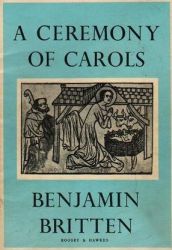
ceremonyJust heard a lovely performance of Britten’s “Ceremony of Carols” given in DC by the Washington Bach Chorus. (Good Britten weekend all around, fine performance of his opera of Midsummer Night’s Dream on the Met b’cast Saturday.)

In this anniversary year for him, I haven’t noticed a lot of news about Britten and the harp, but there is a story there–apparently a lot of his magical writing for this instrument was inspired by a harpist named Osian Ellis. (A name to add to the small list of instrumentalists that inspire great composers. We have Mühlfeld to thank for Brahms’ late, and gorgeous, chamber works for clarinet and strings.)

Osian played the harp solo in the first performance of “Ceremony;” it’s the 7th movement, marked “Andante Pastorle,” and draws from chant,  tapping Britten’s feel for ostinado patterns, and being, like the complete piece, both ancient and crystal clear. It is also for me, perhaps because I first encountered it so long ago, the essence of the season, right up there with Bing singing White Christmas. YouTube has a performance of this movement:

And there are many fine full performances of the entire work on YT; it makes for a nice bit of seasonal contemplation.

Reasonable Words: “They don’t make movies about philosophers”

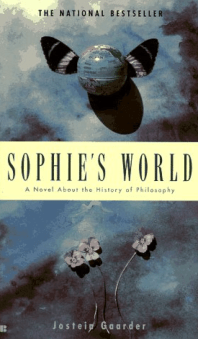
Sophie's World
A best-seller, but no Harry Potter.

A very sweet interchange between an academic and his 9-year-old daughter.

This actually happened earlier this week.

The Girl and I were in the car, driving home after a school event. She’s nine, and she was in the back seat.

TG (unprompted): How do philosophers make a living?

DD (laughs): Where did that come from?

TG: Well, if I want to be a philosopher, how will I make a living?

Hit the link for the full dialogue:

http://suburbdad.blogspot.com/2013/12/the-philosopher-in-back-seat.html

Remembering Peter O’Toole

The actor has died at 81 and the Times’ Benedict Nightingale has a nice obit, including this (perhaps self-mythologizing) explanation of how the young Irish boy turned to acting:

Peter was an altar boy at the local Roman Catholic church and displayed a gift for creative writing, but he left school at 13 and became a warehouseman, a messenger, a copy boy, a photographer’s assistant and, eventually, a reporter for The Yorkshire Evening News. A poor journalist by his own admission, he was fired by the editor with the words, “Try something else, be an actor, do anything.”

He also mentions a memorable performance of his as the daffy Lord Emsworth in a film of P.G. Wodehouse’s “Heavy Weather.” Some priceless bits on YouTube.

Quite a distance from his performance of Lawrence of Arabia, something I grew up hearing about but am glad I first encountered as an adult, better able to tune into the ironic contradictions under the epic sweep of the story. And my were his eyes blue.

Lawrence of Arabia One Sheet

Quotable Words: On Jack London

Great lead to a TLS review of a new bio of Jack London.

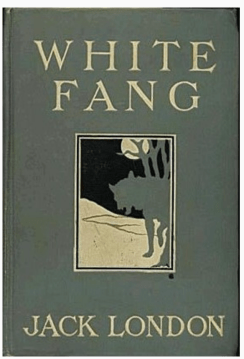
White Fang, First EditionWhat he sought was an impassioned realism”, Jack London wrote of his alter ego, the striving novelist Martin Eden. “What he wanted was life as it was, with all its spirit-groping and soulreaching left in.” One often wishes that London himself had left out the groping and reaching. For all the wide-eyed breathlessness of his characters and the hurtling momentum of his prose – “To live! To live! To live!”, says Wolf Larsen in The Sea-Wolf (1904) – he was a better writer when he slowed down and even stood still, overcoming his fear that inertia meant creative death. Only then could he abstain from the romantic posturing and philosophical maundering of “London the amateur Great Thinker” (as H. L. Mencken called him) and register the undramatic, minor-key world around him – everything that other writers of the Strenuous Age were too exhausted to notice. He might declare, at the height of liquor-fuelled self-regard, “I have ten thousand august connotations” (as he does in his memoir John Barleycorn [1913]), but he is more convincing when he sharpens his observational skills against the one irreducible fact of life named in White Fang (1906): “They were meat”, London writes of two Klondike travellers monitored by a hiding wolf, “and it was hungry”.

Nice work by Marc Robinson. (Full review behind pay wall, sorry). I particularly love that “amateur Great Thinker” jibe by Mencken. A widely applicable term, methinks.)

Reasonable Words: Tidbits from Around the Web

Now that we are safely out of one of my “30 Days” benders, back to regular programming here. Some things that caught my eye from around the web: From Notre Dame Philosophy prof Gary Gutting, a different take on the humanities crisis:

http://opinionator.blogs.nytimes.com/2013/11/30/the-real-humanities-crisis/?src=me&ref=general&_r=0

He talks about the “cultural middle class” — people with humanistic interests, but limited access to jobs that tap this:

We are rightly concerned about the plight of the economic middle class, which finds it harder and harder to find good jobs, as wealth shifts to the upper class. But we have paid scant attention to the cultural middle class, those with strong humanist interests and abilities who can’t reach the very highest levels, which provide almost all the cultural rewards of meaningful work. I’d like to offer some specific suggestions for improving the situation.

His solution ties back into education, and I think is a little simplistic about the comparison with college sports–although I, of all people, should not draw any conclusion about the economics of college sports. (My minimal knowledge of it comes from reading things by people who are as involved in it as I am in arts and culture and feel that it’s pretty screwed up too, albeit for different reasons.) Still, Gutting’s description of the situation resonated with me.

Second is a piece by John Halle at The Jacobin,

http://jacobinmag.com/2013/11/the-end-of-classical-music/

Different, but adjoining issue, and a more sophisticated argument, but some parallels with the first. Halle’s responding to a fatuous piece in the New Republic (how the internet can effectively kill off great newspapers and spare the reliably craptastic New Republic is one of life’s minor mysteries. Of course the Internet bought it, perhaps under the misapprehension it was a humor magazine.) Halle points out that whatever you think about the merits of training in classical music, there is a qualitative difference between this experience and other types of music education–for one thing, it’s unlikely you’ll learn to read music taking only rock guitar. (Not impossible, but less likely). Nor will getting some cognitive handle on, and feel for, big instrumental forms be likely. This may or may not be something to worry about, but it’s the real argument: there is something gained that may be worth the effort. Likewise ideas from ballet, which have to do with patterns in space, movement as wordless story, the expressive power of rhythmic gesture, are distinct human experiences to participate in by doing or watching. May not be your thing, but a comparison with a “School of Rock” is just silly.

Oppenheimer’s TNR essay may have been mostly been a joke to piss off his parents who perhaps forced him to practice the violin as a child leading to a PTSD that is only salved by repeated viewings of “Dazed and Confused.” But Halle does move on to a more interesting point, bringing in an example Gutting also used, the demise of Minnesota Symphony, and providing this info which I didn’t know.

This is at least part of the logic according to which the head of the negotiating committee of the Minnesota Orchestra US Bancorp CEO Richard K. Davis demands sharp wage and benefit reductions from the orchestra’s musicians. His own yearly compensation of $14.4 million could easily make up for the orchestra’s budget shortfall, by itself, as could a small fraction of the tax breaks, subsidies and bailouts gifted to Davis’s fellow board members over the past two decade. A philosophical commitment to austerity, albeit likely compounded by sheer avarice, dictates that any such exercises in generosity would be dismissed as counterproductive.  For Davis, fiscal sustainability is a prima facie indication of social and artistic merit.

While crude market fundamentalism continues to guide the actions of the Minnesota Orchestra’s board, its audiences appear to take a different view, understanding that an orchestra’s job is not to make money but to make music. This was implicit in a recent report of a farewell concert offered by the Orchestra under its departing conductor, Osma Vanska.

Gatting makes a similar argument about the sports subsidy that Minnesota offers, a tiny fraction of which could have made up the shortfall.

And both point out that neo-liberal Capitalism and support for the performing arts is a bad combo.

Perhaps this is the time to note that the Google Doodle for today is Maria Callas! Hit the graphic for her “Una voce poco fa” and you’ll have one truly excellent thing to start your week with.
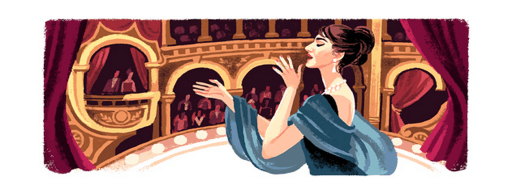
Callas Google Doodle

30 Days of Music: Day 30 “Too Young”

So my “30 Days” is wrapping up tonight, with:

Too Young

A big hit for a great singer who died too young.

And here are all thirty covers, my complete month of sheet music:

30 Days of Sheet Music: Day 29, “Up, Up and Away”

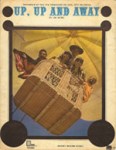
Up Up and AwayOne of the weirder covers in my sheet music collection.  The song was sweet, but forgettable. Wikipedia has, “A canonical example of sunshine pop, themed around images of hot air ballooning…” nicely done, particularly that “canonical.” And that explains what those massive black circles are on the cover. I thought the graphic designer really didn’t like the song, or the 5th Dimension, or balloons.

30 Days of Sheet Music: Day 28, “I Remember it Well”

I Remember It Well

This duet for an elderly couple comes from Learner and Loewe’s “Gigi.” Like “My Fair Lady,” a delightful score in a book that’s pretty dated. This clip from the film (with rather funny captions), gives the taste of the proceedings.

30 Days of Sheet Music: Day 27, “Bess, You Is My Woman”

Porgy and Bes

Today (really yesterday, sorry I’m a day off, busy delivering a web site and on holiday), a turn to turn the greatest American piece of musical theater, ‘Porgy and Bess,’ by my lights an opera, but pretty contested ground. I grew up listening to and playing songs from it, and had a life-changing experience in my teens listening to the Houston Grand Opera present it on tour at the  Academy of Music in Philadelphia.

Clamma Dale as Bess led a superb cast, and a fine recording was made, something that might have put to rest the Broadway musical vs. opera controversy, and also addressed the concerns that the score had various problems in the music, resulting from Gershwin’s inexperience in the form, that had to be solved. Simon Rattle also did a performance that was recorded for video and CD in the 1990s. It has also been in the Met repertoire for 30 years.

Most recently that Sol Hurok of Brattle Square, Diane Paulus, director of American Repertoire Theater at Harvard, has taken it on and with “The Gershwins'” consent, have redone it to address not only the alleged musical deficiencies, but also dramatic and cultural/racial issues. These are legitimate concerns–you see them for yourself in this cover–and there were some good things about what the managed to do. But on the whole, at least in its Cambridge incarnation, before Broadway, fixes, and a mess of Tonys, it was a theatrical mess, despite a lot of glorious singing and two particularly memorable performances from Audra McDonald and Norm Lewis.

Nice thing though: lots of new audiences got a taste of it, and like my battered sheet music and well-thumbed full score, it will survive.