Poetic Words: Richard Siken

Looking for a “poem about copyediting” (don’t ask, I’ll get around to explaining it a few posts from now) rather than information on “copyediting poetry” (a difficult distinction to make clear to the mighty Google), I came across this knife-edged and dazzling piece from a poet named Richard Siken, who was new to me. Sort of a crazy-house ars poetica, and both ingenious and dark.

Litany in Which Certain Things Are Crossed Out

By Richard Siken

Every morning the maple leaves.
                               Every morning another chapter where the hero shifts
            from one foot to the other. Every morning the same big
and little words all spelling out desire, all spelling out
                                             You will be alone always and then you will die.
So maybe I wanted to give you something more than a catalog
         of non-definitive acts,
something other than the desperation.
                   Dear So-and-So, I’m sorry I couldn’t come to your party.
Dear So-and-So, I’m sorry I came to your party
         and seduced you
and left you bruised and ruined, you poor sad thing.
                                                         You want a better story. Who wouldn’t?
A forest, then. Beautiful trees. And a lady singing.
                  Love on the water, love underwater, love, love and so on.
What a sweet lady. Sing lady, sing! Of course, she wakes the dragon.
            Love always wakes the dragon and suddenly
                                                                                               flames everywhere.
I can tell already you think I’m the dragon,
                that would be so like me, but I’m not. I’m not the dragon.
I’m not the princess either.
                           Who am I? I’m just a writer. I write things down.
I walk through your dreams and invent the future. Sure,
               I sink the boat of love, but that comes later. And yes, I swallow
         glass, but that comes later.
                                                            And the part where I push you
flush against the wall and every part of your body rubs against the bricks,
            shut up
I’m getting to it.
                                    For a while I thought I was the dragon.
I guess I can tell you that now. And, for a while, I thought I was
                                                                                                the princess,
cotton candy pink, sitting there in my room, in the tower of the castle,
          young and beautiful and in love and waiting for you with
confidence
            but the princess looks into her mirror and only sees the princess,
while I’m out here, slogging through the mud, breathing fire,
                                                               and getting stabbed to death.
                                    Okay, so I’m the dragon. Big deal.
          You still get to be the hero.
You get magic gloves! A fish that talks! You get eyes like flashlights!
                  What more do you want?
I make you pancakes, I take you hunting, I talk to you as if you’re
            really there.
Are you there, sweetheart? Do you know me? Is this microphone live?
                                                       Let me do it right for once,
             for the record, let me make a thing of cream and stars that becomes,
you know the story, simply heaven.
                   Inside your head you hear a phone ringing
                                                               and when you open your eyes
only a clearing with deer in it. Hello deer.
                               Inside your head the sound of glass,
a car crash sound as the trucks roll over and explode in slow motion.
             Hello darling, sorry about that.
                                                       Sorry about the bony elbows, sorry we
lived here, sorry about the scene at the bottom of the stairwell
                                    and how I ruined everything by saying it out loud.
            Especially that, but I should have known.
You see, I take the parts that I remember and stitch them back together
            to make a creature that will do what I say
or love me back.
                  I’m not really sure why I do it, but in this version you are not
feeding yourself to a bad man
                                                   against a black sky prickled with small lights.
            I take it back.
The wooden halls like caskets. These terms from the lower depths.
                                                I take them back.
Here is the repeated image of the lover destroyed.
                                                                                               Crossed out.
            Clumsy hands in a dark room. Crossed out. There is something
underneath the floorboards.
                   Crossed out. And here is the tabernacle
                                                                                                reconstructed.
Here is the part where everyone was happy all the time and we were all
               forgiven,
even though we didn’t deserve it.
                                                                    Inside your head you hear
a phone ringing, and when you open your eyes you’re washing up
            in a stranger’s bathroom,
standing by the window in a yellow towel, only twenty minutes away
                           from the dirtiest thing you know.
All the rooms of the castle except this one, says someone, and suddenly
                                                                                              darkness,
                                                                                     suddenly only darkness.
In the living room, in the broken yard,
                                  in the back of the car as the lights go by. In the airport
          bathroom’s gurgle and flush, bathed in a pharmacy of
unnatural light,
             my hands looking weird, my face weird, my feet too far away.
And then the airplane, the window seat over the wing with a view
                                                            of the wing and a little foil bag of peanuts.
I arrived in the city and you met me at the station,
          smiling in a way
                    that made me frightened. Down the alley, around the arcade,
          up the stairs of the building
to the little room with the broken faucets, your drawings, all your things,
                                                I looked out the window and said
                                This doesn’t look that much different from home,
            because it didn’t,
but then I noticed the black sky and all those lights.
                                           We walked through the house to the elevated train.
            All these buildings, all that glass and the shiny beautiful
                                                                                             mechanical wind.
We were inside the train car when I started to cry. You were crying too,
            smiling and crying in a way that made me
even more hysterical. You said I could have anything I wanted, but I
                                                                                      just couldn’t say it out loud.
Actually, you said Love, for you,
                                 is larger than the usual romantic love. It’s like a religion. It’s
                                                                                                 terrifying. No one
                                                                                 will ever want to sleep with you.
Okay, if you’re so great, you do it—
                        here’s the pencil, make it work . . .
If the window is on your right, you are in your own bed. If the window
            is over your heart, and it is painted shut, then we are breathing
river water.
            Build me a city and call it Jerusalem. Build me another and call it
                                                                                                                 Jerusalem.
                            We have come back from Jerusalem where we found not
what we sought, so do it over, give me another version,
             a different room, another hallway, the kitchen painted over
and over,
             another bowl of soup.
The entire history of human desire takes about seventy minutes to tell.
             Unfortunately, we don’t have that kind of time.
                                                                                                 Forget the dragon,
leave the gun on the table, this has nothing to do with happiness.
                                        Let’s jump ahead to the moment of epiphany,
             in gold light, as the camera pans to where
the action is,
             lakeside and backlit, and it all falls into frame, close enough to see
                                                the blue rings of my eyes as I say
                                                                                                   something ugly.
I never liked that ending either. More love streaming out the wrong way,
             and I don’t want to be the kind that says the wrong way.
But it doesn’t work, these erasures, this constant refolding of the pleats.
                                                            There were some nice parts, sure,
all lemondrop and mellonball, laughing in silk pajamas
             and the grains of sugar
                              on the toast, love love or whatever, take a number. I’m sorry
                                                                                  it’s such a lousy story.
Dear Forgiveness, you know that recently
                     we have had our difficulties and there are many things
                                                                                                  I want to ask you.
I tried that one time, high school, second lunch, and then again,
             years later, in the chlorinated pool.
                                      I am still talking to you about help. I still do not have
             these luxuries.
I have told you where I’m coming from, so put it together.
                                                            We clutch our bellies and roll on the floor . . .
             When I say this, it should mean laughter,
not poison.
                  I want more applesauce. I want more seats reserved for heroes.
Dear Forgiveness, I saved a plate for you.
                                                  Quit milling around the yard and come inside.


——————————————————————————-

I love the twists and turns of this, the sense of physical space the poem moves through, including folding up against, erasing, rewriting, coiling up even and then unspooling a bit more while the poet is around the corner getting a smoke.

Many fine lines, but I noted this one in particular:

The entire history of human desire takes about seventy minutes to tell.
             Unfortunately, we don’t have that kind of time.

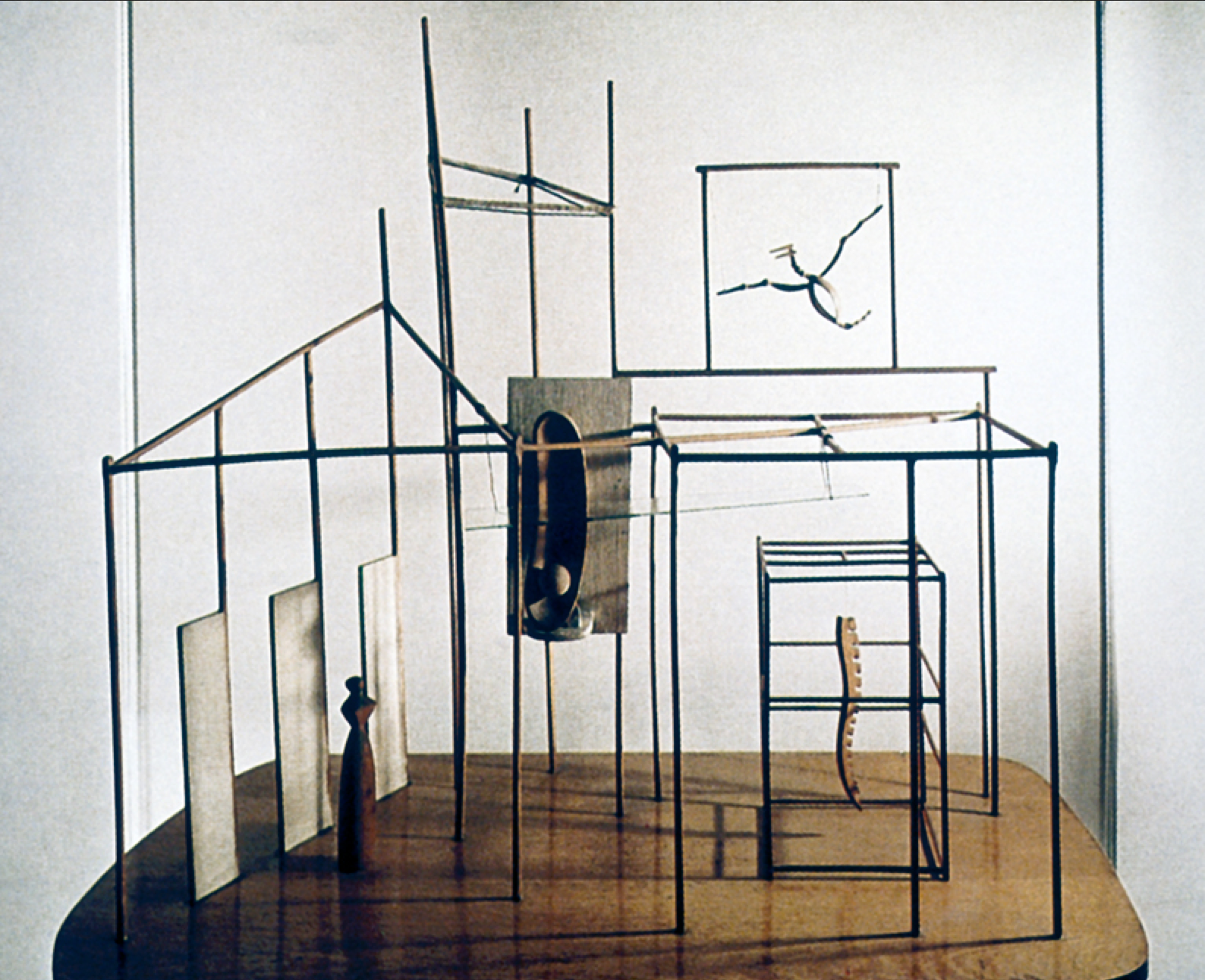
Brings to mind for me Alberto Giocometti’s sculpture “The Palace a 4 a.m.” Similar themes, but lean, compressed and fragile where the poem is lavish.

Screen Shot 2013-08-18 at 8.57.54 AM
The Palace at 4 A.M.

Design: One Second on the Internet

Nice graphic about what one second on the Internet looks like.

Screen Shot 2013-08-12 at 4.48.33 PM
Info graphic on what’s happening in one second on the Internet.

Screen Shot 2013-08-12 at 4.45.00 PM

Too bad Facebook doesn’t  have the “Billions and Billions Served” motto that McDonald’s used to flaunt.


Somebody ought to do a “Powers of Ten” orders of magnitude graphic about the Internet that has the elegance of that wonderful Eames movie. (Although I remember a black and white one from my youth, with a mosquito…)

Beautiful Music: Haydn Andante

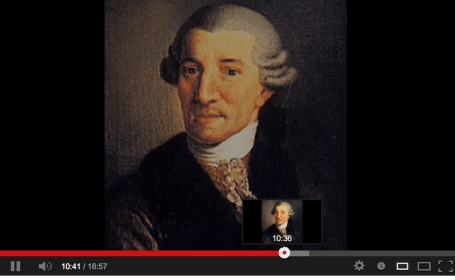
Listening to a lot of Haydn, and even playing some.  Have gotten a bit of a crush on an Andante from the D major Sonata #30 (XV:19). It winds and unwinds so winningly, a small amount of material from which he makes such a finely drawn musical drama.

Below is Rudolf Buchbinder, in somewhat weird sound, but you can get the sense of the characters stealing on and off the scene so craftily. His “notey” version of the last movement doesn’t do it for me, lacks the required lightness and humor. (Save your pomposity for Liszt and Brahms, as Artur Rubenstein coached.)  But still, the skill of the composer comes through.

Screen Shot 2013-08-12 at 10.27.00 AM

Philanthropic Biz Opportunity?

The Times reports today on tech gazillionaires’ “helping hand” towards print media. Sort of the journalism equivalent of underwriting a hospital for sick children, I guess. Except these children are not going to get any better.

From the story:

“So ironic,” Les Hinton, a former publisher of The Wall Street Journal, wrote in a Twitter post last week about Mr. Bezos, that The Washington Post “should be consumed by a pioneer of the industry that almost destroyed it.”

The same story has a quote so audacious from Craig’s list founder Craig Newmark, I had to read it twice:

Mr. Newmark declined to comment on why newspaper officials blamed him. He said he supported journalism initiatives — media ethics and fact-checking are two pet causes — because he valued news he could trust. He said he was not even convinced that Craigslist had hurt newspaper classified advertising.

“I’m still waiting to see any hard evidence for cause-and-effect,” Mr. Newmark said. “I’ve been paying attention for a long time.”

Maybe Craiglist advertising (and web advertising in general) didn’t kill the cash cow that was newspaper classifieds;  if so, it would certainly seem to be one of Mark Twain’s “It ain’t what you don’t know that gets you into trouble. It’s what you know for sure that just ain’t so.” I have a hard time imagining a different scenario, although Phil Weiss in New York magazine makes this provocative point,

From a business standpoint, this may be the most revolutionary aspect of the Craigslist model: It took what had long been defined as a profitable industry—classifieds—and demonstrated that it is not much of a business at all, but is rather what open-source advocates call “a commons,” a public service where people can find one another with minimal intervention from their minders. Even so, the revenues from the tiny portion of ads Craigslist charges for are so considerable that Microsoft and Google and eBay have all come up with competitors or have announced plans to do so.

Sort of interesting considering the inflection point as a discovery that something really isn’t a business “after all,” or at least “any more.” What else is on that conveyor belt?

Today’s Times also has a piece on bookstores turning to donations to survive.

Crowdfunding is sweeping through the bookstore business, the latest tactic for survival in a market that is dominated by Amazon, with its rock-bottom prices, and Barnes & Noble, with its dizzying in-store selection. It’s hardly a sustainable business model; but it buys some time, and gives customers a feeling of helping a favorite cause and even preserving a civic treasure.

So you can’t buy WaPo, maybe you can underwrite a shelf at Politics and Prose?

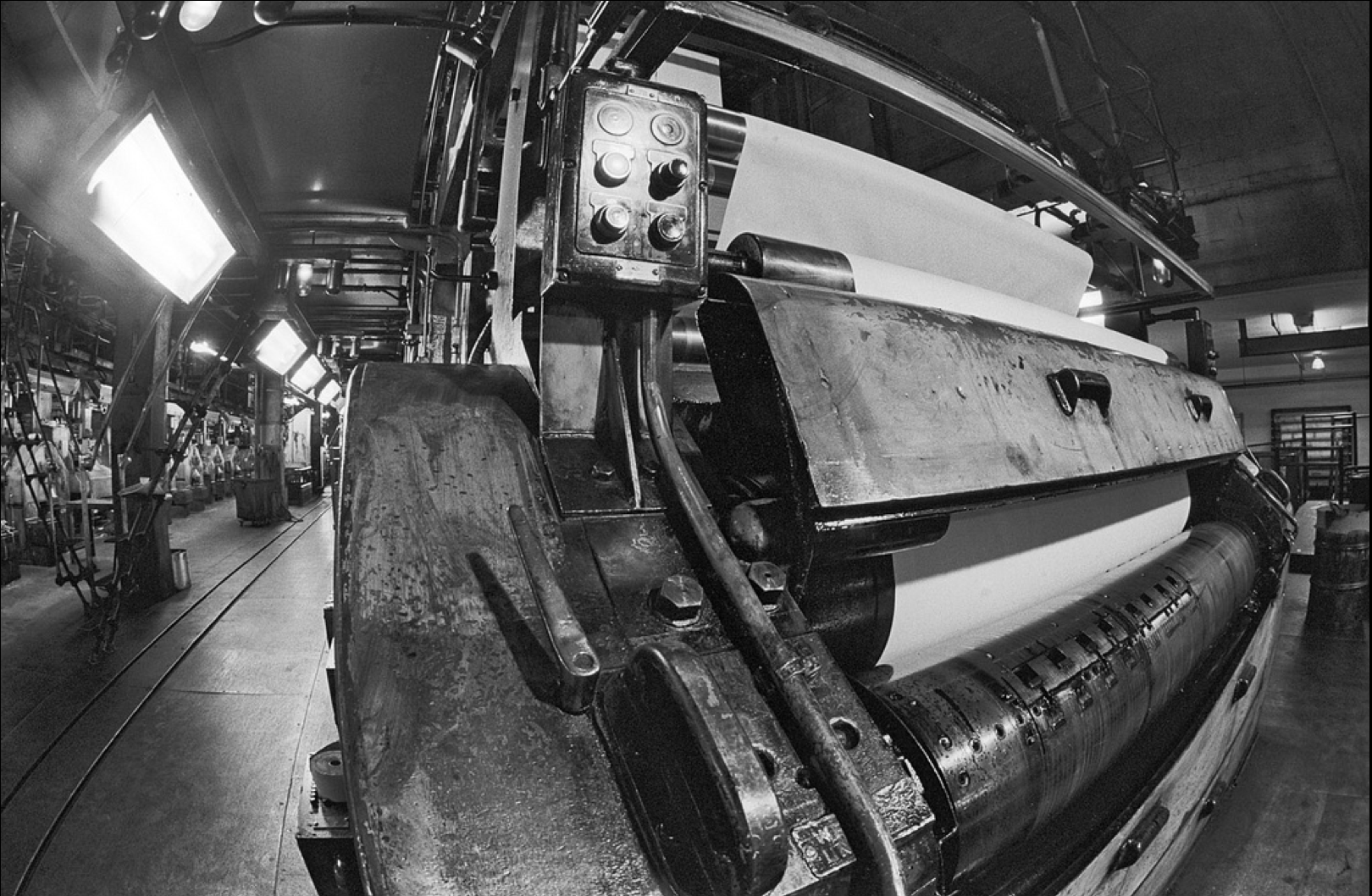
Surely some consultant (perhaps the guy who got canned from NPR?) could work up a service organizing this market, putting millionaires or small fry in touch with their favorite (needy) purveyors of print. Getting your very own printing press sure beats a tote bag, right?

Screen Shot 2013-08-12 at 9.49.55 AM
Printing press for the Boston Globe. Definitely space for an elegant “name plate”–“The operation of this press underwritten by Dandelion and Albrecht Goldenrod of Newton, MA.” Or maybe just skip that step, turn it off, and make it a museum!

Two Ingemisco performances

Requiem_(Verdi)_Titelblatt_(1874)
Title page of Verdi’s Requiem

Lots of opera promo work recently (one of my many freelance gigs), and, of course, digging up YouTube videos of great opera performances hardly counts as work for me.

Two for your delectation–in particular, for my fellow operavore, Andrea.

This is the tenor solo from Verdi’s Requiem, short, but as demanding as many of his arias in range, expression, and the notorious Verdi “climb,” in which the singer has to move up the staff to reach a climatic note (either loud or soft) in a way that requires phenomenal control over breath and dynamics.

The first YouTube clip is Jussi Bjorling. A performance from 1939…and so masterly that it was still the one I grew up listening to 40 years later.


(Sorry for the pedantic German comments. Although insightful, they take an unnecessary swipe at Gigli and his “sobs”).

And from earlier this year, New Jersey tenor, Michael Fabiano.

This 29-year-old knows what he is doing–and certainly refutes the idea that there is nobody with the instrument or the style around for this kind of music. If he is coming to your neighborhood (he’ll be in DC in September) go hear him sing!

Poetic Words: Enzensberger

TLS tipped me off to a poem by Hans Magnus Enzenberg, a polymath author, who, among other works, wrote a charming book on math for kids called The Number Devil.

Here he is in a sharper key.

Short History of the Bourgeoisie

This was the moment when, for five minutes,
without noticing it,
we were immeasurably rich, generous
and electric, cooled in July,
or if it were November,
wood flown in from Finland glowed
in our Renaissance fireplaces. Funny,
everything was there, was flying in,
in a way, by itself. How elegant
we were, no one could bear us.
We threw our money about on solo-concerts,
chips, orchids in cellophane. Clouds
wrote our names. Exquisite.

Scheduled flights in all directions. Even our sighs
were on credit. Like fishwives
we scolded each other. Everyone
had his own misfortune under his seat,
close at hand. That was a shame, really.
It was so practical. Water
flowed from the taps like nothing on earth.
Do you remember? Overcome
by our tiny emotions,
we ate little. If we had only known
that it would all be over
in five minutes, the Beef Wellington
would have tasted quite, quite different.

–Hans Magnus Enzensberger
–Translated by Alasdair King (1990)

Screen Shot 2013-08-09 at 10.15.58 AM

“Culture and possessions, there is the bourgeoisie for you.”
Thomas Mann
and in this case, a little too much red too!

Returns are Easy! Just like Zappos?

Andy Borowitz has inside story on the baffling purchase of The Washington Post by Jeff Bezos:

SEATTLE (The Borowitz Report)—Jeff Bezos, the founder of Amazon.com, told reporters today that his reported purchase of the Washington Post was a “gigantic mix-up,” explaining that he had clicked on the newspaper by mistake.
Screen Shot 2013-08-07 at 2.45.57 PM
“I guess I was just kind of browsing through their website and not paying close attention to what I was doing,” he said. “No way did I intend to buy anything.”

He should be extra careful now. “You might also like Detroit, Fabrice Tourré, or the U.S. Congress. Look at what we’ve recently added to your wish list!”

Silly Words: Sons of Poetry

The appeal of “Sons of Anarchy” on FX eludes me, but I found this Sesame Street spoof pretty adorable.

I will look for “Sons of Poetry” t-shirts and leather jackets at the next reading I go to!

Doodles as Info: New Scribes?

One of the fun formats to emerge over the last few years are the “animated lectures” with great whiteboard illustrations — RSA’s the surprising truth about what motivates people is my favorite.

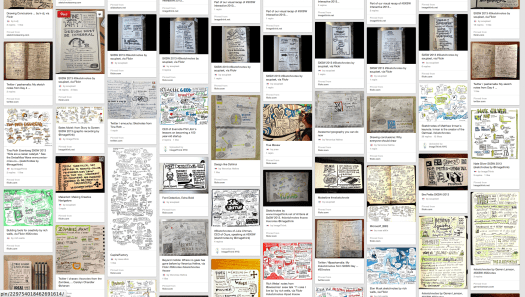
Over at Never Ending Search, a library blog, Joyce Venza calls these kinds of graphics a manifestation of “the new scribes” and links to a bunch of such notes made at SXSW. Wish I had the graphic ability to create them, as they are so intuitively appealing, and seem particularly apposite for capturing the sense of a talk about design.

A new age of scribe is emerging. We’ve seen the work of sketchnoters at the SXSW (South by Southwest) Conference. Their archives at SXnotes Flickr Group, SXnotes on Pinterest, or their Visual Recap artfully capture the big event’s major themes, as well as its conversations.

The Pinterest link with the SWSX notes is cool (and a nice use of Pinterest).

Screen Shot 2013-08-06 at 11.30.58 AM

Minor Infractions: A Crescendo of Disapproval

Screen Shot 2013-08-06 at 10.48.55 AMViolist Miles Hoffman fulminates against “reached a crescendo,” a wrong note to any musician.

All these people, and so many others — oh my goodness, so very many others — have “reached,” or have described events or emotions “reaching,” crescendos. And they not only thought it was O.K. to reach crescendos — they thought, in reaching them, that they were being particularly clever; that they were hitching up their skirts to show flashes of musical knowledge.

But here’s the thing: as God — along with Bach, Beethoven and Mozart — is my witness, you cannot “reach” a crescendo.

I guess it’s proof of the old adage from Aaron Copland,
“If a literary man puts together two words about music, one of them will be wrong.”

Don’t get me started on how to pronounce “it’s not my forte.”

Screen Shot 2013-08-06 at 10.49.04 AM
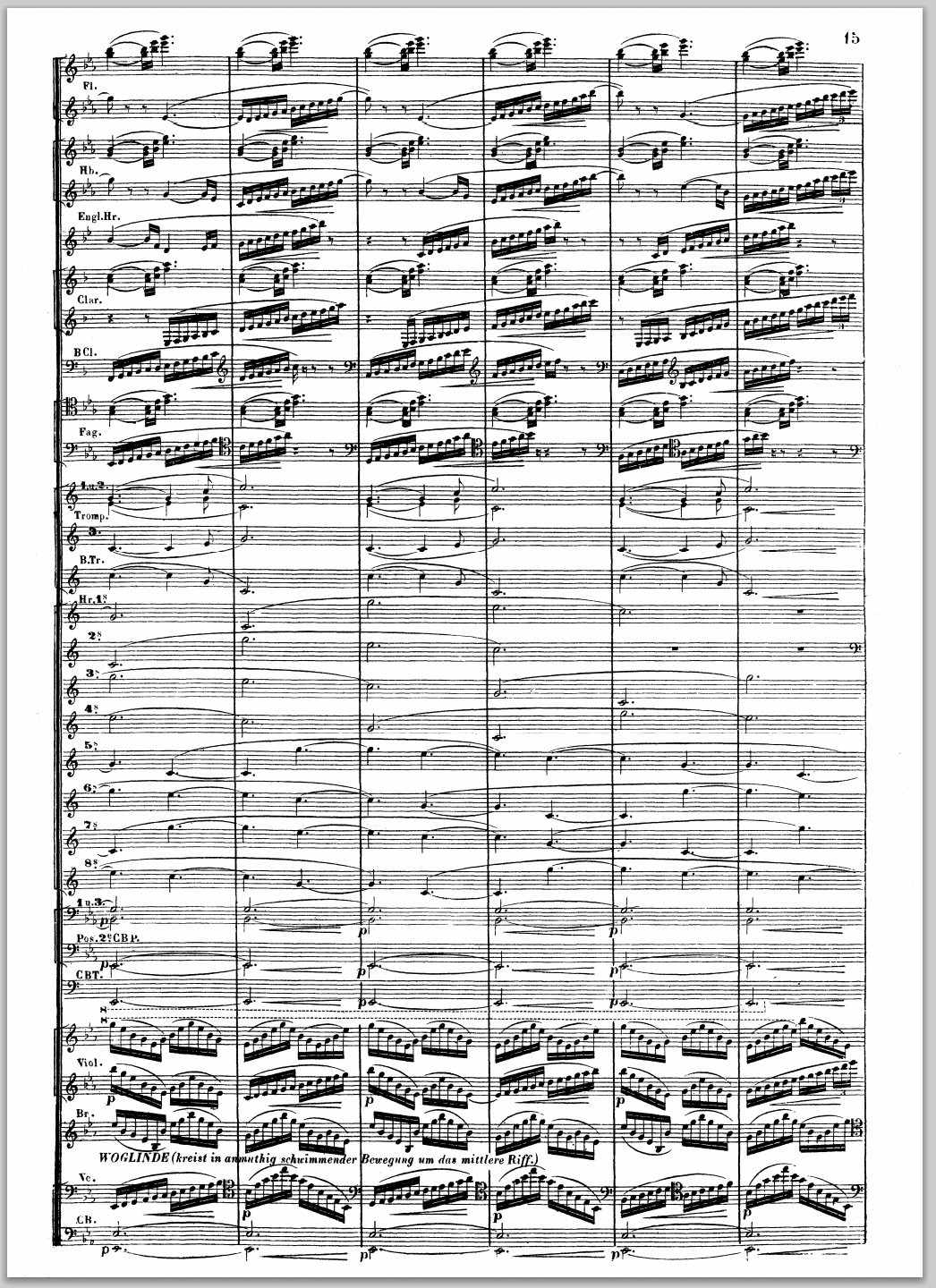
One of the great crescendos in music, the opening of Das Rheingold