When my brother died
I worried there wasn’t enough time
to deliver the one hundred invitations
I’d scribbled while on the phone with the mortuary: Because of the short notice no need to RSVP.
Unfortunately the firemen couldn’t come.
(I had hoped they’d give free rides on the truck.)
They did agree to drive by the house once
with the lights on— It was a party after all.
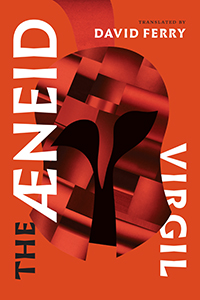
His note on the translation and his aims ends like this (after props to Dryden, which also won me over).
But I think it is not out of order for me to say that “completing” this translation of the work of such a great poet means a great deal to me personally, since I had previously translated his Eclogues and his Georgics, and I am in love with his voice as I hear it in all these poems, telling how it is with all created beings, the very leaves on the trees, very rooted plants, the beasts in the fields, the shepherds trying to keep their world together with song replying to song replying to song, the bees in their vulnerable hives, doing their work, the soldiers doing their work of killing and dying, the falling cities, and the kings and fathers, and their sons, and Dido, and Palinurus, and Deiphobus, and Mezentius the disrespecter of gods, and the mortal son of Venus, the creature Aeneas, carrying his household gods to build a city, heroic and vulnerable, himself subject to monstrous rage, himself not always unconfused, all of them, all of us, creatures, created beings, heroic and vulnerable, and Virgil’s telling it as it is, in his truth-telling pitying voice.
His version has a gorgeous ‘swing’ from beginning to end, and you are likely to find a beautiful line just by opening the book.
After an excess of “dang muggy” days, as a friend puts it, autumn has begun to insinuate herself, the leaves beginning their fading blaze, cool mornings, and if not Keats’ poetic mist, a certain amount of companionable rain after a long summer.
Some seasonal lines and images.
NIGHT-TIME IN MID-FALL
It is a storm-strid night, winds footing swift
Through the blind profound;
I know the happenings from their sound;
Leaves totter down still green, and spin and drift;
The tree-trunks rock to their roots, which wrench and lift
The loam where they run onward underground.
The streams are muddy and swollen; eels migrate
To a new abode;
Even cross, ’tis said, the turnpike-road;
(Men’s feet have felt their crawl, home-coming late):
The westward fronts of towers are saturate,
Church-timbers crack, and witches ride abroad.
—Thomas Hardy, c 1925
It was early in October when the sky was terribly uncertain that I decided to set out on a journey. I could not help feeling vague misgivings about the future of my journey, as I watched the fallen leaves of autumn being carried away by the wind.
From this day forth
I shall be called a wanderer,
Leaving on a journey
Thus among the early showers.
You will again sleep night after night
Nestled among the flowers of sasanqua.
Basho, from “The Records of a Travel-worn Satchel”
The last leaf that is going to fall has fallen.
The robins are là-bas, the squirrels, in tree-caves,
Huddle together in the knowledge of squirrels.
–Wallace Stevens, from “An Ordinary Evening in New Haven”
Are we in a list moment? They seem to be all around us, even gaining their own silly term, listicle. But humans and lists go way back (one of the earliest cuneiform relics is of course a list of kings). List making is perhaps definitional of humans (my list of potential blog entries, most never written, could be my own exhibit A).
This all occurred to me perusing the plethora of lists on Gramophone’s web site. (Gramophone is a classical music magazine published in the UK, and mostly concerned with reviews of recordings. It’s been around a long time and this, plus its focus on classics, is basis for dismissing it out of hand, or treasuring it. I alternate positions.)
Like most digital publications, Gramophone has gotten in line with lists in a big way. Playlists on many topics (Hall of Fame Sopranos, Great Violinists, Inspirational Castratos (that is modern performances of work original written for castratos, not modern inspirational castratos, I hasten to say). This push you to a streaming service after you have read a pithy paragraph or two. I was pleased that the violin list reminded me of how wonderful the fiddling of Arthur Grumiaux was.
They also have numerous compilation lists, “50 Greatest Chopin Recordings” “50 Greatest Schubert Recordings” and so forth. Since they are aiming at record collectors, and we are nerds by definition, they also have “The 50 Greatest Classical Recordings You’ve (Probably) Never Heard.” (If you want a count, I own or have owned three of the 50 (am a streamer now), heard some others, but more than a few are tantalizing unknowns to me: to wit, soprano Gertrud Grob-Prandl, & composer, Johann Heinrich Schmelzer; I also didn’t know Stokowski did one of his technicolor arrangements of Wagner’s “Magic Fire Music” with the Houston Symphony–(a whole LP of magic fire for reals?)
Although music is ideal fodder for listomania, it’s hardly limited to that. Every bookstore I go in seems to have at least some entries in book series titled “1000 [insert noun here] before you die” with varied nouns:
Places to see
Books to Read
Songs to Listen To
etc.
The spoof writes itself, just slot in a different noun:
1000 Episodes of Law and Order to See Before You Die
1000 Starbucks Latte Varieties to Drink Before You Die
1000 Arguments to Have With Your Spouse, Children, Roommate, Dog About Where They Leave Their Stuff
Granted mine don’t have the ‘bucket list’ frisson of visiting Corfu or reading Ulysses, but they do have the virtue of being easily achieved.
Oddly, there is, at least as far as I know, no parallel “1000” series about things to avoid (call it the anti-bucket list). The 1000 Books Not To Read Before You Die (so many choices!) would be a hit I bet. I can contribute a few entries.
In addition to being easy, lists do emit at least a weak signal as a bit of rhetoric. Little doubt that most composition teachers and editors would discourage lists in prose. Writing-wise their challenges (parallel or not? what order? list within lists?) aren’t very taxing (certainly not the furniture moving-level effort required in the typical essay).
Yet they are writing, and sometimes can shine. That list of guests at Gatsby’s party is a miracle. And lists spin through Stephen Millhauser’s magical novels. Just now, I’m deep into Robert Macfarlane’s The Old Ways, inspired by the life of naturalist and poet Edward Thomas, whose guides to rambling through the British Isles are quiet classics, and whose bleak-beautiful poetry is newly appealing to me. Macfarlane has this delectable bit for the list-o-mane.
pilgrim paths
green roads
drove roads
corpse roads
trods
leys
dykes
drongs
sarns
snickets
he goes on “—say the names of paths out loud and at speed and they become a poem or rite–holloways, bostles, shutes, driftways, lichways, ridings, halterpaths, cartways, carneys, causeways, herepaths.”
Macfarlane’s book is beautifully written, and carries its literary and geographic learning with a light touch.
There is, of course, course another famous list, Ko-Ko’s from The Mikado of potential victims for the Lord High Executioner. Frequently updated, but at its most swell, perhaps, in Martyn Green’s classic recording.
Both Poetry Daily and Knopf Poem of the Day do celebrations of National Poetry Month (April, of course, the ‘cruelest’ month). Sharon Olds was one of Knopf’s selections, and she has always resonated with me, perhaps never more so than in this poem.
Directly
Then, one late afternoon,
I understand: the harm my father
did us is receding. I never thought
it would happen, I thought his harm was stronger than that,
like God’s harm—flood, or birth without
eyes, with mounds of tissue, no retina, no
pupil, the way my father on the couch did not
seem not to be using eyes
but not to have them, or to have objects
for eyes—Jocastal dress-brooches.
But he had not been hated, so he did not hate us,
just scorned us, and it is wearing off.
My son and daughter are grown, they are well
as if by some miracle. The afternoon has a
quality of miracle, the starlings all facing
the west, his grave. I come to the window
as if to open it, and whisper,
My father’s harm is fading. Then,
I think that he would be glad to hear it
directly from me,
so I come to where you are, bone
settled under the dewed tangle
of the blackish Northwoods moss like the crossroads
hair of a beloved. I come to you here
because it is home: your done-with body
broken back down into earth, holding
its solemn incapable beauty.
Perhaps all writers make use of their family first and foremost, but few do it as fearlessly.
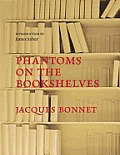
Still dipping into Phantom of the Bookshelves, one of those charming books on books that show up from time to time. Chapter 7 addresses a phenomena that many readers encounter.
Chapter 7
Real People, Fictional Characters
“The best bacon omelettes I have eaten in my life have been with Alexandre Dumas.” — Jacques Laurent
Hundreds of thousands of people live in my library. Some are real, others are fictional. The real ones are the so-called imaginary characters in the works of literature, the fictional ones are their authors. We know everything about the former, or at least as much as we are meant to know, everything that is written about a given character in a novel, a story, or a poem in which he or she figures. This character has not grown any older since the author brought him or her into existence, and will remain the same for all eternity. When we hold in our hand the text or texts in which such a person appears, it feels as if we are in possession of everything the author wanted us to know about the character’s acts, words and sometimes, thoughts. The rest doesn’t matter. Nothing is hidden from us. For us, a novel’s characters are real. We may be free to imagine what we don’t know about them, though we know quite well that these are just guesses. And we are free to interpret their words or their silences, but again these will just be interpretations. We know quite a lot about Odysseus, Aeneas or Don Quixote, correspondingly little about Homer, Virgil or Cervantes. Sometimes characters are even deprived of an author as if their creator had discreetly sipped away. Who made up the first version of Don Juan? Who invented Faust? And while we feel sure that Harpagon, Tartuffe or Monsieur Jourdain undeniably exist, what do we know in the end about a certain Jean-Baptiste Poquelin, whose stage name was Molière. Not very much, not even whether he really wrote all the plays attributed to him.
[…]
Authors are just fictional people, about whom we have a few biographical elements, never enough to make them truly real people. Whereas the biography of a literary character, even if it is incomplete–and explicitly so–is perfectly reliable: it is whatever its creator decided.
A real map of a fictional place, R.K. Narayan’s Malgudi, which is nonetheless a place that was very real to me when I fell in love with his books in my twenties.
“Two communities outside Birmingham, Alabama, are
still searching for their dead.” — News Telecast
And tomorrow morning at 8 o’clock in Springfield, Massachusetts,
my oldest aunt will be buried from a convent.
Spring is here and I am staying here, I’m not going.
Do birds fly? I am thinking my own thoughts, who else’s?
When I die, don’t come, I wouldn’t want a leaf
to turn away from the sun — it loves it there.
There’s nothing so spiritual about being happy
but you can’t miss a day of it, because it doesn’t last.
So this is the devil’s dance? Well I was born to dance.
It’s a sacred duty, like being in love with an ape,
and eventually I’ll reach some great conclusion, like assumption,
when at last I meet exhaustion in these flowers, go straight up.







 Both
Both 




 A Few Reasonable Words