New York Public Library has just re-opened its 53rd Street branch (replacing the old Donnell Library). Justin Davidson in New York Magdoesn’t much care for it…
Glance in from the sidewalk, and the eye falls on a set of blond-wood terraces that go cascading into a cave, between walls of metal slats and raw concrete. The vibe mixes the slovenly with the dictatorial. On the steps, felt discs — four per row, not really plush enough to qualify as cushions — demonstrate where to place one’s behind, but in the end most people sprawl or hunch. Neither is especially comfortable. This narrow buried amphitheater gives library patrons a split-level vista: above, a rat’s-eye view of the street and passers-by; below, a wide screen playing a promotional slideshow for New York and its libraries. Architects love choreographing such chance urban spectacles, but this one enjoys a special kind of pointlessness.
The Times was less critical adopting a wait and see stance and pointing out that the community space function of the library might be very well served by the innovative design.
As a bookish type, I share some qualms about thinning the collection out during a renovation (but it’s been happening for decades and probably centuries). On the other hand it looks like an intriguing space to me, perhaps pointing towards some new directions of what a library can be. As John Cage said, “I can’t understand why people are frightened of new ideas. I’m frightened of the old ones.” I’m looking forward to checking it out when I’m up there next, and seeing how it compares to the plans for the new MLK Library in D.C.
No news to anybody in the archives and records world, or researchers who work with public documents or manuscripts for that matter, but huge amounts of the original written legacy of the last 30 years is falling into the digital abyss as formats become obsolete, hardware is hard to find/non-functional, and magnetic storage media itself crumbles into dust.
But maybe there’s hope: A paper in Nature reports on a novel approach to saving the archives, applying techniques from digital forensics. Stanford’s efforts to save the Stephen Jay Gould Papers from oblivion gives an example of the impetus.
The Gould papers were an early indication of an issue that’s been rapidly worsening: four decades after the personal-computer revolution brought word processing and number crunching to the desktop, the first generation of early adopters is retiring or dying. So how do archivists recover and preserve what’s left behind?
From, “Digital forensics: from the crime lab to the library” by Mark Woverton.
The approach is to fit out archivists with the skills of a crime investigator (who will star in the spinoff “CSI: The Manuscript Division,” I wonder?).
The list of dead or dying media that a UNC prof mentions– floppies, Zip disks, CDs, DVDs, flash drives, hard drives–reads like my career. I’m sure that any digital traces of a monthly opera newsletter I contributed to and later edited for years was delivered to the printer and archived on SyQuest discs, a medium and a company both long gone. So is PageMaker, the program we designed it on. The newsletter was no great shakes, but probably somebody put stuff on SyQuest worth saving, be it a data set that has otherwise impossible to recreate info, a great novel or an archive of legal docs.
Fragments of Sappho’s poetry. (By Masur (Own work) [CC BY-SA 2.5 (http://creativecommons.org/licenses/by-sa/2.5)%5D, via Wikimedia Commons)Seems like UNC is on the job, with a tool called BitCurator, so maybe future generations won’t have to depend on the digital equivalent of somebody using a scrap of Sappho’s poetry as a wine stopper to rescue a legacy. (I know that story may be only a romantic legend, but it’s still evocative.)
The American Library Association has released their State of America’s Libraries Report 2016 and nestled among many interesting tidbits is the current list of most challenged books in libraries. (I assume this is all libraries, but, as usual, the list is heavy on teen titles, always the scorched earth of book censorship.)
Out of 275 challenges recorded by the American Library Association’s (ALA) Office for Intellectual Freedom, the “Top Ten Most Challenged Books in 2015” are:
Looking for Alaska, by John Green
Reasons: Offensive language, sexually explicit, and unsuited for age group.
Fifty Shades of Grey, by E. L. James
Reasons: Sexually explicit, unsuited to age group, and other (“poorly written,” “concerns that a group of teenagers will want to try it”).
I Am Jazz, by Jessica Herthel and Jazz Jennings
Reasons: Inaccurate, homosexuality, sex education, religious viewpoint, and unsuited for age group.
Beyond Magenta: Transgender Teens Speak Out, by Susan Kuklin
Reasons: Anti-family, offensive language, homosexuality, sex education, political viewpoint, religious viewpoint, unsuited for age group, and other (“wants to remove from collection to ward off complaints”).
The Curious Incident of the Dog in the Night-Time, by Mark Haddon
Reasons: Offensive language, religious viewpoint, unsuited for age group, and other (“profanity and atheism”).
The Holy Bible
Reasons: Religious viewpoint.
Fun Home, by Alison Bechdel
Reasons: Violence and other (“graphic images”).
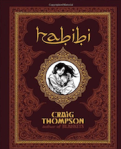
Habibi, by Craig Thompson
Reasons: Nudity, sexually explicit, and unsuited for age group.
Nasreen’s Secret School: A True Story from Afghanistan, by Jeanette Winter
Reasons: Religious viewpoint, unsuited to age group, and violence.
Two Boys Kissing, by David Levithan
Reasons: Homosexuality and other (“condones public displays of affection”).
John Green! He’s practically an institution after “Fate,” and a wonderful writer to boot. And although I am in hearty agreement with the assessment of “poorly written” for E.L. James’s entire oeuvre, where’s the fun (or the feasibility) in expelling works for that? “Condones public display of affection” is also a head-scratcher, and one would assume understanding a ‘religious viewpoint’ is one of many reasons The Bible, still the big dog on the porch of banned books, is read and worth having in a public library collection. Fun Home the musical just won the Tony, and the graphic novel is a great, and poignant read, and by reliable accounts the show is super. I’m not really much of a graphic novel reader, but one positive effect of this list on me is that I now want to read Habibi, which of course, I’ll get from my public library.
Likely only of interest to library nerds or technology history types, but here’s an interesting piece in American Libraries about how the technology behind library catalogs & how it drove standards (and came to be limited by them). I lived through a lot of these shifts, including the end of the physical catalog at the Library of Congress. Henriette Avram (mother of the computerized format of bibliographic info) was still working there at the time and treated with the same sort of awed respect that TBL got in early web days.
From the piece:
“[Melvil] Dewey did not anticipate the availability of the LC printed card service when he proposed the standardization of the library catalog card, yet it was precisely that standardization that made it possible for libraries across America to add LC printed cards to their catalogs. Likewise, Avram did not anticipate the creation of the computerized online catalog during her early work on the MARC format, but it was the existence of years of library cataloging in a machine-readable form that made the Online Public Access Catalog (OPAC) a possibility.”
MARC automated a process, but it was founded on the idea of printing, wrangling and using a physical card, and this has led to any number of misfires…
We, and by “we” I mean all of us in library technology during this time, created those first systems using the data we had, not the data we would have liked to have had. The MARC records that we worked with were in essence the by-product of card production. And now, some 35 years later, we are still using much the same data even though information technology has changed greatly during that time, potentially affording us many opportunities for innovation. Quite possibly the greatest mistake made in the last two to three decades was failing to create a new data standard that would be more suited to modern technology and less an imitation of the library card in machine-readable form. The MARC record, designed as a format to carry bibliographic data to the printer, was hardly suited to database storage and manipulation. That doesn’t mean that databases couldn’t be created, and to be sure all online catalogs have made use of database technology of some type to provide search and display capabilities, but it is far from ideal from an information technology standpoint.
Not to mention a pain for the user. What’s puzzling to me is why we are still stuck with a system that technology has blown past. Karen Coyle wonders too:
The entire basis of the discovery mechanism addressed by the cataloging rules has been rendered moot in the design of online catalogs, and the basic functioning of the online catalog does not implement the intended model of the card catalog. Parallel to the oft-voiced complaint that systems developers simply did not understand the intention of the catalog, the misunderstanding actually goes both ways: Significant differences in retrieval methods, that is, sequential discovery on headings versus set retrieval on keywords, did not lead to any adaptation of cataloging output to facilitate the goals of the catalog in the new computerized environment. Library systems remain at this impasse, some 35 years into the history of the online catalog. The reasons for this are complex and have both social and economic components.
I wonder if they still teach MARC coding in library school? As Wikipedia points out, it’s clearly technically obsolete, but 30 million plus libraries keep track of their collections that way, as the famous saying goes, ” what is to be done?”
“The local-history room of the New Hanover County Public Library (NHCPL) in Wilmington, North Carolina, harbors the ghost of a patron who frequented the library conducting Civil War research.
Former local-history librarian Beverly Tetterton insisted that some mornings she had found files spread out on a reading-room table when she is certain she had put everything away the night before. Sometimes people report the sounds on pages turning—subtle rustling noises that a “librarian would recognize as the sounds of doing research.”
She often would find one book, The Papers of Zebulon Baird Vance, left out on the table. Tetterton said that once a 10-year-old boy came into the room to investigate the ghost. “I gave him the book to look at. Later, he walked up and said, ‘Do you think this has anything to do with it?’ Inside this book was an envelope addressed to the person that I thought might be the ghost. I have been through that book hundreds of times and never saw that envelope. I could feel my hair standing straight up.”
There is also a library that takes such pride in its paranormal activity that it’s set up webcams so you can take photos for yourself.
And for some ghostly, and wonderful sounds, check out the first part of Gloria Coates, Symphony No. 1, “Music on Open Strings”: I. Theme and Transformation, a suitably ghostly dance for a Halloween night. Happy trick or treating! We’re curling up with John Carpenter’s Classic Fright Flick, Halloween.
I remember these catalogs (whether just a few drawers in a school library or the mammoth city of catalogs at the Library of Congress when I worked there in the 80s). I don’t miss them as an information tool, but they had a certain human beauty that somehow a computer search input box lacks.
The Electronic Freedom Foundation reports that a a pilot project at the Lebanon, New Hampshire, Library to serve as a TOR exit relay has been temporarily halted, and potentially totally scotched, by the U.S. Department of Homeland Security. ProPublica has a rundown as well.
To shed some light on the the question of whether this is an outrage or reasonable, here’s a quick TOR 101 lesson. TOR (name comes from The Onion Router, but no relation to the satirical web site) is a means of using the Internet anonymously. Individual computers (of volunteers) provide entry into and exit from anonymous, encrypted network paths–sort of a series of safe houses that let computer traffic pass from one to the next without recording from whence it came or whither it goest. (Disclosure: I’ve not used it, got as far as downloading the software, installing it, and chickening out. So somebody who has it running live can no doubt improve and correct that description.) Also: lots of good explanations around the web, including one from EFF’s “in plain English” series. The key thing is that the set-up provides a theoretically untraceable way to navigate the Internet, and can be installed on any computer.
The library proposes to offer an exit for TOR, meaning people could use its computer network to download materials anonymously. A bunch of questions ensue: what do people do in TOR, and does this activity matter as a point of library policy? The dark speculations come easily: Deal drugs? Send a bomb threat? Plot insurrection or worse? Just steal software? But in the other column, there are better possibilities: evading censorship for for political art? Blowing the whistle on unconstitutional surveillance? Negotiating a job offer across international borders or protecting a trade secret? Organizing for rights in a closed regime? Negotiating safe passage for a political prisoner?
Since it’s software, TOR is simply a platform for human purposes, be they benign or malignant. It is no more culpable than the library card catalog of a previous era: those listed how to find books on the shelves, providing neutral access to anything, be it The Anarchist Cookbook or Charlotte’s Web. What patrons did with the books was their concern, and librarians at least aspired to stay out of that question.
Were I still a librarian, I would be vexed by this one. It’s a first-amendment loving profession, and access is central (both characteristics resonate with me). At the same, criminal activity such as Silk Road, or ransomware bots, may live in TOR, organizing capacity for hate groups, and human trafficking networks could lurk as well. Yet, TOR’s stated goals are to support free expression, privacy, and human rights, and libraries, in their nerdy, sometimes quaint way aim to live that mission every day. If some teenage Ai Wei Wei-type in is trying to get her message out, and my library is her exit relay, should I say no? Access is entwined with the right to privacy: being able to checking out the oft-banned Ulysses, for instance, means being able to check this out more or less anonymously. If I use a library terminal to tap the Internet, what content is fair game, and what level of privacy is appropriate?
I think on the whole (particularly if I were a New Hampshire librarian–a state that has “Live Free Or Die” on its license plants), I’d brave the battle and provide the relay. Libraries are networks, and although its easy to stay out of the fray, and let others fight this battle, who is really doing it from the public interest side? Our Google overlords have already got a huge advantage, and are so unfazed by their ability to track our every move online that their position–something which I think the STASI would have been fine with — is “don’t do anything that you shouldn’t, and everything will be fine.” Privacy in our lawful actions is not something we should compelled to give up, nor do our intentions and our explanations of what we might do become property of the state, even if some of our fellow inhabitants of the planet have dark ones, and use tools to foment them. TOR is tool to keep things private, at least some of which should be, even at a public library, perhaps even particularly there, where there is a means to discuss the public good and answer to it.
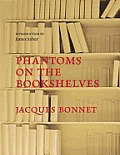
From a memoir of reading, book collecting, and libraries, Phantoms of the Bookshelves, that I, appropriately enough, picked up at the Bethesda Library.
On 1 September 1932, the Portuguese newspaper O Século carried an advertisement for the post of librarian-curator at the Condes de Castro Guimarães Museum, in Cascais a little town on the coast about thirty kilometers from Lisbon. On 16 September, the poet Fernando Pessoa sent the local authority a letter applying for the post. The six-page document was later reproduced in a book by Maria José de Lancastre, Fernando Pessoa, una fotobiografia (Fernando Pessoa: photographic documentation), published in 1981 by Imprensa Nacional-Casa da Moeda and the Centro de Estudios Pessoanos, which I bought for 500 escudos in a bookshop in Coimbra in November 1983. It was the only copy they had. In the town’s cafés in those days there was still a ledge under the table where you could put your hat, and I remember seeing a woman go past in the street with a sewing machine balanced on her head. The Portuguese text of the letter is reproduced in Fernando Pessoa in characters far too tiny for anyone without good Portuguese to decipher.
Pessoa, who was tired of translating commercial correspondence for import-export firms in Lisbon, on a wage that scarcely allowed him to survive and get (moderately) drunk every day, felt the urge to change his way of life and leave his flat at 16, Coelho da Rocha Street for a small town near Lisbon. In my copy of the book, a few pages before the letter, there is a photograph of Pessoa drinking a glass of red wine in the shop owned by the wine merchant Abel Ferreira da Fonseca. Behind him you can see casks of Clairette, Abafado, Moscatel, Ginginha and so on. This was the snapshot which Pessoa sent in September 1929 to Ophelia Queiroz, the only romantic relationship he is known to have had. The dedication reads: “Fernando Pessoa, em flagrante delitro”, or “Fernando Pessoa in flagrante with a litre”. Sending the photograph had marked the renewal of a connection broken off nine years earlier, and which would end, permanently this time, six months later. At least, it ended materially. Ophelia never married, and she recounted that shortly before his death, Pessoa, on meeting his nephew Carlos, had asked him, “How is Ophelia?”, then, his eyes filled with tears, had grasped his hands and added: “Oh what a fine soul, a fine soul!”
The lovely opening…evocative of Pessoa himself, a lyrical mysterious spirit.
A cigarette card from the NYPL collection, offering help on that frequent query, “how do I hold my Guinea Pig?”
As a regular denizen of various libraries and library websites, I frequently am surprised about what they have and hang on to. A case in point is cigarette cards, a bit of ephemera that has its own little history as a collectible. The York Public Library has heaps, many from the UK, and they’ve digitized the lot.
Initially just used to stiffen the packaging, cigarette cards became sort of baseball cards for adults, with an image and a little blurb. (Dare I say tumblr or pinterest-esque?).
Some are quite fetching, others a little scary, but they offer one unfiltered view of what was popular in a different age. (Would “American Editors” rate their own series of anything now? Shows what prestige the newspaper biz had 100+ years ago. Even somebody as awesomely named and mutton-chopped as Oswald Ottendorfer of the New Yorker Staats-Zeitung probably wouldn’t even merit his own Wikipedia page today.)
Oswald has lots of other sometimes wonderful and sometimes inexplicable company: pets, sports (including golf holes), movie stars, far away places, gizmos, jokes, you name it. A coil ignition system? For intent study during your cigarette and coffee break? Hmm.
One I particularly liked was “Figures of Speech,” many of which are still current, but what on earth is “All my eye and Betty Martin”? It takes on “Queer Street” and it’s not what you think, although an “uncle” is involved.
NYPL has a nice “ABC of Cigarette Cards” and here’s a slideshow of a few of the many that caught my eye.
I’m a library lover (sort of a librarian manqué in fact, even though my days employed in a library or using it for academic work are a ways back). I even cataloged my childhood books in 3rd grade (odd but true). In 2013, Pew which is sort of Upworthy for the egghead set, did a quiz on how engaged you are with your public library, and predictably I got good marks.
So the question of the shifts in the mission and services of libraries that comes from the digital revolution is naturally of interest. The quick assumption is that libraries are toast (like much else I care about, live music, newspapers, analogue photography, spelling analog with a “ue” at the end.) But, in fact, libraries, some of the oldest institutions on earth, have a reliable way of reinventing themselves. That they existed pre-Gutenberg gives the hope that they will be around post-web, even if their shape morphs radically and their services include more 3D printing than readers’ advisory.
I attended an interesting, if speculative, webinar on possible futures put out by the Library 2.0 people, and in addition to hearing an aside from school library guru Joyce Valenza that has stuck with me, “stop saying ‘social’ media, it’s just ‘media,’ particularly to anyone under 25,” I was impressed to learn that the American Library Association has a future of libraries project, with a handy guide to the broader trends that are shaping libraries, and for that matter much else. Worth checking out, and notable for a minimum amount of jargon (particularly for librarians, who love their argot); pithy, to the point and intriguing.
ALA’s Trend Watch
And as the saying goes, “the future is here, it’s just not evenly distributed.” I recently got to visit one example of the future of libraries, the Hunt Library at NC State. That particular future: amazing.

evel vista: above, a rat’s-eye view of the street and passers-by; below, a wide screen playing a promotional slideshow for New York and its libraries. Architects love choreographing such chance urban spectacles, but this one enjoys a special kind of pointlessness.





 A Few Reasonable Words