Grit and its Discontents

Having been involved in creating media for K-12 teacher professional development (among many other educational topics over the years), I have seen many trends admirable or baleful blow through the zeitgeist.

A current obsession is ‘resilience’ (taking a role akin to positive psychology or learning styles in previous periods).  I am not qualified to say whether resilience, the practice of teaching with an eye to fostering individual self-agency, perseverance, learning from failure etc.  is actually, as is sometimes claimed, an approach with a neurological basis, or whether it reflects a sounder pedagogy that any others per se.  It certainly goes down easily (would a teacher want a kid not to be resilient? does anybody seek, except perhaps strategically in soap operas, want a reputation as ‘fragile’?)

And yet…

Some questions occur, prompted on my own and in part by a provocative talk called “Resilience, Grit, and Other Lies” given at a library conference and archived online.


A few natural questions, prompted by the talk and qualms I have had about this line of thinking. Individual self-efficacy is a fine notion, and experiences for students that foster it might have the potential to do good, but if they happen in circumstances that are structurally dysfunctional, couldn’t this backfire? Doesn’t self-efficacy (and by implication resilience) have a developmental dimension? How do you know what fosters it and when, versus just causing frustration. Is context not key?

More seriously, if individual resilience or grit is a key message, what happens to  responsibility beyond the individual student’s effort? Does it melt away when other units/dimensions are concerned? If you are in a significantly under-resourced school, are the inequalities that led to that reality ignored, are the people and systems responsible let off the hook with a shrug and the message that students can overcome based on grit?

I’m sure there is nuance I am missing–it can’t be just about individual merit full stop, and  good counter arguments to my skepticism must exist. To continue in the negative column, however, it is worth noting that resilience is a darling of Silicon Valley, which has among its ideological biases an emphasis on the individual rather than the any larger unit. (Shades of Maggie Thatcher’s “there is no such thing as society”). It is also true that resilience and its related pedagogies really caught fire around the time of the great recession, in which forces beyond most individuals’ personal control were abundant and highly visible. (And God knows, some solace, even if merely notional, was perhaps in order. )

Still, it seems on balance to perhaps to be notional in the sense that is mostly perhaps  a good story,  as if schooling was a narrative arc, ‘first there was such promise, then I struggled and there were terrible times, but I found my inner grit and triumphed.’  “You can do it, just hunker down and pull yourself up by your bootstraps.” It would make Dickens or better Horatio Alger smile.

Philosopher Robin James catches some of this “it makes a good story” –although situating it a sort of complicated context of pop music among other things.

“Resilience is a specific type of therapeutic overcoming. It has three steps: (1) perform damage so that others can see, feel, and understand it; (2) recycle or overcome that damage, so that you come out ahead of where you were even before the damage hit; (3) pay that surplus value–that value added by recycling–to some hegemonic institution, like white supremacist patriarchy, or capital, or the State, something like that. This isn’t just coping–it’s a very, very specific form of coping designed to get individuals to perform the superficial trappings of recovery from deep, systemic issues, all the while reinforcing and intensifying the very systemic issues it claims to solve. Resilience is how patriarchy hides behind superficial feminist liberation, how white supremacy hides behind superficial multiculturalism.” – Robin James, Resilience & Melancholy: Pop Music, Feminism, Neoliberalism

Horatio Alger, the apostle of grit from yesteryear.

​Not sure what I make of all of it…and still even see the appeal in “the story,” its potential to be an approach that could help inspire others, or yourself, to find perseverance and strength. But the ideological trappings are there too, and not at all comfortable. If you are interested in the topic, do listen to the presentation. One quotation, in particular, stayed with me, “We needed a revolution, we got resilience.” Alf Hornberg – Professor of Human Ecology, Lund University.


Commonplace Book: Uncle Rudolf

Enjoying Paul Bailey’s “Uncle Rudolf,” set in the early 20th century, and focused on a celebrated Romanian tenor who aspired to Mozart and Verdi, but ended up singing operetta to international acclaim, but increasing disgust. Late in the novel, the narrator, the tenor’s nephew, relates,

“I came to understand, in the years of Uncle Rudolf’s continuing musical re-education, the nature of the distaste he felt for the culture in which operetta had flourished. He had been party to a despicable frivolousness, he said. The gypsies he’d impersonated weren’t real, because they all turned out to be kings or princes or barons, and what were the brigands he’d played but a bunch of rabid nationalists, crude beasts forever casting roguish glances at love-sick lunatic maidens? In the streets of Vienna, Bucharest, and Budapest, a black operetta was being enacted daily while he was behind the footlights singing of a liberty and freedom indistinguishable from tyranny. He had betrayed not only Jean de Reszke and Georges Enesco, but his own best instincts as well. He had sung the kind of music that was enjoyed by those who brought about Europe’s destruction. Such was his conviction in old age , which I refrained from arguing against.

Earlier, in the book, Andrei, the nephew, hears Handel for the first time. His uncle performs at a Christmas party that Andrei is present at as a child:

It is the not-so-famous pianist I remember best, simply because he was my uncle’s regular accompanist. His name was Ivan but he wasn’t Russian. Uncle Rudolph called him Ivan he Terrible whenever he hit a wrong note or was out of time. The prima donna refused to sing that first Christmas and the cabaret artist was so drunk that he forgot his words, to everyone’s amusement, and so it was that my uncle, who was not sober, beckoned Ivan Morris over to the piano.

–You must forget Danilo, and the Gypsy Baron, and the Vagabond King, and that bloody idiot of a brigand Zoltan, and all of the other halfwits in my repertoire.

My uncle cleared his throat, signalling to Ivan that he was ready to begin, and then sang the aria from Handel’s Jeptha in which the anguished father offers up his only child for sacrifice:

Waft her, angels, through the skies,
Far above yon azure plain;
Glorious there, like you, to rise,
There, like you, for ever reign.

I was unaware of Jephta’s plight and I had never heard Handel’s music before, but I did understand , at the age of seven, that I had just listened to something radiantly beautiful.

Answers to Questions You Didn’t Ask

CES (formerly the Consumer Electronics Show) in Las Vegas is the ultimate nerd destination, and yes, once my husband and I made a vacation of it. We learned that it isn’t all that accessible for your ordinary gear head consumers, more B2B and a media showcase, but as an anthropological experience it’s certainly something.

This year’s probably has a full plate of drama, given that everything with a chip in it may have a security vulnerability, but the sad/funny chapter has been inadvertently been penned by a company that created a piece of luggage that follows you around.  Here is what you need to know:

1. It’s called 90Fun’s Puppy 1.

2. They gave to a reporter at the Verge to test.

She gave it a spin:

 So far, all these bags seem more like proof of concepts than gadget of the year. A market exists for suitcases that cater better to those with mobility impairments, but I am not yet convinced this is the solution.

90Fun plans to take preorders for the Puppy 1 during the second half of 2018 in a crowdfunding project, which means it’s got some time to work out the kinks. For now, think of it as an actual, untrained puppy. In theory, it’s cute that a dog will follow you wherever you go, but pair that with the idea of enlisting a puppy to drag your luggage around the airport… and it’s about as useful as it sounds.

Somehow the sight of it falling helplessly to the ground makes me feel for it too…which is completely ridiculous!


Wagner on Tristan

On a Tristan und Isolde kick because of a writing assignment. It’s an opera I don’t think I got until I turned 50 (and saw the Met’s weird but gorgeously sung  production.)

One of Wagner’s many inamoratas, Mathilde Wesendonck, helped inspire the opera, and he wrote thus to her: “… I have never written anything like it before–you will indeed marvel when you hear it.”  “To me Tristan remains a wonder! I….I shall be eternally grateful to you for the fact that I have written Tristan.


Winter Words

Still cold in Washington, so some pics and a poem by Mark Strand. We’ll be ushering in more seasonable weather this week I hear.

Rock Creek Park

Lines for Winter

by Mark Strand

for Ros Krauss

Tell yourself
as it gets cold and gray falls from the air
that you will go on
walking, hearing
the same tune no matter where
you find yourself-
inside the dome of dark
or under the cracking white
of the moon’s gaze in a valley of snow.
Tonight as it gets cold
tell yourself
what you know which is nothing
but the tune your bones play
as you keep going. And you will be able
for once to lie down under the small fire
of winter stars.
And if it happens that you cannot
go on or turn back
and you find yourself
where you will be at the end,
tell yourself
in that final flowing of cold through your limbs
that you love what you are.
A neighborhood front yard.

Editors, We Hardly New Ye

Rediscovered an old, but still insightful paean to editors by the poet and memoirist Blake Morrison.

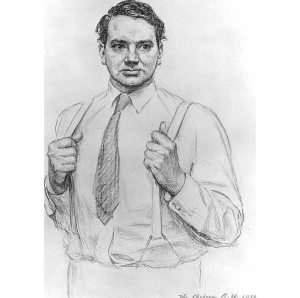
Novelist Thomas Wolfe, whose mammoth manuscripts were transmuted into literature by the great editor Maxwell Perkins.

“A graduate student of mine at Goldsmiths College expressed similar nostalgia in an email: “I have a notion of editors in days of yore,” he wrote, “being straight-backed and terrifying, all integrity and no bullshit, responding to a vocational calling and above all driven by a love of the word, brave enough not only to champion the best but also to tell their authors whatever might be needed to improve the work. And that now such personalities are as distant a myth in publishing as yer Shanklys and yer Cloughs are to football, that sharp-dressed corporate beasts run the show, reluctant to make decisions of their own, and ill-equipped to challenge those who rule a star-led system, so that everyone from JK Rowling to David Eggers suffers from the lack of scissors that might have been to their benefit.”

and later…noting that some writers don’t hesitate to knock editors, he calls T.S. Eliot to the stand,

“Those who can, write; those who can’t, edit – that seems to be the line. I prefer TS Eliot. Asked if editors were no more than failed writers, he replied: “Perhaps – but so are most writers.”

This article is now more than a decade old, and editors and editing standards have declined even more precipitously. (Newspapers being a particularly baleful example.) At a time that everything I read (or write for that matter) seems to need them urgently.

James Fallows on Jimmy Carter

Tipped by a NYTimes piece on the latest Trump book, I read James Fallow’s think piece on Jimmy Carter, written in 1979, after Fallows had serve a stint as a presidential speech writer.

Interesting to read through the lens of current events, and history’s perhaps somewhat less harsh judgment of Carter.  One bit stuck out…the “gatekeeper” role of media, and Carter’s lack of insight into it.

Nor did [Carter] distinguish among the audiences he had to address. For some—but only a few—of his televised appeals, it was important that a speech be understood by every hearer. In most other cases, that was a false goal. In a television interview in 1960, Walter Lippmann said that an effective President “must be articulate. He must be able to talk in language which is not the lowest common denominator, but the best. What you must lead in the country are the best of the country and they will carry it on down. There’s no use of the President trying to talk down to a fellow who can just about read and write. Let somebody else do that. He must talk to the people who teach the man to read and write.” I came to believe very deeply in a hierarchy of information and attitudes. Once an idea took hold in the serious magazines and the editorial pages, it would make its way down through the news columns, the reports in Time and Newsweek, and eventually to the television commentators, who shape most people’s view of public affairs. In many cases, the real audience for a speech should be not the 5000 people who are present for the occasion but the editors, academics, politicians, and columnists who will read the text and adjust their view of the President accordingly. Such speeches are the best, sometimes the only, way a President can show that he understands the complications in his policies, the problems ahead, the hard questions that have been raised about his course. Except for one or two speeches on foreign policy—where he was more willing in general to buy the conventional wisdom than he was in domestic affairs—Carter never consented to such speeches.

Nearly 40 years on, I wonder what has happened to this hierarchy, and  Fallows’ “deep belief” in it. The ones that I grew up with and worked in have surely toppled, or simply melted away in favor of platforms that in theory let everybody talk to everybody with explosively unpredictable results.

The decline in newspaper readership from a Pew study.

Interesting read overall. Fallows’ take on Carter is not mine, but he was there and I was a kid.  And the readership, and related hierarchy, of that 5000 is mostly gone I would think.


Winter music

Some music for a gray winter day in DC.

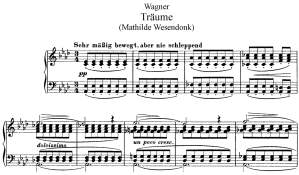
Richard Wagner, in one his many  infatuations, had more than a passing, affair with Mathilde Wesendonck (and following his usual m.o., cadged a lot of money and housing from her, and Otto, her husband).

the first measures…

One result of this is a set of songs, The Wesendonck Lieder, to poems she wrote and which he set while he had Tristan in mind among other things. The final song, “Träume,” is a 5-minute Wagner gem (most of his portions come in 5 hours so that’s saying something):  a nice distillation of what is so distinctive about him–the endless line, the sense of yearning, the odd text setting (he’s sort of the humpty-dumpty of prosody, “words will have stresses where I mean them to!”)–and the radiant glow, distinctly his in an era of ardent romantic music.

He liked Träume so much he set it for solo violin and chamber orchestra as well. And here are a few versions to accompany the snow.

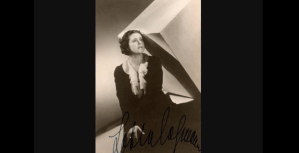
Lotte Lehmann from 1941…


https://youtu.be/EPG-aFDBRKQ

Interpretive freedom that seems fresh, but is, in fact, so old fashioned by today’s puritanical textual standards.

The German tenor Jonas Kaufmann (currently best-known in the U.S. for not being at the Met in Tosca), with his ability to summon a burnished baritonal sound as needed and such vocal tenderness (particularly for a helden tenor).

Finally, in case sung German is just not your thing, here is the violin arrangement, also gorgeous.

Word Watch: Hunker Down

The East Coast is getting clobbered by a “bomb cyclone” and weather stories (rather than actual weather) are a guilty pleasure of mine. Probably one of the few things I could have managed as a straight news reporter. If clichés  were traded on a linguistic S&P 500, now would be a great time to go long on weather ones, in particularly go out and buy some “hunker down” futures!

A nice instance comes from the end of the Times story on the storm,

Carpodacus mexicanus (House Finch) location: Sierra Nevada, taken by Steve Ryan. I’m sure this guy is saying, “I’ve got the hunker down thing down.”

“The birds that are wintering down there are going to have to hunker down and deal with the conditions,” he said. [He being Geoff LeBaron, the director of Audubon’s Christmas Bird Count.]

This piqued my curiosity about “hunker down” and to learn more I dropped in at the OED to see what background  they offered:


Etymology: Origin obscure: it has the form of an iterative from a stem hunk-. Compare Middle Dutch hucken, huken (Verwijs and Verdam), Middle Low German hûken, Dutch huiken (Franck), Old Norse húka, modern German hocken (Kluge) to sit on the hams or heels, to squat. These words point to an original ablaut series heuk-, hûk, huk- (hok-); from this hunk-er, might perhaps be a nasalized derivative. Old Norse hok-ra to crouch may be a parallel form; Dutch hunkeren to hanker, is not connected.

a. To squat, with the haunches, knees, and ankles acutely bent, so as to bring the hams near the heels, and throw the whole weight upon the fore part of the feet.”

b.transf. To cower or squat in a lowly manner.

c. [draft] fig. With down. To concentrate one’s resources, esp. in unfavourable circumstances; to dig in, buckle down; spec. (frequently in Mil. contexts) to shelter or take cover, lie low. orig. and chiefly U.S.

This leads to the interesting image of a bird, “squat, with the haunches, knees, and ankles acutely bent”

I’m sure this guy is saying, “I’ve got the hunker down thing down.” Carpodacus mexicanus (House Finch) location: Sierra Nevada, taken by Steve Ryan.

Of course it’s the figurative use that OED sniffs at with “draft” that everybody uses (I can’t recall a literal hunker in my reading or conversation). How did a squat cower turn in to settling in and riding out the storm?


In any case, hoping wherever you are you are warm, dry, and hunkered down safely.

Your Very Own Search Engine

The adage, “Any sufficiently advanced technology is indistinguishable from magic,” attributed to Arthur C. Clarke, seems more applicable than ever.

There is corollary I would like to offer, “Any sufficiently advanced cloud application trailer is indistinguishable from a cheerfully ominous sci-fi novel opening scene.” To wit, I offer,

https://www.unforgettable.me/

This is a service, once hooked into your devices, in particular, your smart phone, and social media feeds, etc. tracks everything and compiles it into your very own search repository. They are in beta and have an explanatory video:

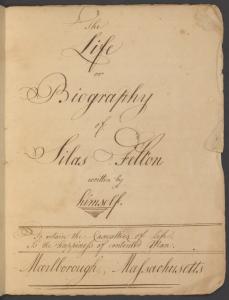
Diaries as they once were.

Brilliant? Creepy? Both? A solution in search of a problem? Or an early sign of how we will someday outsource our memories to our cloud storage lockers?

Aside from the rich ground for fictional (or humorous) speculation. (How do you call tech support to upgrade/correct your own memories? is there a “fish story” plugin?)  it does immediately raise questions about privacy, identity, and invasion/malleability thereof. What happens to this mass of data after somebody dies, is it uploaded into a new person’s avatar. The Sci-Fi possibilities really are endless.

Yet at the same time, before I get my hackles up, all this data is already being collected by the Big Brotherhood, and quite possibly the NSA. Unforgettable.Me is at least offering your data as a service to you, instead of offering you up as raw material for ad revenue and the like.

Another managed quote: “O brave new world that has such data in it.”