30 Days of Musical Tidbits: Day 13 Diabolus in Musica

Augmented_fourth_on_CToday a bit of music theory. The most notorious interval in music is the tritone, the so called “devil in music.”  This is the interval of an augmented 4th (that is, for instance, from C to F-sharp). It has all kinds of odd properties both theoretical (unlike other intervals it inverts to itself) and auditory (it seems to shimmer with instability).
Once forbidden in traditional western harmonies, as it tends to undo a solid sense of key, it gained favor as a sort of special effect in the 19th century music, and then became something more serious in 20th century works. (The somber opening of Britten’s War Requiem relies on it.)

It is all over “West Side Story,” which is full of clever musical tricks and references (the serial technique in “Cool” for instance). Perhaps the most subtle of the many tritones in the music (perhaps when all the dust has settled Bernstein’s greatest achievement), is how it weaves in and out of the tune and accompaniment to “Something’s Coming.” Far from being some technical error, it’s evocative, hopeful, and at the same time prophetic. Like a line of poetry that doesn’t quite turn. (It’s also key to how LB sets the word “Maria.”)

Here is “Something’s Coming” from the 60s movie:

30 Days of Music Tidbits, Day 12, Great (fictional?) Band Names

A break from classical music blather to provide a choice tidbit from Roddy Doyle’s The Commitments. Band manager Jimmy Rabbitte checks the paper to see if they got a review.

“There was no review in Hot Press. That was a disappointment. But they were in the Rhythm Guide.

–Your Regular Beat . . .
What’s Happening in Residencies.
WednesdaysThe Commitments
Carlow, Octopussys: The Plumbers.
Cork, Sir Henrys: Asthmatic Hobbit Goes Boing.
Dublin, Baggot: The Four Samurai.
Dublin, Ivy Rooms: Autumn’s Drizzle.
Dublin, Miami Vice: The Commitments.

Jimmy cut it out and stuck it on his wall.”

30 Days of Music Tidbits, Day 11, Classical Radio on the Web

These are commonly assumed to be dark times for classical radio, although whether there have ever been truly bright times for this genre I’m not completely sure. Although I almost seldom turn on my local radio station over the air, I am a very content user of many online stations. So for me, at least, it’s just a shift, not a loss.

Three streaming stations–chosen from many–that I particular enjoy:

wqxrWQXR from New York is high on my list. They still play opera every Saturday, and have recently launched a show called “The Sopranos” with Debbie Voight. Quite a good web site as well, and they have an app.

BBC Radio 3 is superb all around–not just for the Proms which they do every summer. Lots of interesting talk amidst bbc3the music, which has a good complement of live offerings, including Wigmore Hall. Shows are archived often for a week, and some for longer. If you are a choral singer or fan of that repertoire, their program “The Choir” is fascinating. Their web site is part of the overall BBC one, and they have an app, although last I checked it doesn’t work in the U.S.

br_klassikMy German is rudimentary, but that has not stopped me from listening a lot to BR-Klassik, out of Munich, which has the benefit of coming from a country that is well-provisioned with classical ensembles, be they orchestras, choral groups or operas. Lots of live music, and a refreshing range of what counts as classical. Their hourly nachrichten is a good test for anybody’s long ago German I. The only thing I can reliably get is the weather.

30 Days of Music Tidbits, Day 10, Handel Singing to Remember

Front_page_Ariodante
“Front page Ariodante.”  via Wikimedia Commons.

For today: British mezzo Sarah Connolly singing “Scherza Infida” from Handel’s “Ariodante.” This was one of those recordings that seeks you out. Connolly had sung for “The Sixteen,” Harry Christopher’s elite chorus, and then started a solo career, which has become pretty starry. This early solo recording of hers–about 12 years old now–garnered great favor in Gramophone. I heard this cut from it excerpted on the demo CD they used to send. And I found myself playing it over and over…something I haven’t done for years, then got the full CD, which I have played over and over since then.

Something about her ardor and restraint is so very British, and so very moving…

30 Days of Music Tidbits, Day 9 (late), Bad Reviews and the Right to be Forgotten

So, trying to find any light to shed about the flap over Dejan Lazic’s request to have a critical review removed, and not really sure if there is any larger lesson. Neither the web nor music criticism works in such a way, much as we might wish they might–performers and critics both were prefer their efforts weren’t in the permanent record, but now that is how it works.


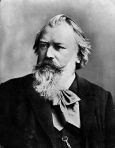
JohannesBrahmsOne positive outcome of this is that it has gotten me to go listen to Lazic for myself. Interesting pianist, unusual combo of old-school rhetorical flourish and super-modern pin-point clarity. He manages to engage me in a work I have come to loathe (after a teenage infatuation with it), Brahms alternately pompous and cloying B-minor Rhapsody. Lazic doesn’t quite scrub all the triteness out of it for me, but it definitely is a fresh take. Suggests his playing would be well-suited for Liszt.

After the Fall

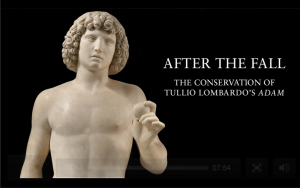
A fascinating short about the restoration of Tullio Lombardo’s Adam, a Renaissance sculpture that crashed into hundreds of pieces 12 years ago at the Met. The restoration, which looks astonishing, involved materials science, 3-D imaging, and engineering innovation.

Tullio_Lombardo_s_Adam___The_Metropolitan_Museum_of_Art

30 Days of Music: Day 8, Tidbits, Your Brain on Music

Although I’m sort of a “neuro-skeptic” about all these “findings” from fMRI. Sticking somebody in a brain scanner while they play pinocle or whatever and discovering great truths seems to me a dubious methodology (although granted it’s been going on a decade).

But this is so charming, and such a boon to musical duffers such as myself that I thought I’d share.

flute_lesson_sized
Flute lessons as recorded on the walls of the pyramids.

30 Days of Music: Day 6, Resources, Grove Dictionary Dictionary of Music

Grove Online is the big daddy of classical music resources (at least in English). Its origins rest with one of the crazy 19th century encyclopedists, George Grove, who was asked to write a musical dictionary for amateurs.

Over the years it grew to a hefty twenty plus volumes, and is now the authoritative source, available online for a fairly sizeable subscription (although many academic and some public libraries offer access for card holders.) It combines “life and works” info, including musicological and interpretive music history context where relevant, and there are multimedia examples you can play or pull into programs like Sibelius.  They are trying to deal with the question of how you update a professionally written and edited (rather than crowd-sourced) encyclopedia. Not completely up-to-date: Did just check and they still have Peter Maxwell Davies as the Master of the Queen’s Music (it’s Judith Weir now). So best to combine with other resources, but still the place to go for things like a comprehensive summary of the history of the mass in Western Classical music.

Grove

And on a lighter note, here’s Dame Kiri in a favorite encore of hers, “Art is Calling For Me,” which I heard the next rising star, Pretty Yende sing in a wonderful recital recently.

Best line “I want to be want to be a screechy peachy cantatrice.” Neither Pretty, nor Kiri have the least bit screechy about them! Only truly great singers can bring this one off..

30 Days of Music Tidbits: Day 6, Performers, Oscar Shumsky

Thinking back to my music reviewing days, one of the concerts I most enjoyed was a National Gallery of Art Garden Court shumskyperformance by the violinist Oscar Shumsky, not perhaps a household name like Perlman or Heifetz–to say nothing of the modern attention hogs. He was not after stardom and in fact for most of his adult career taught, played chamber music, led festivals and the like. But as he neared seventy, he returned to the concert stage, and gave solo recitals that were a model of musicianship and good humor.

For his NGA program, he played sonatas in the first half, and came out for the second half (having changed from bow tie to ascot) and presented bon-bons, explaining that unremitting seriousness of the “sonata abend” format—an evening composed exclusively of long masterworks, although all well and good, did not capture the full range of the violin’s personality or of what people might enjoy hearing. Fritz Kriesler, whom he idolized, had often followed this approach, filling the last half of concerts with lighter pieces–delightful, and often short, even tiny–hence the name bon bon, and delivering them with dazzling technique and panache.

Shumsky did the same in this NGA concert, transporting us all. That concert wasn’t recorded, but here’s his performance of one of Kriesler’s arrangements, Falla’s “Danse Espagnole “from La Vida Breve. A live recording–and you can tell–but such élan in the phrasing, and virtuosity with a twinkle in the eye–the man had style!

30 Days of Music Tidbits: Day 5, Droll Words, Lord Berners

bernersGerald Hugh Tyrwhitt-Wilson, better known as Lord Berners, 1883-1950, was an eccentric British composer, painter and writer–Grove Dictionary pegs him well as part of a “slender British avant garde which emerged after World War I.” –A sort of English Satie if you can imagine it, best known for some ballet music and a truly wonderful autobiography. The initial volume of which, “First Childhood,” begins thus:

I can remember very vividly the first time I became aware of my existence; how for the first time I realised that I was a sentient human being in a perceptible world. I seem to have acquired this state of self-consciousness very much in the way in which one masters the technique of riding a bicycle or of performing some trick of juggling, when, at a given moment and without any apparent reason, it is suddenly found that the thing can be done.

This awakening of my perception was not brought about by any very remarkable incident. There was no salamander in the fire, no tolling of bells to announce some famous victory or the accession of a monarch. Much as it would enhance the interest of my story and lend it a touch of the picturesque, a strict regard for truth forbids me to connect the circumstance with any occurrence of national or even of local importance. The conditions in which this epoch-making event in my mental career took place could not possibly have been more trivial. I was merely standing beside a table in the library at Arley, when, all at once, what had hitherto been a blurred background became distinct, just as when someone who is shortsighted puts on spectacles. Objects and individuals assumed definite shapes, grouping themselves into an ordered whole, and from that moment I understood that I formed part of it—without, of course, a full premonition of all that this exactly entailed. The commonplace features of this first landmark in my experience remain clearly recorded in my mind’s eye; the massive mahogany table with its cloth of crimson velvet, the fat photograph album with gilt clasps that could be locked up as though it were a receptacle for obscene pictures, whereas in reality it contained nothing worse than family portraits; the china bowl full of Christmas roses, slightly frost-bitten as those flowers usually are, a pastel portrait of my grandmother as a girl; in the middle distance my grandmother herself, my mother and a few aunts and, in the doorway, my nurse waiting to take me out for a walk. An ensemble which, you will agree, was entirely devoid of any kind of poignancy, although it may have had a certain charm as a Victorian conversation piece.

* * * * *

People I have questioned on the subject of the first awakening of their consciousness, have proved strangely uninformative. They could in most cases remember some particular incident that had occurred at an early stage in their lives, but none of them were able to recall the exact moment in which they had realised for the first time that they were human beings. Some even confessed that, as far as they knew, it had never happened to them at all. And I daresay they have managed to get through life just as happily.

The phenomenon I have described took place when I was three and a half years old. Up to that point my life had not been wholly uneventful…


The entire text is available on Gutenberg.ca
and has been reprinted as well.